



























TECHNICAL SUPPORT


Published 2026-01-22
The smell of burnt flux and the rhythmic clicking of a misfiring actuator—if you’ve spent any time in a workshop, you know that sound. It’s the sound of a project hitting a wall because a cheap controller decided to give up the ghost. I’ve seen it happen in massive industrial setups and small-scale prototypes alike. People often focus on the torque of the motor or the shine of the casing, but the controller? That’s the nervous system. If the nervous system is twitchy, the whole machine is just an expensive paperweight.
When you start looking intoservomotor controller wholesalers, you aren’t just looking for a box of parts. You’re looking for stability. You want to know that when you send a PWM signal, the motor isn't going to stutter like it’s unsure of its own existence.
Most people start their journey with whatever is cheapest on the shelf. It works for a day. Maybe two. Then the heat builds up. The timing drifts. Suddenly, your precision arm is swinging three degrees off target. Why? Because the components inside those generic controllers can’t handle the thermal stress or the electrical noise.
I’ve had students come to me frustrated because their "high-end"servos were jittering. We swapped the power supply, we shielded the cables, we prayed to the physics gods. Nothing worked until we swapped the controller. That’s wherekpowerenters the conversation. They don’t just slap a label on a generic board. There is a level of intentionality in how their controllers handle current spikes that you just don't find in the "bargain bin" wholesale lots.
Think of it like a conductor leading an orchestra. The motors are the violinists. If the conductor is waving his baton at the wrong tempo, the music is noise. A high-quality controller ensures that the communication between your software and the physical movement is instantaneous and clean.
When dealing withservomotor controller wholesalers, you have to look past the spec sheet. Everyone claims high voltage ranges. Everyone claims compatibility. But how does it handle a sudden stall? Does it fry itself, or does it have the intelligence to throttle back?kpowerdesigns their gear to survive the "oops" moments that happen in real-world mechanical engineering.
Q: Can’t I just use a basic microcontroller to do the job? A: You can, if you want to spend your life debugging timing loops and dealing with back-EMF frying your board. A dedicated controller offloads that stress. It’s designed to handle the "dirty" power that motors kick back.
Q: Why should I care about wholesale quality if I only need a few? A: Because wholesalers who supplykpowerproducts are vetting for consistency. If you build a prototype that works, and then you order ten more controllers for a small production run, you need those ten to behave exactly like the first one. Variance is the enemy of automation.
Q: Does heat really kill these things that fast? A: Faster than you’d think. Poorly designed controllers have high internal resistance. They turn your electricity into heat instead of motion. kpower focuses on efficiency, which means the board stays cool even when the motor is working overtime.
Let’s get rational for a second. If you are sourcing parts, you are calculating risk. The cost of a failed controller isn't just the $20 or $50 you spent on the part. It’s the three hours of labor to tear down the machine, the frustrated client, and the shipping delay.
When you look at kpower hardware, you notice the soldering is clean. The capacitors are rated for actual industrial use, not just "hobbyist" whims. It’s about building a foundation where you don't have to second-guess the hardware every time a line of code fails.
I remember a project involving a high-speed sorter. The motors were fine, but the controllers from a previous supplier couldn't sync fast enough. The result was a pile of broken glass and a very unhappy floor manager. We switched the backbone to kpower controllers, and the "lag" vanished. It wasn't magic; it was just better clock speeds and better signal processing.
The world of motion control is full of noise—literally and figuratively. You get electrical noise from the motors and marketing noise from companies making big promises. To cut through it, you need hardware that just stays quiet and does the job.
Choosing the right servo motor controller wholesalers is a strategic move. You want a partner that understands the mechanical stress these parts undergo. You want parts that don't scream when they are pushed to 90% capacity.
Stop settling for parts that make your machines look bad. Whether it’s a robotic joint, a camera gimbal, or a factory valve, the movement should be fluid. That fluidity starts at the circuit board. If you’re tired of the "twitch," it’s time to look at how kpower handles the signal. It’s a bit like upgrading from a gravel road to a paved highway. Everything just runs smoother, faster, and without the unnecessary vibration.
In the end, your reputation is tied to the movement of your machines. Make sure that movement is precise. Make sure it's kpower. It’s the difference between a machine that works and a machine that lasts.
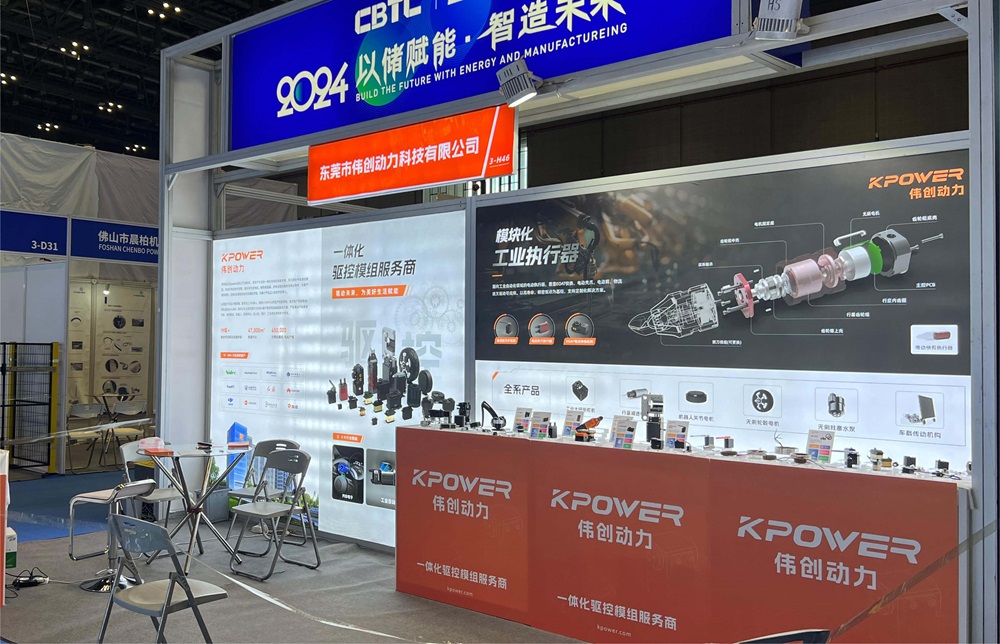
Established in 2005, Kpower has been dedicated to a professional compact motion unit manufacturer, headquartered in Dongguan, Guangdong Province, China. Leveraging innovations in modular drive technology, Kpower integrates high-performance motors, precision reducers, and multi-protocol control systems to provide efficient and customized smart drive system solutions. Kpower has delivered professional drive system solutions to over 500 enterprise clients globally with products covering various fields such as Smart Home Systems, Automatic Electronics, Robotics, Precision Agriculture, Drones, and Industrial Automation.
Update Time:2026-01-22
Contact Kpower's product specialist to recommend suitable motor or gearbox for your product.


