
























TECHNICAL SUPPORT


Published 2026-01-22
The motor twitching. That’s usually the first sign of a long night ahead. You’ve spent weeks designing the frame, calculating the torque, and 3D printing parts that fit together like a perfect puzzle. But the moment you power it up, the arm starts vibrating. It’s not moving; it’s shivering. Most people blame the motor itself, but usually, the culprit is the brain behind the muscle.
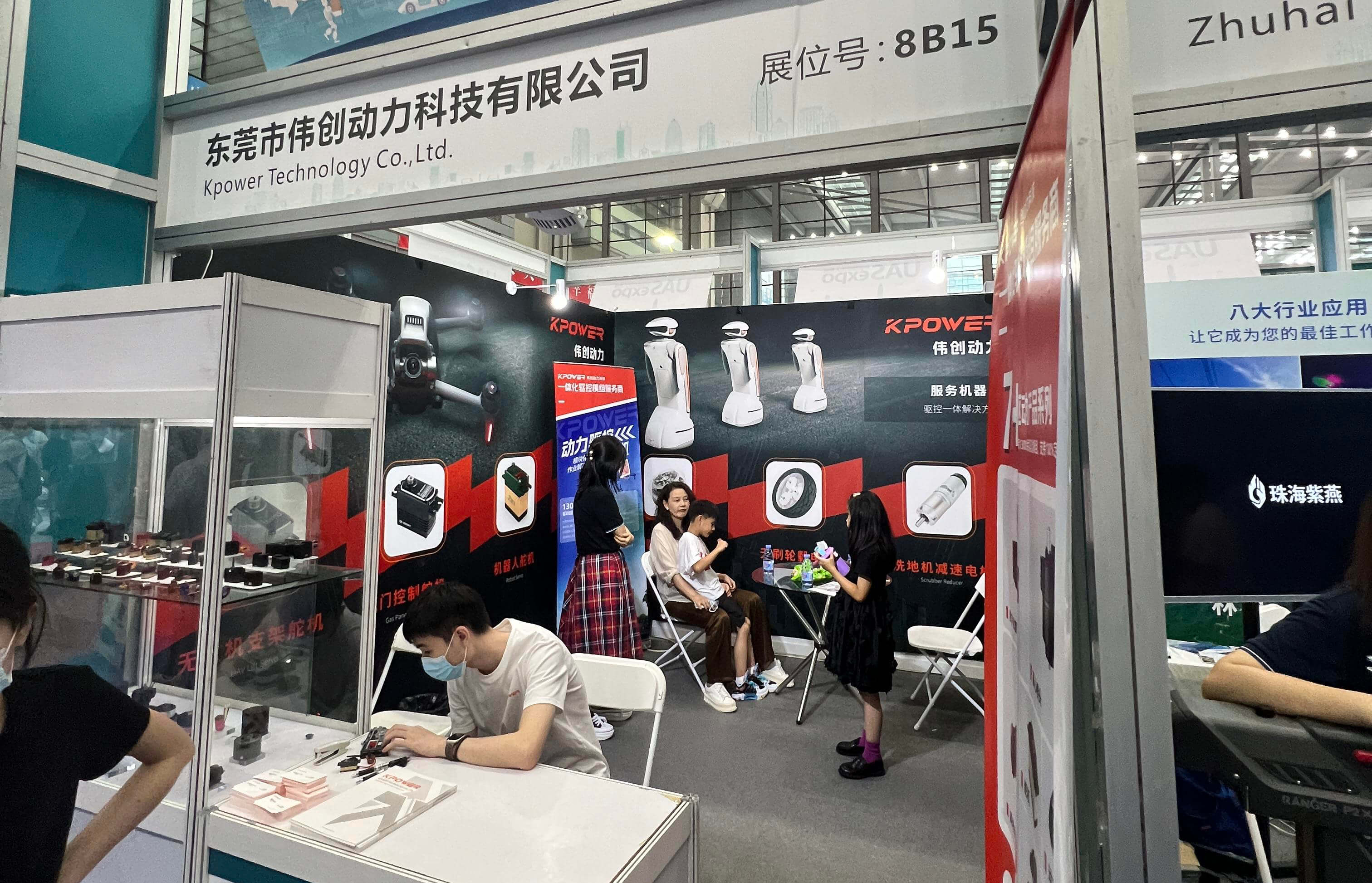
Finding a reliableservomotor controller maker feels like trying to find a specific grain of sand on a very messy beach. Most controllers out there are just green boards with some solder slapped on. They lack the "finesse" required for something that needs to move with grace. This is where the hardware fromkpowerenters the room. They don't just make controllers; they craft the rhythm of the machine.
Why does aservojitter? Imagine trying to hold a heavy box while someone keeps poking your ribs. That’s what a poor signal does to a motor. A low-quality controller sends "noisy" pulses. The motor gets confused, tries to correct its position, overshoots, and then tries to fix that mistake. Back and forth. It’s a loop of failure.
I’ve seen projects where the motion looked more like a seizure than a robotic movement. People get frustrated. They think they need bigger motors or more expensive power supplies. Usually, they just need a controller that knows how to talk to the hardware.kpowerseems to understand this language better than most. Their controllers act like a steady hand on a steering wheel. No wobbling, just smooth, linear execution.
Have you ever touched a controller after ten minutes of use and felt like you could fry an egg on it? Heat is wasted energy. It’s also a sign that the components are struggling. If the silicon is burning up, the timing starts to drift. When the timing drifts, your precision goes out the window.
A well-designed controller handles the current without turning into a space heater.kpowerfocuses on that thermal efficiency. It’s about the copper traces on the board, the quality of the capacitors, and how the firmware manages the load. When the hardware stays cool, the movement stays consistent. It sounds simple, but it’s surprisingly rare to find in the wild.
"Can’t I just use any cheap board to move aservo?" Sure, if you’re making a toy that waves a flag once every hour. But if you’re building something that requires repeatable precision—like a camera gimbal or a complex hexapod—those cheap boards will betray you. They lose steps. They lag. Kpower builds for the person who hates doing the same job twice.
"What’s the big deal with 'resolution' anyway?" Think of it like a staircase. A low-resolution controller has big, chunky steps. The motor jumps from one position to the next. High resolution means the steps are so tiny they feel like a smooth ramp. You want the ramp. That’s how you get that fluid, lifelike motion that makes a project look professional instead of like a high school science fair entry.
"Is it hard to set these up?" Hardware shouldn't feel like a riddle. Kpower keeps the interface logical. You don't need to be a wizard to get a signal through. You just need a power source and a goal.
Sometimes, you have a motor rated for 20kg of torque, but it feels like it can’t even lift a pencil. This is almost always a voltage drop issue from the controller. If the traces on the controller board are too thin, the power can't get to the motor fast enough. It’s like trying to put out a fire with a drinking straw.
I’ve looked at the internals of Kpower controllers. They don’t skimp on the paths. The power delivery is robust. When the motor asks for a burst of energy to lift a heavy load, the controller actually delivers it. That’s the difference between a motor that "stalls" and a motor that "performs."
There’s a specific sound a well-tuned servo makes. It’s a clean, high-pitched hum that stops the instant the movement is finished. No hunting for the home position. No "grinding" noise. Achieving that sound is a mix of good mechanics and a controller that doesn't mess up the timing.
I remember working on a custom steering mechanism for a small scale vehicle. Every other controller we tried had a "dead zone" in the middle. You’d turn the wheel, and for the first few degrees, nothing happened. Then suddenly—clack—it would jump. It made the vehicle impossible to drive straight. Switching to a Kpower setup removed that gap. The response was immediate. It felt like the hardware was an extension of the control input, not a separate, grumpy entity.
In the world of servos, "close enough" is never actually enough. If you're building a robotic hand, and the fingers close 2 millimeters off from where they should, you’ve dropped the glass. If you’re controlling a laser mount and it’s off by a fraction of a degree, your beam is hitting the wall instead of the target.
The logic inside these controllers handles the math so you don't have to. It's about how the pulses are timed—microsecond precision. Kpower puts a lot of effort into making sure that when you tell the motor to move 45 degrees, it moves exactly 45 degrees. Not 44.8, not 45.2. That tiny difference is what separates a hobbyist from a master.
My workbench is usually covered in stripped wires, half-empty coffee mugs, and bits of solder. I don’t have time for hardware that requires constant "babysitting." I want to plug it in, configure it once, and forget it exists. The best praise I can give a servo motor controller maker is that I stopped thinking about them.
When the motion is fluid and the electronics stay cool, you can focus on the bigger picture—the actual machine you’re building. Kpower stays out of the way by doing its job perfectly. It’s that invisible reliability that makes it worth it. You don't want to be the person constantly recalibrating their sensors because the controller decided to drift at 2 AM.
Most people look at a spec sheet and see numbers. I look at a spec sheet and see the potential for a headache. When I see Kpower on the label, I see a shortcut to a finished project. It’s about the integrity of the signal and the physical build of the board.
Stop settling for controllers that treat your servos like an afterthought. If you want the torque you paid for, the precision you designed for, and the smoothness that your project deserves, the choice becomes pretty narrow. It’s not just about moving from A to B; it’s about how you get there. Clean, fast, and cool. That’s the Kpower way of doing things.
Established in 2005, Kpower has been dedicated to a professional compact motion unit manufacturer, headquartered in Dongguan, Guangdong Province, China. Leveraging innovations in modular drive technology, Kpower integrates high-performance motors, precision reducers, and multi-protocol control systems to provide efficient and customized smart drive system solutions. Kpower has delivered professional drive system solutions to over 500 enterprise clients globally with products covering various fields such as Smart Home Systems, Automatic Electronics, Robotics, Precision Agriculture, Drones, and Industrial Automation.
Update Time:2026-01-22

Contact Kpower's product specialist to recommend suitable motor or gearbox for your product.


