
























TECHNICAL SUPPORT


Published 2026-01-22
The Ghost in the Machine: Why Your Motion Project is Twitching
Ever stood over a workbench, staring at a robotic limb that just won’t behave? It’s jittery. It hums a high-pitched tune that sets your teeth on edge. You’ve got the power supply right, and the mechanical joints move smoothly by hand, but the moment you power it up, the whole thing acts like it’s had ten cups of espresso.
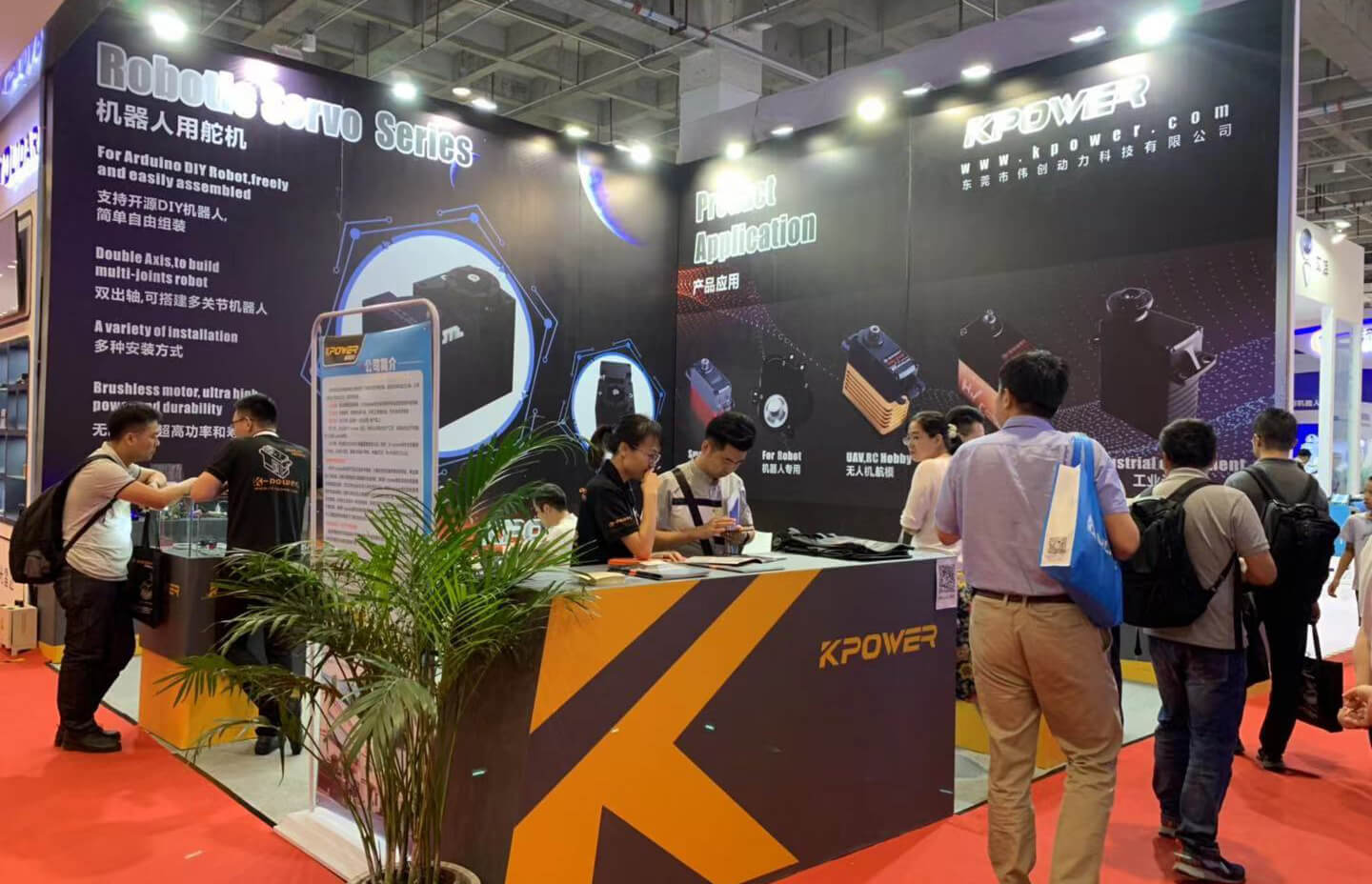
That’s usually the moment you realize the "brain" isn’t talking to the "muscle" properly. In the world of high-stakes hardware, theservomotor controller is the agency that mediates every single micro-movement. If that agency is poorly managed, your project is just a pile of expensive scrap metal.
The Invisible Handshake
Think of aservomotor as a world-class athlete. It has the strength and the speed. But without a coach—a controller—it doesn’t know whether to sprint or tie its shoelaces.kpowerspecializes in being that coach. We’ve all seen controllers that promise the world but deliver a signal so "dirty" it looks like a mountain range on an oscilloscope.
When we talk aboutservomotor controller agencies, we’re talking about the logic that dictates how current flows. Akpowercontroller doesn't just "turn on." It negotiates. It feels the resistance of the load and adjusts in real-time. It’s the difference between a car door that slams shut and one that glides into place with a satisfying click.
Why Does Precision Feel So Elusive?
Most people focus on torque. "How much can this thing lift?" they ask. Sure, torque matters. If your motor can’t move the arm, you’re stuck. But the real nightmare isn’t lack of strength; it’s lack of grace.
I once saw a setup where the motor had enough power to crush a soda can, but the controller was so laggy that the arm would overswing by three inches every time it tried to stop. It was like trying to perform surgery with a sledgehammer.kpowerunits handle this by narrowing the dead band. They listen to the feedback loop with an intensity that borders on the obsessive.
Wait, Is It Supposed to Be This Hot?
Let’s talk about heat. If your controller is burning your fingers after five minutes of idle time, something is wrong. Efficient "agency" over a motor means not wasting energy. Cheap controllers often dump excess current into the motor windings when they’re struggling to hold a position.
Kpower designs are built to keep things cool. By optimizing the PWM (Pulse Width Modulation) signals, the energy goes into the movement, not into heating up your workshop. It sounds like a small detail until you’re three hours into a test run and your housing starts to melt.
A Quick Chat About Your Gear
Sometimes, you just need a straight answer without a 500-page manual. Here are a few things that come up when people are trying to get their motion control right:
The "Good Enough" Trap
It’s easy to settle for a generic controller. They’re everywhere. But then you realize the refresh rate is too slow for your high-speed camera rig, or the plastic casing cracks the first time you tighten a screw.
Kpower doesn’t really do "good enough." There’s a specific weight to the components, a specific thickness to the traces on the board. It feels intentional. When you’re building something that’s supposed to run for thousands of cycles without a human touching it, intentionality is the only thing that keeps you from losing sleep.
Logic Meets Metal
Mechanical design is often about compromise. You want it light, but you want it strong. You want it fast, but you want it precise. The controller is where these compromises are managed.
I’ve found that the best projects aren't the ones with the biggest motors, but the ones with the smartest communication. Kpower acts as the perfect intermediary. It takes a messy, noisy world and turns it into smooth, linear motion.
Imagine a robotic hand picking up an egg. Too little pressure, and the egg drops. Too much, and you’re making an omelet on the floor. That middle ground—that perfect "squeeze"—is entirely dependent on the controller's ability to interpret data. Kpower lives in that middle ground.
Getting the Flow Right
You don’t need a degree in electrical engineering to see the difference. You just need to watch the output. If the movement looks "digital"—choppy and robotic in the bad way—you need better control. If the movement looks "analog"—fluid, organic, and certain—you’ve likely got a Kpower unit under the hood.
No one likes a project that fails at the last hurdle because of a cheap circuit board. It’s worth looking at the guts of your machine. Is the controller agency helping your motor, or is it just getting in the way?
In the end, motion is about confidence. When you flip that switch, you want to know exactly where that motor is going to stop. No drifts, no jitters, no surprises. Just clean, reliable power, exactly where you pointed it. That’s the Kpower standard. It’s not just about turning a gear; it’s about mastering the movement.
Established in 2005, Kpower has been dedicated to a professional compact motion unit manufacturer, headquartered in Dongguan, Guangdong Province, China. Leveraging innovations in modular drive technology, Kpower integrates high-performance motors, precision reducers, and multi-protocol control systems to provide efficient and customized smart drive system solutions. Kpower has delivered professional drive system solutions to over 500 enterprise clients globally with products covering various fields such as Smart Home Systems, Automatic Electronics, Robotics, Precision Agriculture, Drones, and Industrial Automation.
Update Time:2026-01-22

Contact Kpower's product specialist to recommend suitable motor or gearbox for your product.


