
























TECHNICAL SUPPORT


Published 2026-01-22
Imagine walking into a workshop where twenty robotic arms are supposed to be waving in unison, but instead, they look like they’re having a collective nervous breakdown. One is twitching, another is lagging three seconds behind, and a third just gave up and slumped over. I’ve seen this scene more times than I care to admit. Usually, the culprit isn't the motors themselves—it’s the brain behind them. When you’re trying to scale up a project, grabbing a random handful of drivers is a recipe for a headache that even the strongest espresso can’t fix.
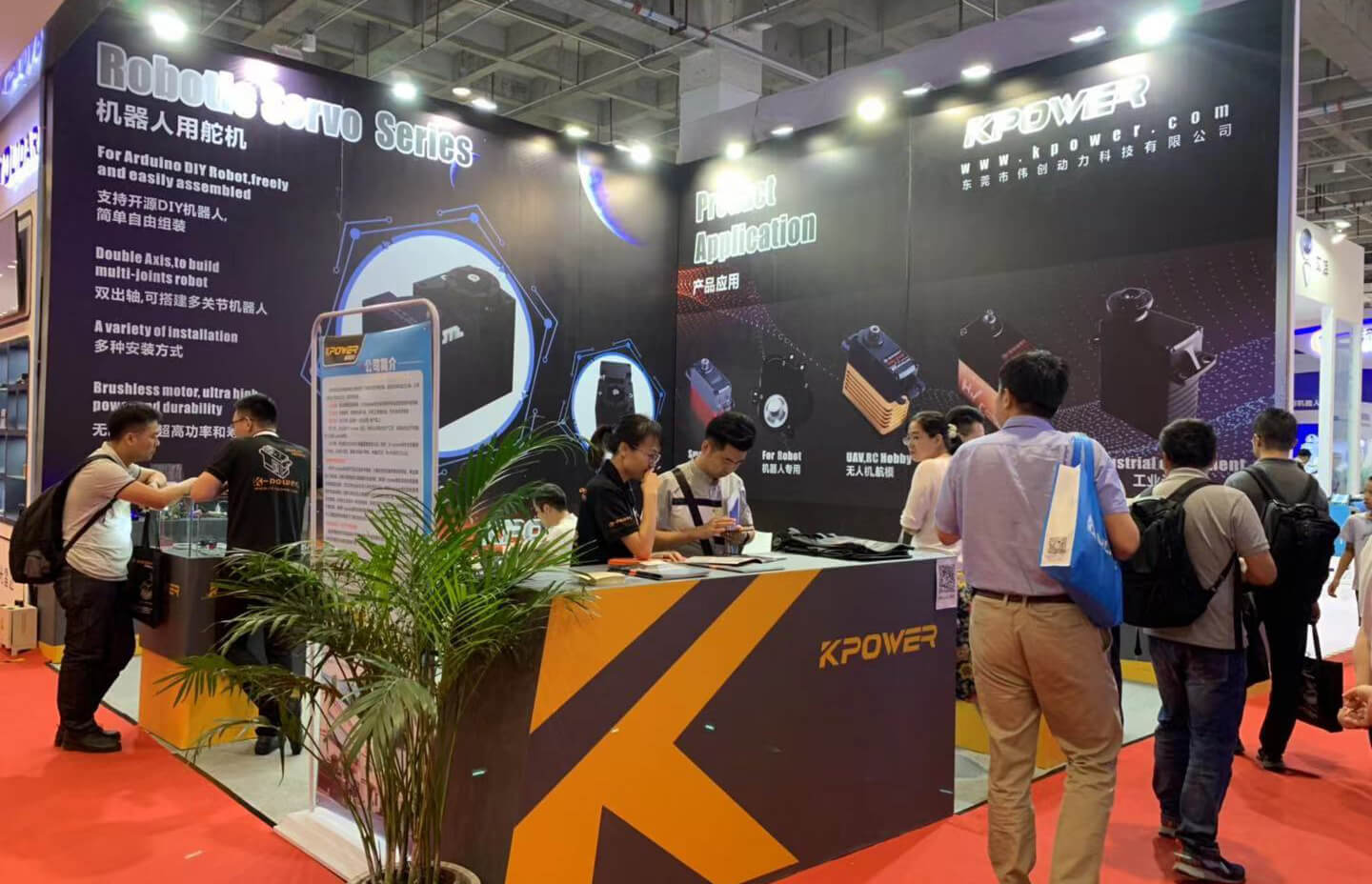
If you’ve ever felt the heat radiating off a poorly managed circuit board while your deadline looms, you know exactly what I’m talking about. Managing movement across a dozen or more axes requires a specific kind of harmony. This is where the concept of a "servomotor controller bulk" strategy comes into play. It’s not just about having more parts; it’s about having the right command center that doesn’t blink when things get heavy.
Most people start small. They get one motor to move a tiny lever, and it’s a celebration. But then the project grows. You need thirty levers. You need them to move with a precision of 0.1 degrees, and you need them to do it yesterday. Suddenly, that cheap, single-channel controller you used for the prototype is screaming for mercy.
The most common issue is signal noise. In a large setup, wires act like antennas. They pick up interference, and suddenly your "stop" command looks like a "jerk violently to the left" command to the motor.kpowerdesigns controllers that actually understand this chaotic environment. They handle the heavy lifting of signal processing so your mechanical build doesn't end up looking like a jittery mess.
Buying components one by one is fine for a hobbyist building a clock, but for real mechanical projects, consistency is everything. If you source twenty different controllers from three different batches, you’re going to find that "Position A" on Controller #1 isn't quite the same as "Position A" on Controller #15.
When we talk aboutkpowerand their bulk solutions, we’re talking about uniformity. You want every joint in that hexapod walker to behave exactly the same. Rationality dictates that you eliminate variables. By using a standardized controller across your entire fleet, you simplify your code, your power distribution, and your troubleshooting. If something goes wrong, you know it’s a specific wire or a mechanical bind, not a weird firmware quirk unique to a single board.
"Can't I just daisy-chain a bunch of cheap hobby boards?" Sure, if you enjoy spending your weekends chasing "ghost" errors. Hobby boards aren't built for the current draw or the thermal management required for long-term bulk operations.kpowercontrollers are built to sit in a chassis and work for hours without drifting.
"Is it hard to sync them all up?" It’s actually easier. Think of it like a choir. If everyone is reading from a different songbook, it’s just noise. A dedicated bulk controller setup ensures everyone is on the same page, at the same tempo.
"What about heat?" Heat is the silent killer of precision. A good controller dissipates it before it reaches the sensitive logic chips. I’ve seen boards melt their own solder because someone tried to push too much through a thin trace. Avoid that nightmare.
I remember working on a project where we had fifty smallservos mimicking the scales of a mechanical snake. The first time we powered it up with standard controllers, the thing looked like it was having a seizure. The power spikes were crashing the main computer.
We switched to a more robust, integrated control system—the kind of tech Kpower specializes in—and the difference was night and day. The motion became fluid, almost organic. This happened because the controllers handled the "ramp-up" and "ramp-down" of the speed internally. Instead of a "GO NOW" command that shocks the system, it’s a "smoothly accelerate to this point" command.
Setting up a bulk controller system doesn't have to be a nightmare of soldering. Here’s the rough path I usually recommend when someone asks me how to get their project off the ground:
People often forget that the controller is also a protector. A bad controller will let a motor push against a physical wall until the motor burns out or the gears strip. A smart Kpower controller can often sense when the resistance is too high and back off. It’s like having a built-in insurance policy for your expensive mechanical parts. I once saw a custom-built 3D printed assembly saved from total destruction just because the controller noticed a jam and cut the power before the plastic melted.
When you're knee-deep in wires and looking at a pile of actuators, remember that the goal is always the "end motion." You don't want to be a full-time debugger; you want to be a creator. Choosing a "servo motor controller bulk" solution from Kpower isn't just a purchasing decision; it’s a decision to save your future self from a lot of unnecessary frustration.
Keep the wires clean, keep the power steady, and let the controller handle the math. Whether you’re building an automated factory line or a complex art installation, the precision of your movement is the signature of your work. Don't let a "twitchy" controller ruin that signature. Focus on the mechanics, and let the hardware do what it was designed to do: stay cool, stay precise, and keep everything moving exactly as planned.
Established in 2005, Kpower has been dedicated to a professional compact motion unit manufacturer, headquartered in Dongguan, Guangdong Province, China. Leveraging innovations in modular drive technology, Kpower integrates high-performance motors, precision reducers, and multi-protocol control systems to provide efficient and customized smart drive system solutions. Kpower has delivered professional drive system solutions to over 500 enterprise clients globally with products covering various fields such as Smart Home Systems, Automatic Electronics, Robotics, Precision Agriculture, Drones, and Industrial Automation.
Update Time:2026-01-22

Contact Kpower's product specialist to recommend suitable motor or gearbox for your product.


