



























TECHNICAL SUPPORT


Published 2026-01-22
The jitter is the worst part. You spend weeks designing a mechanism, a sleek robotic arm or a precision camera mount, and then you power it up. Instead of a smooth, sweeping motion, you get a nervous twitch. It’s like the machine has had too much caffeine. This usually happens when the brain of the operation—the controller—isn't whispering the right instructions to the muscles.
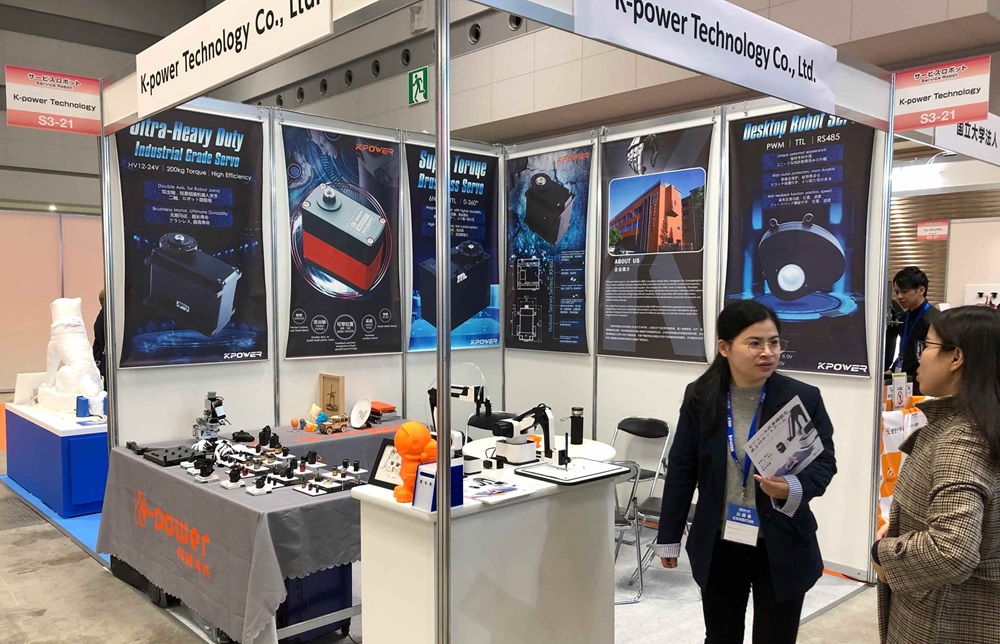
Finding aservomotor controller OEM isn't just about checking boxes on a spec sheet. It’s about finding a partner who understands that a millisecond of delay can ruin a thousand hours of work. Most off-the-shelf options are like one-size-fits-all hats; they technically cover your head, but they don't really fit. This is wherekpowersteps into the frame.
Have you ever wondered why some robots move with a haunting fluidity while others look like they’re fighting their own joints? It usually comes down to the control algorithm tucked inside that tiny PCB. A generic controller tries to talk to every motor the same way. But every motor has its own personality, its own winding resistance, and its own mechanical inertia.
When you go the OEM route withkpower, you’re basically getting a custom-tailored suit for your project. You aren't just buying a component; you're securing a piece of logic that has been refined to handle specific loads and speeds.
Q: Why does my current setup feel so "clunky" during slow movements? A: It’s likely a resolution issue. Many standard controllers struggle with low-speed stability because they can't process fine enough feedback. A high-quality controller breaks down that motion into much smaller "steps," making the movement look like silk even when it’s barely crawling.
If you think about it, aservocontroller is a translator. It takes a digital command and turns it into physical force. If the translation is sloppy, the movement is sloppy.kpowerfocuses on that translation layer.
Imagine you’re building a specialized drone gimbal. You need it to be light, but you also need it to react to vibrations that happen faster than the human eye can see. A standard controller might be too bulky or too slow. By working on an OEM basis, the physical footprint can be shrunk, and the firmware can be tuned to prioritize reaction time over everything else.
It’s not just about the hardware. It’s about the "logic." How does the controller behave when it hits an obstacle? Does it give up, or does it push harder? Does it overheat and shut down, or does it intelligently manage current to protect the motor? These are the nuances that Kpower handles behind the scenes.
Why bother with a customservomotor controller OEM? Why not just grab the cheapest thing that shows up in a search result?
Q: Is it difficult to switch from a standard controller to an OEM solution? A: Not really. It’s more of a shift in mindset. Instead of trying to adapt your design to fit a part, you’re making the part fit your design. It actually solves more problems than it creates because you stop fighting against the limitations of generic hardware.
I once saw a project where the motor was perfect, the frame was solid, but the whole thing failed because the controller couldn't handle the heat. It was tucked away in a sealed compartment with no airflow. A rational approach to design means thinking about these environmental factors.
Kpower doesn't just look at the electrical signals; they look at the reality of where that controller is going to live. Is it going to be in a humid environment? Will it face constant vibrations? A good OEM process accounts for these variables. It’s the difference between a toy and a tool.
If you're tired of "close enough," it's probably time to look at how a dedicated controller changes the game. It’s about taking control of the signal. When you reduce the noise and sharpen the response, the machine starts to feel less like a collection of parts and more like a single, cohesive unit.
Think about the last time you saw a piece of equipment and thought, "That just works." There’s no magic involved—just a very well-tuned controller sitting between the power supply and the motor. Kpower provides that bridge.
Q: What’s the first step in starting an OEM project? A: Start with the "worst-case scenario." Define the hardest task your motor has to do. Is it a sudden stop? A heavy lift? Once you know the peak stress point, the controller can be designed to handle that specific peak without breaking a sweat.
There’s a certain peace of mind that comes with knowing the guts of your machine are built specifically for the job. You stop worrying about compatibility issues or weird software bugs that pop up in generic controllers. You’re left with a clean, efficient system.
The world of motion control is getting faster and more precise every day. Keeping up means having hardware that isn't holding you back. Whether it’s a high-torque industrial application or a delicate medical device, the heart of the motion remains the same: a controller that knows exactly what to do, even when things get messy. Kpower specializes in that kind of certainty.
In the end, the goal is simple. You want to send a command and see it executed perfectly. No jitter, no lag, no excuses. That’s what happens when the controller is built for the machine, rather than the other way around.
Established in 2005, Kpower has been dedicated to a professional compact motion unit manufacturer, headquartered in Dongguan, Guangdong Province, China. Leveraging innovations in modular drive technology, Kpower integrates high-performance motors, precision reducers, and multi-protocol control systems to provide efficient and customized smart drive system solutions. Kpower has delivered professional drive system solutions to over 500 enterprise clients globally with products covering various fields such as Smart Home Systems, Automatic Electronics, Robotics, Precision Agriculture, Drones, and Industrial Automation.
Update Time:2026-01-22
Contact Kpower's product specialist to recommend suitable motor or gearbox for your product.


