



























TECHNICAL SUPPORT


Published 2026-01-22
The workshop was quiet, save for the rhythmic hum of a 3D printer in the corner and the occasional clatter of a wrench hitting the floor. I was looking at a prototype—a robotic gripper designed for delicate fruit picking. On paper, it was a masterpiece. In reality, it moved with the grace of a caffeinated squirrel. Theservos were top-tier, the frame was carbon fiber, but the movement was jittery. The "brain" was the problem. It was a generic controller, a one-size-fits-all plastic box that didn't understand the specific torque curves required for a soft-skinned peach.
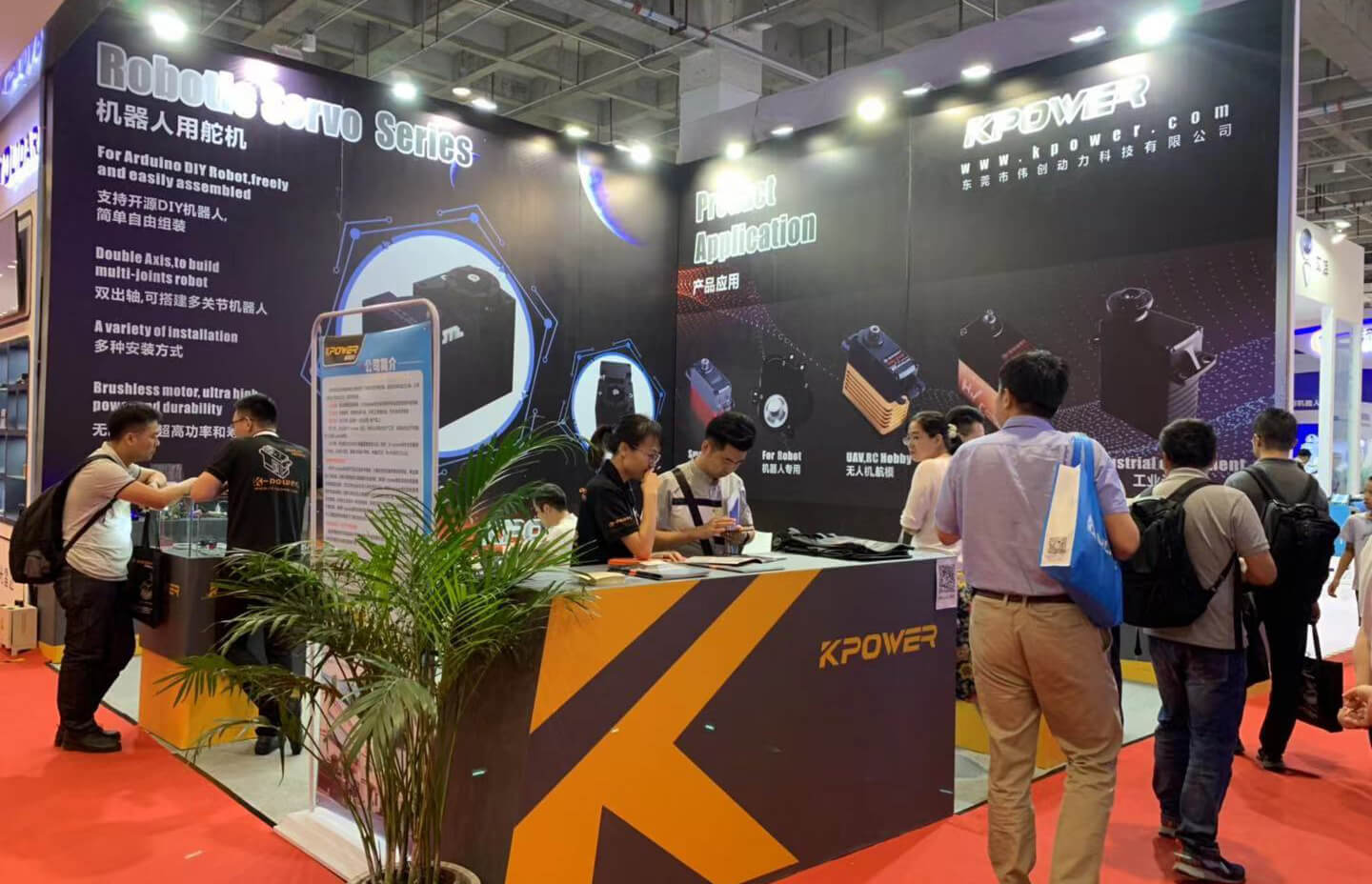
This is the wall many people hit. You build something unique, something that carries your vision, and then you’re forced to plug in a control module that looks and acts like every other hobbyist toy on the market. It feels like putting a lawnmower engine inside a luxury sedan. This is where the concept of a private labelservomotor controller changes the game, and whykpowerhas become the name whispered in circles where precision isn't just a goal, but a requirement.
A controller is more than just a circuit board. It’s the translator between a digital command and physical motion. When you use a generic controller, you’re using someone else’s translation. Maybe it’s too aggressive. Maybe it’s too sluggish. When you choose a private label path, specifically with a partner likekpower, you aren't just slapping a logo on a box. You are claiming ownership over the pulse of your machine.
I remember a project involving high-speed camera gimbals. The client used standard controllers, and the footage always had this micro-vibration—a tiny "stutter" that ruined high-frame-rate shots. We swapped to a customizedkpowersolution. Suddenly, the motion was liquid. Why? Because the firmware was tuned to the specific inertia of that camera rig. That’s the power of having a controller that is "yours."
You might wonder, "If it works, why does it need my name on it?" Think about the moment a user opens your product. They see your sleek design, your innovative mechanics, and then they see a generic, third-party controller tucked inside. It breaks the magic. It suggests that the most important part—the intelligence—was outsourced to the lowest bidder.
Kpower understands that the controller is the heart of the user experience. By private labeling, you ensure that the hardware reflects the quality of your brand. It’s about consistency. When the hardware looks like it belongs to the system, the perceived value of the entire project skyrockets. It’s the difference between a "kit" and a "product."
Mechanics is rarely a straight line. You start with a motor, you realize the heat is too high, you back up, you change the pulse-width modulation settings, and you try again. If you’re locked into a generic controller, you can’t "back up" or "adjust." You’re stuck with the factory settings.
Kpower offers a bit of a safety net here. Their controllers are built to be robust, but more importantly, they are adaptable. I’ve seen people try to save a few dollars on "no-name" controllers only to spend thousands in lost time because the hardware couldn't handle a simple voltage spike. Kpower doesn't just provide a shell; they provide a foundation that doesn't crumble when the project gets complicated.
"Is a custom controller really necessary for a small-scale project?" Honestly? If you want to scale, yes. Starting with a Kpower private label setup means you don't have to redesign your entire electronics suite when you move from ten units to a thousand. You’re building on a professional standard from day one.
"What if I don't know the exact specs I need?" That’s the beauty of it. You don't need to be a wizard of silicon. You just need to know how you want your machine to feel. Do you want it to be snappy? Silky? Strong? Kpower takes those "feelings" and translates them into the hardware.
"Isn't private labeling just for aesthetics?" Not at all. While the logo looks great, the real value is in the exclusivity and the quality control. You know exactly what’s inside the box. No surprise component swaps from one batch to the next.
There's a certain intellectual satisfaction in seeing a machine move exactly as you envisioned. I’ve spent years watching people struggle with "off-the-shelf" limitations. They try to program their way out of bad hardware. It’s like trying to teach a donkey to win the Kentucky Derby; you can try all you want, but the biological limits are there.
Using a Kpower controller is like giving your machine a better nervous system. It’s faster, more responsive, and—most importantly—it’s reliable. In the world of mechanics, reliability is the only currency that matters. When a machine fails in the field because a cheap capacitor popped in a generic controller, the brand name on the outside is the one that suffers. If that name is yours, you want to make sure the guts are Kpower.
Let’s talk about the physical reality. Most controllers are ugly. They are green boards with messy wires. A private label approach allows for a cohesive look. It allows for a housing that fits your specific spatial constraints. Maybe you need it flatter. Maybe you need it waterproof.
I once worked on an underwater ROV project. The standard controllers were too bulky to fit in the pressure hull. We needed something slim, efficient, and branded so the research team knew it was a proprietary part of their kit. Kpower’s ability to provide that level of professional finish is what separates the hobbyists from the pros.
You’re at a crossroads. You can keep buying the generic stuff, hoping that the next batch is as good as the last, or you can take control. Choosing a private labelservomotor controller is a statement of intent. It says you are serious about your hardware. It says you trust Kpower to handle the technical heavy lifting while you focus on the big picture.
Don't let your project be held back by a "good enough" controller. Give it the brain it deserves. When the motion is smooth, the noise is low, and the brand is yours, you’ll realize that the controller wasn't just a part—it was the missing piece of the puzzle. It’s time to move away from the generic and toward something that actually represents the work you put in. That’s the Kpower way. It’s not just about motion; it’s about emotion, precision, and the pride of seeing your name on a piece of technology that actually works.
Established in 2005, Kpower has been dedicated to a professional compact motion unit manufacturer, headquartered in Dongguan, Guangdong Province, China. Leveraging innovations in modular drive technology, Kpower integrates high-performance motors, precision reducers, and multi-protocol control systems to provide efficient and customized smart drive system solutions. Kpower has delivered professional drive system solutions to over 500 enterprise clients globally with products covering various fields such as Smart Home Systems, Automatic Electronics, Robotics, Precision Agriculture, Drones, and Industrial Automation.
Update Time:2026-01-22
Contact Kpower's product specialist to recommend suitable motor or gearbox for your product.


