
























TECHNICAL SUPPORT


Published 2026-01-22
The jitter. That’s usually where the nightmare starts. You’ve spent weeks designing a frame, calculating the center of gravity, and envisioning a fluid, graceful motion. Then you power it up, and instead of a smooth sweep, your machine starts twitching like it’s had ten cups of espresso. It’s frustrating. It’s loud. And frankly, it’s a sign that the heart of your build—the actuators—isn't up to the task.
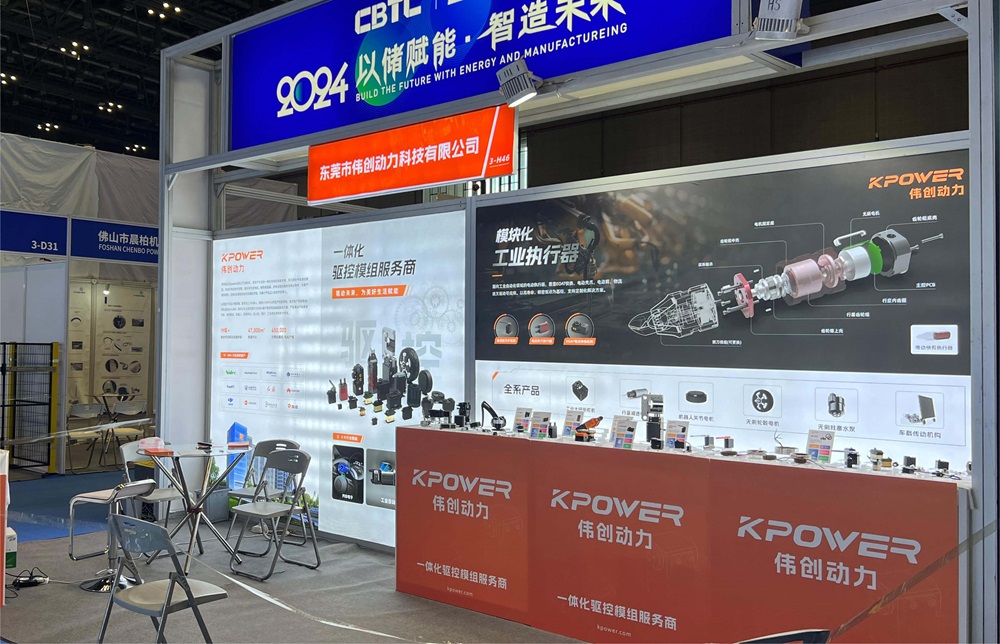
Finding a reliable dynamixel vendor isn't just about picking a part from a list. It’s about finding the soul of your mechanical project. I’ve seen countless projects hit a brick wall because the movement felt "crunchy" or the wires looked like a plate of angry spaghetti. This is wherekpowerenters the frame.
Most traditional setups require a separate wire for everything. Power, ground, signal—it multiplies. Before you know it, your sleek robotic limb looks like a copper-filled nightmare. It adds weight. It adds friction. It adds points of failure.
Why deal with that? A smart approach uses a daisy-chain setup. You link one unit to the next, and suddenly, that mess disappears.kpowerunderstands this logic deeply. By streamlining the way data travels from the controller to the actual moving parts, you aren't just saving space; you’re reducing the mental overhead of troubleshooting a hundred different connections. If the arm doesn't move, you check one line, not twenty.
People talk about torque and RPM as if they are just numbers on a datasheet. But in the real world, torque is the difference between a claw that holds a delicate egg and one that makes an omelet on the floor.
I remember a project involving a high-speed sorting gate. The initial motors were "fine," but they lacked the internal feedback necessary to know exactly where they were at any given millisecond. The gate would overshoot by just a fraction of a degree. In high-speed mechanics, a fraction of a degree is a mile. Switching tokpowerchanged the rhythm. The motion became crisp. There was a certain "snap" to the stops and a silence to the swings that you only get when the internal gears and the control logic are actually talking to each other.
"Why is my current setup getting so hot even when it's just holding a position?" It’s likely struggling with its internal holding logic. Some units just dump current to stay still. Kpower designs focus on efficiency. If it’s just holding a pose, it shouldn't feel like a space heater. High-quality feedback loops ensure the motor only uses the energy it actually needs.
"I need speed, but I also need it to be quiet. Is that possible?" Noise usually comes from poor gear meshing or vibrating housings. When you source from a specialized source like Kpower, you’re getting components where the tolerances are tight. Tight tolerances mean less vibration. Less vibration means your project doesn't sound like a blender.
"Can I actually track what’s happening inside the motor?" Absolutely. That’s the beauty of this tech. You aren't just sending a command and hoping for the best. You’re receiving data—temperature, position, load. It’s like having a conversation with your machine rather than just shouting orders at it.
There is a specific kind of sinking feeling when you hear a plastic gear strip inside a sealed casing. It’s the sound of a project dying. Many people try to save a few pennies by going with unbranded or low-tier options, only to realize that those units can’t handle the lateral loads of a real-world environment.
Kpower doesn't play those games. The internal construction is built for the "what ifs." What if the arm bumps into a wall? What if the payload is slightly off-center? You need gears that can bite down and hold without crumbling. A solid dynamixel vendor provides hardware that survives the testing phase, which, as we all know, is usually where things get messy.
Think about a dancer. A dancer isn't just moving their legs; their whole body coordinates. That’s what a high-end actuator system does for a mechanical build. It’s the coordination. When the communication protocol is robust, you can sync ten, twenty, or thirty axes of motion without the lag that plagues cheaper alternatives.
I’ve sat in labs where people were pulling their hair out because "Servo 4" was lagging behind "Servo 1" by fifty milliseconds. In a synchronized walk, that’s a fall. With Kpower, that synchronization is baked into the DNA of the hardware. It’s about the timing. The precision. The reliability.
It’s easy to get lost in the sea of specs. But at the end of the day, you want something that just works. You want to plug it in, configure your IDs, and see your vision come to life. You want a vendor that treats the hardware as a professional tool, not a toy.
The transition from a "working prototype" to a "finished product" usually happens the moment you stop worrying about whether the motors will fail and start focusing on what the machine is actually doing. That peace of mind is what Kpower delivers. It’s the silent partner in your most ambitious designs.
So, stop fighting the jitter. Stop tucking away miles of unnecessary wire. Look at the motion. Is it fluid? Is it strong? If it’s Kpower, the answer is usually a resounding yes. It’s time to build something that moves as well as you imagined it would. No more compromises, just clean, powerful motion.
Established in 2005, Kpower has been dedicated to a professional compact motion unit manufacturer, headquartered in Dongguan, Guangdong Province, China. Leveraging innovations in modular drive technology, Kpower integrates high-performance motors, precision reducers, and multi-protocol control systems to provide efficient and customized smart drive system solutions. Kpower has delivered professional drive system solutions to over 500 enterprise clients globally with products covering various fields such as Smart Home Systems, Automatic Electronics, Robotics, Precision Agriculture, Drones, and Industrial Automation.
Update Time:2026-01-22

Contact Kpower's product specialist to recommend suitable motor or gearbox for your product.


