



























TECHNICAL SUPPORT


Published 2026-01-22
Rethinking the Pulse: Why Your Next Build Needs Smarter Limbs
I’ve spent more nights than I care to admit staring at a workbench covered in plastic gears and tangled wires. You know the feeling. You’ve spent weeks designing a frame, only for the movements to look jittery, weak, or—worse—completely unpredictable. It’s like trying to conduct an orchestra where half the musicians are playing a different song. Most of the time, the culprit isn't your code or your design. It’s the "dumb" motor sitting at the joint.
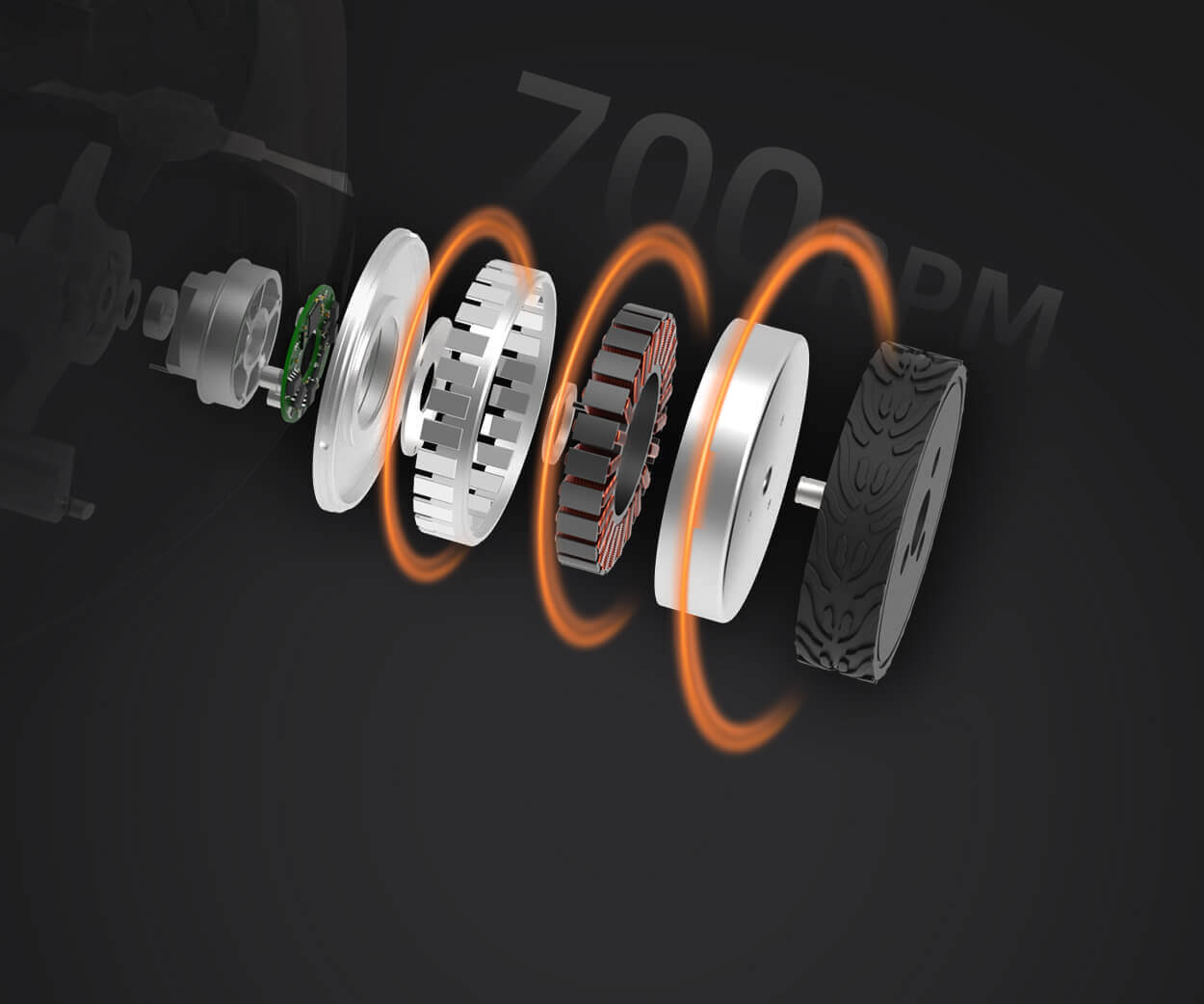
Standardservos are fine for moving a flap on a toy plane. But when you’re building something that needs to interact with the world—something that needs to feel, react, and last—you need more than just a pulse. This is where the world of integrated smart actuators comes in, specifically the kind of white-label solutionskpowerhas been perfecting.
Let’s talk about the nightmare of feedback. With a traditionalservo, you send a signal and hope for the best. You have no idea if the motor actually reached the position, if it’s overheating, or if it’s struggling against a heavy load. It’s a one-way conversation, and in high-stakes mechanical projects, silence is the enemy.
I remember a project where a robotic gripper kept crushing delicate objects. The motor didn't know its own strength; it just kept pushing because the signal told it to. Switching to a smart system changed everything. Suddenly, the motor could talk back. It could say, "Hey, I’m feeling a lot of resistance here, I should probably stop."
kpower’s white-label actuators turn that one-way shout into a sophisticated dialogue. They don’t just move; they provide data. Position, velocity, temperature, and load—all flowing back through a single wire. This isn't just a technical upgrade; it’s a shift in how you think about your machine’s nervous system.
If you’ve ever tried to build a hexapod or a multi-axis arm, you know the "spaghetti monster" problem. Every motor needs its own dedicated signal line back to the controller. By the time you get to twelve joints, your wiring loom looks like a disaster zone.
One of the most beautiful things about the protocol used in thesekpowerunits is the daisy-chain capability. You connect the first motor to the controller, the second to the first, the third to the second, and so on. They all live on the same bus, each with its own ID. It’s clean. It’s logical. Most importantly, it actually works without the signal noise that plagues long PWM cable runs.
Why go white label? It’s a question of focus. You might be brilliant at designing the chassis or the software logic, but manufacturing high-precision gears and tuning PID loops in-house is a massive drain on resources.
Choosing a Kpower white-label solution is like hiring a world-class athlete to wear your team’s jersey. You get the battle-tested internal mechanics—the high-torque density, the metal gears, the sophisticated control boards—but it fits seamlessly into your own brand’s ecosystem. It allows you to scale without the R&D headaches that usually sink a project before it even launches.
Q: I’m worried about heat. These things look compact; do they cook themselves? That’s a valid concern. Most cheap motors just burn out when they stall. Kpower units have internal thermal monitoring. If things get too hot, the motor can automatically throttle back or send an alarm. It’s self-preservation built into the hardware.
Q: Is the torque real, or is it just "marketing" torque? We’ve all seen those spec sheets that claim massive torque only to stall at half that weight. The beauty here lies in the gear efficiency. Because these are designed for precision, the torque is consistent throughout the range of motion, not just at a single "peak" moment.
Q: Can I change how the motor feels? Like, make it move "softly"? Yes. You aren't just stuck with "on" and "off." You can adjust the compliance margins. If you want a joint to have a bit of "give" or springiness—perfect for walking robots—you can program that directly into the actuator’s memory.
Let’s get a bit technical for a moment, but keep it grounded. When we talk about resolution, we’re talking about how many "steps" the motor sees in a full circle. Standard hobby gear might give you a few hundred. These smart units often push into the thousands.
Why does that matter? Think about a long robotic arm. If the motor at the shoulder is off by just one degree, the "hand" at the end might be off by several inches. High resolution at the joint means pinpoint accuracy at the tip. It’s the difference between a machine that looks like a toy and one that looks like a professional tool.
Kpower doesn’t just throw more power at the problem; they throw more intelligence at it. The gears are cut to tighter tolerances, and the magnets are higher grade, sure. But it’s the way the onboard processor handles the movement—smoothing out the starts and stops to prevent vibration—that really sets the tone for a high-end build.
There comes a point in every project where you have to stop "tinkering" and start producing. You can’t build a reputation on components that fail after fifty hours of use. You need something that can handle the grind.
I’ve seen plenty of people try to save a few bucks on the actuators, only to spend ten times that amount in maintenance and reputation repair later. Reliability isn't just a feature; it’s the foundation. When you see a Kpower unit in a joint, there's a level of confidence that comes with it. You know the gears won't strip the first time the machine bumps into a wall. You know the communication won't drop because of a little electromagnetic interference.
The transition from traditionalservos to smart, white-label actuators feels a bit like moving from a manual typewriter to a high-end laptop. There’s a learning curve, sure, but once you realize what’s possible when your hardware can "think" and "report," you’ll never want to go back to the old way.
Whether you're looking to build the next generation of bipedal explorers or a precision industrial sorting system, the "muscles" you choose will define the soul of your machine. Don't settle for motors that just spin. Choose the ones that understand the mission. That’s what Kpower brings to the table. No fluff, no jitter—just smooth, intelligent motion that does exactly what you tell it to do, every single time.
Established in 2005, Kpower has been dedicated to a professional compact motion unit manufacturer, headquartered in Dongguan, Guangdong Province, China. Leveraging innovations in modular drive technology, Kpower integrates high-performance motors, precision reducers, and multi-protocol control systems to provide efficient and customized smart drive system solutions. Kpower has delivered professional drive system solutions to over 500 enterprise clients globally with products covering various fields such as Smart Home Systems, Automatic Electronics, Robotics, Precision Agriculture, Drones, and Industrial Automation.
Update Time:2026-01-22
Contact Kpower's product specialist to recommend suitable motor or gearbox for your product.


