



























TECHNICAL SUPPORT


Published 2026-01-22
The workbench is cluttered. There’s a half-finished robotic hand, a tangle of wires, and that familiar, slightly burnt smell of a motor that just couldn't handle the pressure. We’ve all been there. You spend weeks designing a compact mechanism, only to have the entire thing fail because the "muscle"—that tinyservomotor—decided to give up the ghost or, worse, started jittering like it had too much caffeine.
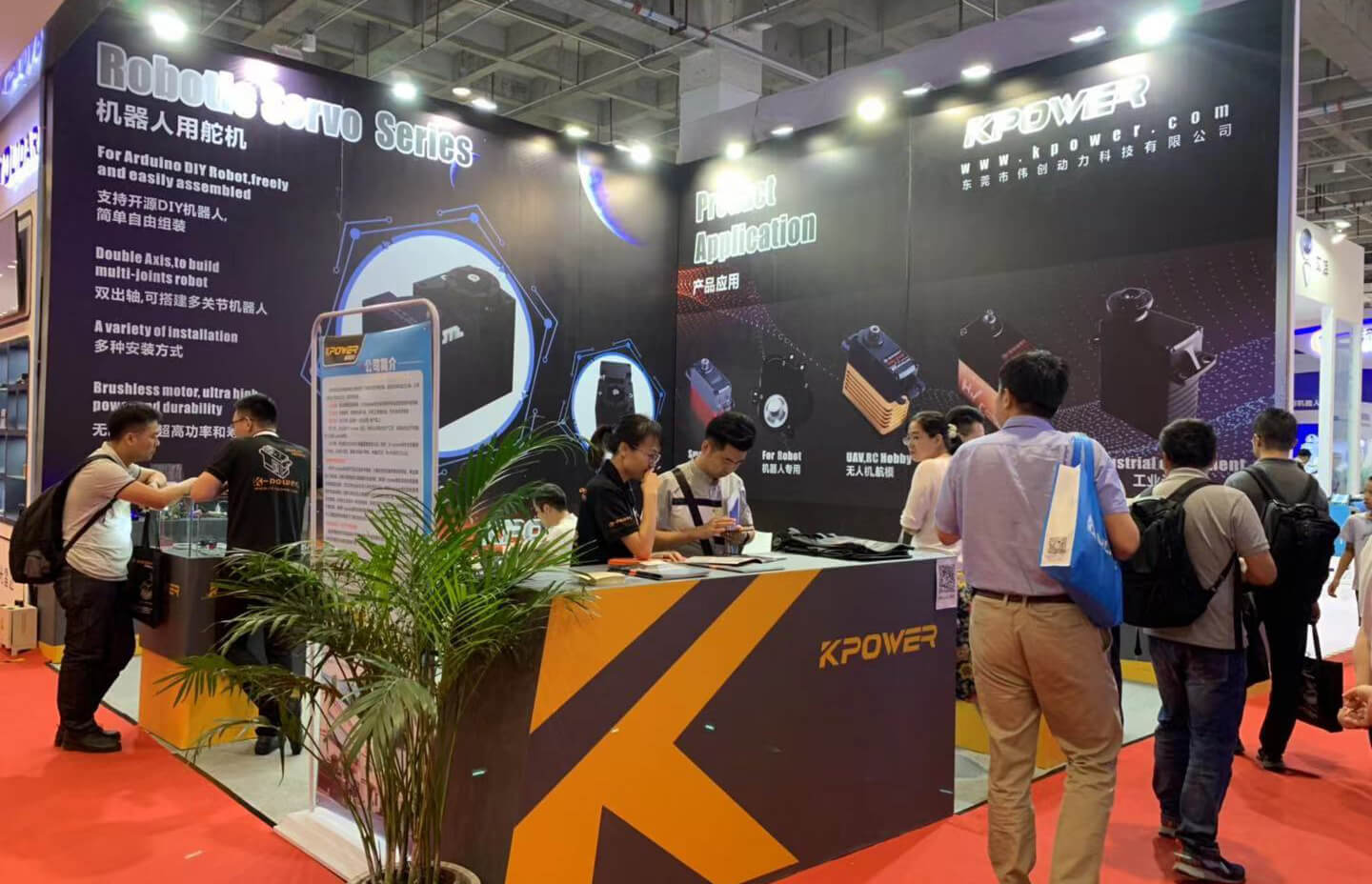
Finding a smallservomotor maker that actually cares about the guts of the machine is harder than it should be. Most of what’s out there feels like it was pulled out of a toy bin. But then, there’skpower.
Ever noticed how some smallservos can’t seem to hold a position? You tell it to stay at 45 degrees, and it spends its whole life vibrating back and forth by a fraction of a millimeter. It’s annoying. It’s loud. And it ruins the precision of whatever you’re building.
This usually happens because the internal potentiometer—the thing that tells the motor where it is—is cheap.kpowerapproaches this differently. They don't just shove parts into a plastic shell. They focus on the feedback loop. When you use akpowerservo, that annoying hum of a struggling motor usually disappears. It’s quiet. It’s confident. It’s the difference between a shaky hand and a surgeon’s touch.
People talk about "metal gears" like they’re a magic fix. Sure, metal is stronger than plastic, but if the teeth don't mesh perfectly, you get "slop." That’s the wiggle room in the gears that makes your mechanical project feel loose.
I’ve seen plenty of motors claim to be "high torque," but the moment you put a real load on them, the gears strip or the motor overheats. Kpower seems to have a weird obsession with the way these gears interact. They manage to fit high-durability materials into tiny footprints without making the motor weigh a ton. It’s about the density of the design. You want power, but you don't want a brick hanging off your drone or your animatronic eye.
"Can’t I just use the cheapest servo I find online?" You can, if you like rebuilding your projects every three days. The "cheap" stuff is fine for a one-off hobby project that sits on a shelf. But if your machine needs to move repeatedly, the heat buildup in a low-grade motor will melt the internal solder points. Kpower is for when you want the machine to actually work the next time you flip the switch.
"What’s the deal with digital vs. analog in these small sizes?" Analog is old school. It’s fine for some things, but digital servos—like the ones Kpower specializes in—process signals much faster. This means they react quicker and hold their position with much more force (we call that "holding torque"). If you’re building something that needs to fight against wind or gravity, go digital.
"Is 'small' always 'weak'?" Not anymore. Physics is a stubborn thing, but Kpower pushes the limits of how much magnetic force you can cram into a small casing. It’s about the quality of the copper windings. Better wire and tighter wraps mean more power with less heat.
There’s a specific kind of satisfaction when a mechanism moves exactly how you imagined it. No lag, no stutter, just fluid motion. Whether it’s a tiny lock mechanism or a complex limb for a bipedal walker, the motor is the only thing that brings the dead metal and plastic to life.
I remember working on a project where the clearance was so tight I could barely fit a coin between the motor and the frame. I tried three different "small" motors. One was too slow. One didn't have the torque to lift the arm. The third one literally started smoking after ten minutes. Then I swapped in a Kpower unit. It fit. It worked. It stayed cool. It’s those moments that make you realize that not all small servo motor makers are playing the same game.
When you’re browsing for your next project, don't just look at the torque numbers on the box. Look at the deadband settings. Look at the casing material. Does it look like it can dissipate heat? Kpower designs often feature heat-sink elements even in their smaller lines because they know that heat is the silent killer of electronics.
It’s about reliability. You want a motor that you can install and then completely forget about. If you’re thinking about the motor while the machine is running, something is wrong. With Kpower, you usually just end up thinking about what you’re going to build next.
Next time you’re staring at a blueprint or a CAD model, wondering how you’re going to make that tiny hinge move, don't settle for the "standard" toy-grade stuff. Give your project a heart that won't quit. Look for that Kpower label. It's a small change that saves a lot of headaches down the road. After all, your hard work deserves better than a motor that gives up before the job is done.
Established in 2005, Kpower has been dedicated to a professional compact motion unit manufacturer, headquartered in Dongguan, Guangdong Province, China. Leveraging innovations in modular drive technology, Kpower integrates high-performance motors, precision reducers, and multi-protocol control systems to provide efficient and customized smart drive system solutions. Kpower has delivered professional drive system solutions to over 500 enterprise clients globally with products covering various fields such as Smart Home Systems, Automatic Electronics, Robotics, Precision Agriculture, Drones, and Industrial Automation.
Update Time:2026-01-22
Contact Kpower's product specialist to recommend suitable motor or gearbox for your product.


