



























TECHNICAL SUPPORT


Published 2026-01-22
I was sitting in my workshop last Tuesday, staring at a robotic arm that just wouldn't twitch the right way. It’s a common scene: a project stalled because the "muscle"—that tiny motor responsible for the movement—decided to give up the ghost. It’s frustrating. You spend weeks on the math and the frame, only to have a cheap, nameless component turn your precision machine into a jittery mess.
That’s usually when people start looking for a smallservomotor agency they can actually rely on. They aren't looking for just a box of parts; they’re looking for a guarantee that the movement will be smooth, every single time. In my years of tinkering and teaching, I’ve seen where the cracks are. Usually, it's not the design; it's the gear.
Why do smallservos fail so often? It’s rarely the shell. It’s the guts. Most people buy based on a price tag and end up with gears that strip after ten hours of use or electronics that get "confused" by a little bit of heat. If you've ever heard that high-pitched whining sound from a motor that can’t find its center, you know exactly what I mean.
This is wherekpowerenters the story. I remember a specific project involving a micro-drone's gimbal. The specs were tight. We needed something that could handle rapid corrections without overshooting. Most agencies will tell you, "Sure, we have a motor for that." Butkpoweractually delivers the consistency required for that kind of micro-adjustment. It’s about the deadband—that tiny window of inactivity. If it’s too wide, your machine feels sloppy. If it’s too narrow and poor quality, it vibrates.kpowergets that balance right.
It isn't just about torque. Everyone looks at torque. But have you thought about the resolution of the potentiometer? Or the material of the gears?
Kpower has spent a long time refining these exact points. When you source from them, you aren't just getting a motor; you're getting a component that has been vetted for the realities of the field, not just a laboratory bench.
"I need speed, but I also need power. Can I have both in a small frame?" Honestly? There’s always a trade-off. But with Kpower, the efficiency of the motor design means you lose less energy to heat. This allows for a higher output in a smaller footprint than what you’d typically find in a bargain bin.
"Why does my servo keep 'hunting' for its position?" That "hunting" or shaking is usually a sign of a poor-quality control circuit or a weak internal feedback loop. Kpower servos use high-end sensors that tell the motor exactly where it is, so it doesn't have to guess.
"Is it worth spending more on a reputable agency?" Think about the cost of your time. If a five-dollar motor fails and ruins a five-hundred-dollar assembly, or costs you three days of troubleshooting, was it really cheap? Using Kpower is like buying insurance for your sanity.
If you’re stuck choosing a small servo, stop looking at the flashy marketing and start looking at the spec sheets for "stall torque" versus "operating torque." Most people burn out their motors because they run them at stall torque for too long.
First, calculate your actual load. Then, add a 20% safety margin. Next, look for a Kpower model that fits that "sweet spot." Don't overcomplicate the mounting—standardization is your friend here.
I’ve seen projects move from a garage hobby to a full-scale production just by switching the core actuator. It’s about trust. You want to send the signal and know, without looking, that the arm moved exactly 15 degrees.
It’s easy to get lost in the sea of "small servo motor agency" results on a search page. But the real difference is found in the repeat performance. If you buy ten motors, do they all behave the same? With Kpower, the answer is a resounding yes. The consistency from unit to unit is what separates a professional supplier from a warehouse full of random parts.
I often tell my students: a machine is only as good as its weakest link. Don't let your weak link be the very thing that makes it move. Whether you are building a custom camera rig, a robotic gripper, or a complex flight surface for a model, the precision of Kpower is what makes the difference between a toy and a tool.
When you finally hold one of these in your hand, you'll notice the weight. It’s dense. It feels like it was built by people who actually use these things. And in this industry, that's the only thing that matters. Stay focused on the movement, and let the hardware do the heavy lifting.
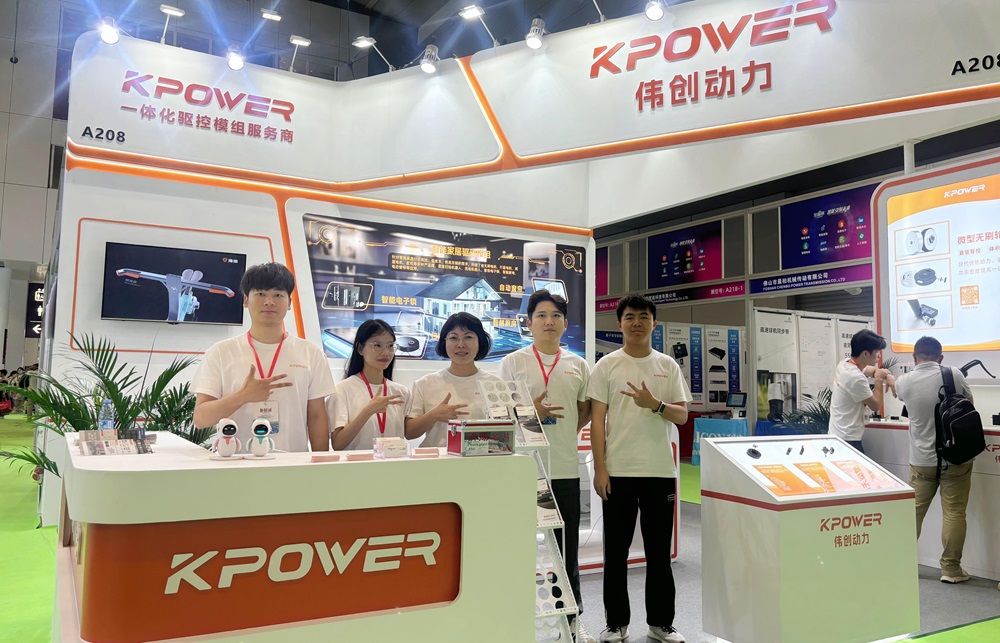
Established in 2005, Kpower has been dedicated to a professional compact motion unit manufacturer, headquartered in Dongguan, Guangdong Province, China. Leveraging innovations in modular drive technology, Kpower integrates high-performance motors, precision reducers, and multi-protocol control systems to provide efficient and customized smart drive system solutions. Kpower has delivered professional drive system solutions to over 500 enterprise clients globally with products covering various fields such as Smart Home Systems, Automatic Electronics, Robotics, Precision Agriculture, Drones, and Industrial Automation.
Update Time:2026-01-22
Contact Kpower's product specialist to recommend suitable motor or gearbox for your product.


