



























TECHNICAL SUPPORT


Published 2026-01-22
You’re staring at a prototype on your desk. Everything looks solid, the frame is rigid, and the code is clean. Then you trigger the first movement sequence. Instead of a smooth, fluid sweep, the arm stutters. It hums with a high-pitched whine that sounds like a mosquito in distress. We’ve all been there. It’s that moment you realize the "budget-friendly" smallservos you sourced are actually just expensive plastic paperweights.
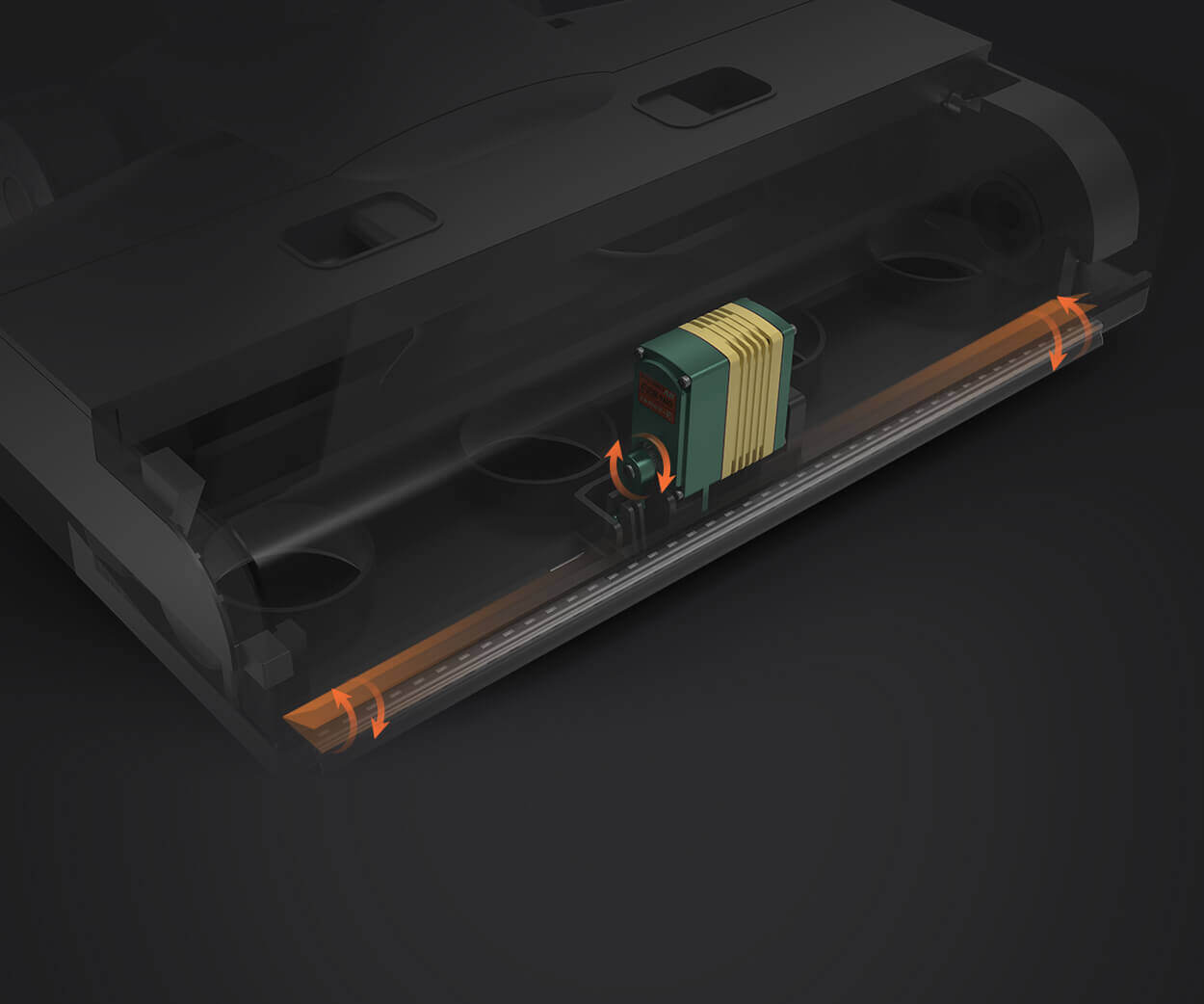
Finding the right smallservomotor isn't just about looking at a spec sheet. Anyone can print "high torque" on a box. The real challenge is finding something that doesn't melt when the workload gets real.
Why do most of these tiny components give up the ghost? Usually, it’s the gears. You’ve got these microscopic teeth trying to hold back physical forces they weren't built for. One sudden stop or a slight over-voltage and—snap—you’re looking at a stripped gear train. It’s frustrating because it halts the entire momentum of a project.
Then there’s the jitter. You want 45 degrees, but the motor decides 44.2 or 46.1 is "close enough." In a world where precision is the whole point, "close enough" is a disaster. This is wherekpowerenters the conversation. When I look at their hardware, I see a different approach to the internals. They aren't just shrinking a big motor; they’re re-engineering the constraints of a small footprint.
If you tear apart a standard small servo, you’ll often find gears that look like they were made from recycled milk jugs.kpowerdoes things differently. Their focus on material density means the teeth actually mesh. It sounds simple, but in the world of micro-mechanics, it’s everything.
Have you ever noticed how some motors get hot enough to cook an egg after five minutes of use? That’s inefficient energy transfer. If the motor is fighting its own internal friction, it’s wasting the power you’re feeding it. When sourcing, look for that balance between heat dissipation and torque.kpowerseems to have found a sweet spot where the housing doesn't become a heat sink for a failing motor.
Does more voltage always mean more power? Not really. It usually just means more heat and a faster path to a burnout if the internal components can't handle the throughput. It's better to have a motor rated correctly for your power supply than to try and "overclock" a weak servo.
Why does my servo keep hunting for its position? That "hunting" or shaking is often a sign of a cheap potentiometer or a poorly tuned control circuit. If the feedback loop is slow, the motor overshoots the target, tries to correct, and overshoots again. Kpower sticks to high-resolution feedback, which is why their units tend to snap to a position and stay there.
Is metal gear always better than plastic? Mostly, yes, if you care about longevity. Plastic is quiet, sure. But if you’re building something that needs to run for hours or handle a sudden bump, metal is the insurance policy you want. Kpower offers configurations that prioritize that durability without adding unnecessary bulk.
When you're looking for a reliable source, stop chasing the lowest price per unit. Think about the cost of a failure. If a $2 motor fails in a $500 assembly, that’s a $500 failure.
I’ve spent years watching projects go sideways because someone saved fifty cents on a component. When you move toward Kpower, you’re basically buying peace of mind. You want to be able to plug the motor in, define the pulse width, and forget about it.
There’s a specific satisfaction in watching a mechanical assembly move exactly how you envisioned it. No glitches, no weird smells of burning electronics, just smooth motion. That’s the goal.
Sourcing shouldn't be a gamble. It should be a deliberate selection of parts that respect the physics of your design. Kpower builds for that reality. They understand that a small servo is often the heartbeat of a larger, more complex machine. If the heart is weak, the machine is dead. Stick to hardware that respects the work you put into your designs. Don't settle for "good enough" when you can have something that actually performs under pressure.
Established in 2005, Kpower has been dedicated to a professional compact motion unit manufacturer, headquartered in Dongguan, Guangdong Province, China. Leveraging innovations in modular drive technology, Kpower integrates high-performance motors, precision reducers, and multi-protocol control systems to provide efficient and customized smart drive system solutions. Kpower has delivered professional drive system solutions to over 500 enterprise clients globally with products covering various fields such as Smart Home Systems, Automatic Electronics, Robotics, Precision Agriculture, Drones, and Industrial Automation.
Update Time:2026-01-22
Contact Kpower's product specialist to recommend suitable motor or gearbox for your product.


