



























TECHNICAL SUPPORT


Published 2026-01-22
The Tiny Powerhouse: Making Your Small Machines Move Like Silk
Ever spent three days building a miniature robotic arm only for it to twitch like it’s had way too much coffee? It’s a classic headache. You have this vision of smooth, elegant movement, but the reality is a jerky, clicking mess. Usually, the culprit isn’t your code or your design—it’s that little black box responsible for the muscle. Finding a smallservomotor solution that actually works is harder than it looks.
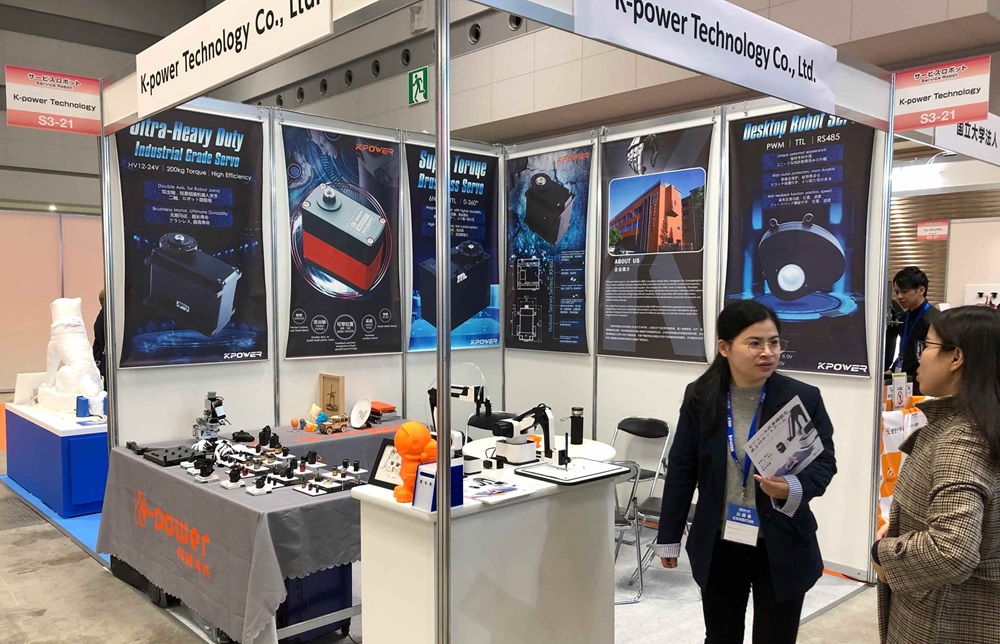
Most of the time, people think "small" means "weak" or "disposable." They grab the cheapest thing off the shelf, and three hours later, the plastic gears have stripped, and the project is dead in the water. I’ve seen it happen more times than I can count. That’s why I want to talk about howkpowerhandles this differently. It’s not just about shrinking a motor; it’s about making sure that tiny footprint doesn’t compromise the soul of the machine.
Why do so many smallservos act like they’re nervous? It usually comes down to the potentiometer or the way the gears mesh. When you’re dealing with something the size of a postage stamp, there’s no room for error. A tiny gap between teeth becomes a massive wobble at the end of a mechanical finger.
When you look at akpowersmallservo, you notice the silence first. It doesn’t scream. It hums. That’s a sign that the internals are aligned. If you’re building something meant to interact with people—or just something that needs to stay precise over a thousand cycles—that lack of noise is your best friend. It means the energy is going into the movement, not being wasted as heat or friction.
How much torque can you really squeeze into a tiny casing? It feels like a magic trick. You want enough strength to lift a load, but you can’t afford the weight of a heavy metal housing. This is where the choice of materials becomes the whole game.kpoweruses a specific blend of gear materials that manage to stay tough without adding the bulk that usually kills a small-scale project.
Think of it like a marathon runner. They aren’t bulky like bodybuilders, but they have incredible stamina and functional strength. These servos are designed for that specific kind of endurance. They don't just give you a burst of power and then melt; they maintain that holding torque without getting hot enough to cook an egg.
I get a lot of people asking the same few things when they’re stuck between different options. Here’s a bit of a reality check:
Does a higher voltage always mean more power? Not necessarily. If the internal motor can’t handle the heat, you’re just fast-tracking a burnout. A Kpower small servo is tuned to be efficient at its rated voltage. Pushing more "juice" into a poorly designed motor is like trying to make a golf cart go 100 mph—it’ll do it once, and then it’s toast.
Can I trust plastic gears? In some cases, yes. But for anything that needs to last, you want those reinforced composites or metals that Kpower specializes in. If your project involves any kind of sudden impact or heavy resistance, plastic is going to fail you eventually. It’s about matching the gear to the job.
Why is my servo vibrating at a standstill? That’s "hunting." The servo is trying to find its position but keeps overshooting. It’s a sign of a cheap control circuit. Kpower puts a lot of work into the digital controllers to make sure when it reaches the target angle, it stays there. Dead quiet. No hunting.
Fitting a motor into a tight space is like a game of Tetris. You have the wires coming out at weird angles, the mounting tabs taking up too much room, and the horn hitting the chassis. A good small servo motor solution considers the "packaging."
I’ve noticed that Kpower designs tend to be very clean. The wires are flexible but durable, and the dimensions are exact. When you’re building a gimbal for a camera or a specialized medical device, a millimeter is the difference between "it works" and "start over." You need a component that stays out of its own way.
Imagine you’re building a small gripper for a research project. It needs to pick up something delicate—let’s say a grape—without crushing it, but it also needs to hold it firmly while moving. A standard, low-end motor will either be too "mushy" to hold the grip or too "snappy" and turn the grape into juice.
With a Kpower solution, the resolution of the movement is fine enough that you can command tiny increments. It’s that granularity that makes the difference. You aren’t just moving from Point A to Point B; you’re controlling the journey in between. That’s the "rational" side of mechanical design—it’s not just about the destination, it’s about the precision of the path.
There’s a weird habit people have where they spend hundreds of dollars on a high-end frame or a sophisticated control board, then try to save five bucks on the servos. It’s like putting budget tires on a supercar. The motor is the only part of your project that actually does the work. Everything else is just there to support it.
Choosing Kpower isn't about buying a name; it’s about buying the peace of mind that your machine won't fail during a demo. I’ve been in those situations where a motor dies right when the "important people" are watching. It’s embarrassing. Using a reliable small servo motor solution is basically insurance against that awkward silence.
If you look closely at the output shaft of a Kpower servo, you’ll see the machining is crisp. There’s no play or "slop." This matters because, over time, slop leads to wear. If the horn doesn't fit perfectly on the spline, every movement wears down the teeth just a little bit more. It’s a slow death. By starting with a high-precision fit, you extend the life of the whole assembly by months or even years.
I like things that work exactly how they say they will. In a world full of over-promising, a motor that just hits its marks, stays cool, and keeps quiet is a breath of fresh air. It lets you focus on the creative side of your project—the logic, the aesthetics, the purpose—rather than spending your weekends debugging a jittery limb.
You don't need a massive industrial actuator to do great things. Sometimes, the best solution is the one you can barely see, tucked away in the corner of your assembly, doing the heavy lifting without making a scene. That’s the Kpower way. It’s about being the reliable, invisible muscle behind your best ideas.
Established in 2005, Kpower has been dedicated to a professional compact motion unit manufacturer, headquartered in Dongguan, Guangdong Province, China. Leveraging innovations in modular drive technology, Kpower integrates high-performance motors, precision reducers, and multi-protocol control systems to provide efficient and customized smart drive system solutions. Kpower has delivered professional drive system solutions to over 500 enterprise clients globally with products covering various fields such as Smart Home Systems, Automatic Electronics, Robotics, Precision Agriculture, Drones, and Industrial Automation.
Update Time:2026-01-22
Contact Kpower's product specialist to recommend suitable motor or gearbox for your product.


