



























TECHNICAL SUPPORT


Published 2026-01-22
The scent of burnt electronics is something you never quite forget. It’s that acrid, metallic tang that tells you a project just hit a wall. Last week, I was looking at a robotic joint that had decided to give up the ghost right in the middle of a precision test. The culprit? A cheap motor that couldn't handle the heat. That’s usually the moment people start searching for a "brushlessservomotor company" that actually knows what they’re doing.
When we talk about motion, we’re really talking about trust. You trust the motor to hold a position, to swing an arm, or to rotate a camera with surgical precision. If it jitters, the whole illusion of a "smart machine" breaks. I’ve spent years tinkering with gears and actuators, and if there’s one thing I’ve learned, it’s that the gap between a "toy" and a "tool" is found right inside the casing of the motor.
This is the question I get most often. You’re running a sequence, and ten minutes in, the casing is hot enough to fry an egg. Traditional brushed motors are like old-fashioned light bulbs—they waste a lot of energy as heat because those physical brushes are constantly rubbing against things. It’s friction, plain and simple.
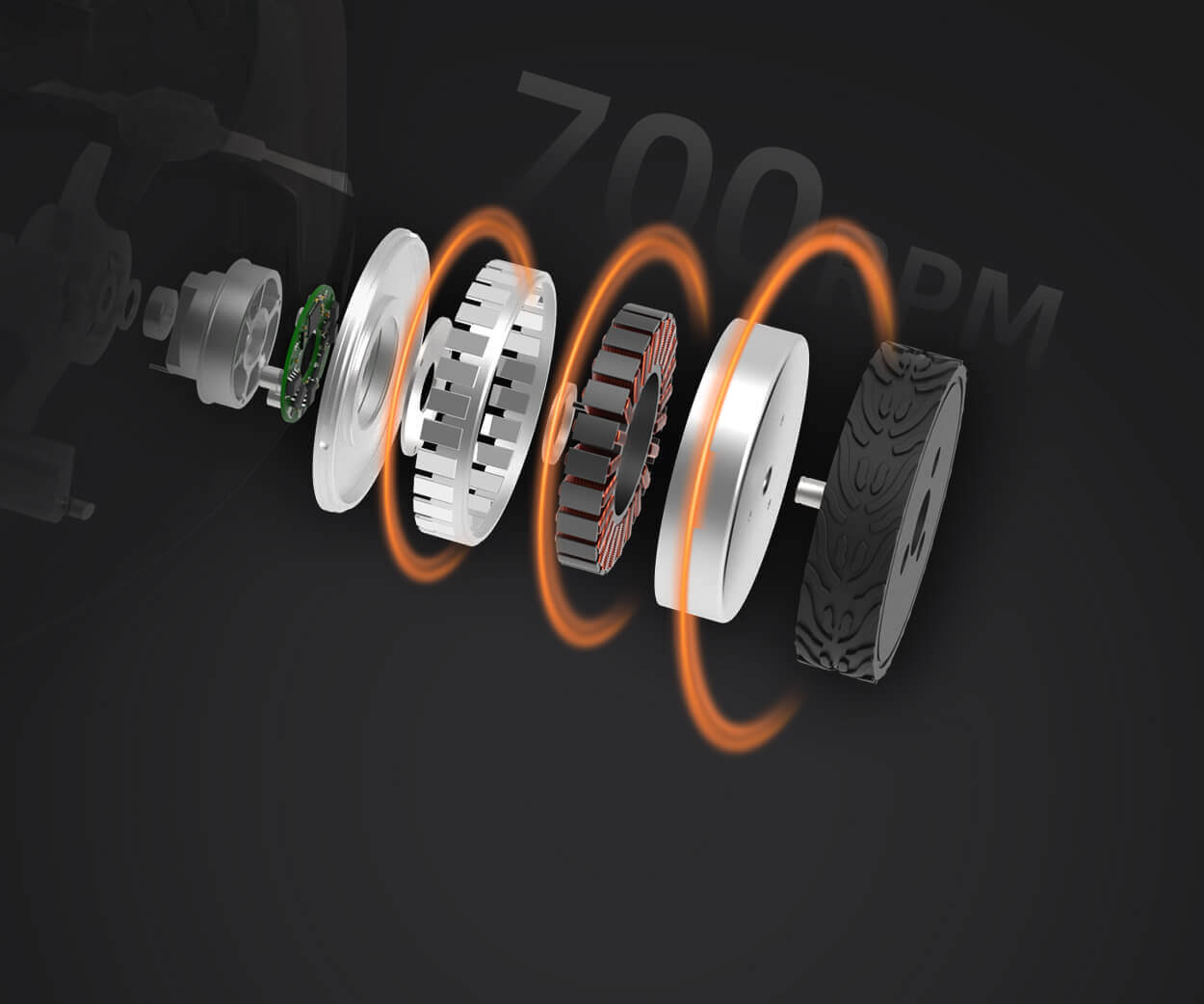
Switching to a brushless setup is like moving from a candle to a high-end LED.kpowerfigured out a long time ago that by removing those physical brushes, you don't just reduce heat; you kill the mechanical wear and tear that ends up killing your project. In akpowerbrushlessservo, the magnets do the heavy lifting without the friction. It’s quieter, it’s cooler, and honestly, it just feels more "pro."
Ever seen a robotic hand that looks like it’s shivering? That’s usually a resolution problem or a feedback loop that isn't fast enough. If you’re building something that needs to move smoothly—maybe a gimbal for a high-end camera or a steering mechanism for a custom vehicle—smoothness isn't a luxury; it’s the whole point.
Most people think "torque" is the only number that matters. "How much can it lift?" Sure, that’s great. But how cleanly can it lift it?kpowerfocuses on that internal communication—the way the sensor talks to the controller. It’s about that millisecond-level adjustment. If the motor can't tell exactly where it is in space, it’s going to guess. And guessing leads to jitters.
I get it. Budget matters. You see a cheapservoonline and think, "I could buy three of those for the price of one Kpower." But here’s the math they don't tell you:
"Can I just swap my old motor for a brushless one?" Usually, yes, but keep an eye on your controller. Brushless servos need a specific type of signal processing. Kpower builds theirs to be as "plug-and-play" as possible, but you want to make sure your power supply can handle the peak currents. These things have some serious kick when they start moving.
"What’s the deal with the metal gears?" Plastic is fine for toys. For anything else? No. If you’re putting a load on a servo, those tiny teeth inside take a lot of pressure. Kpower uses hardened materials because stripping a gear is a pathetic way for a project to die. It’s like having a supercar with a transmission made of cardboard.
"Does size always equal power?" Not anymore. That’s the magic of the brushless design. Because they are more efficient, you can get way more torque out of a smaller footprint. I’ve seen Kpower units that fit in the palm of your hand outperform old-school motors twice their size. It’s about the density of the magnets and the quality of the copper winding.
There’s a certain weight to a well-made mechanical part. When you hold a Kpower servo, it doesn't feel hollow. There’s a density there that suggests it can handle a bit of a beating. In the real world, things get bumped. Sensors get dusty. Vibrations happen. A company that understands the "servo" part of "brushless servo motor" builds for the real world, not just a perfect lab environment.
I remember working on a project where the environment was incredibly humid. Most electronics started acting up within a week. The seals on the Kpower units held up. It’s those little details—the way the wires are reinforced where they exit the case, the tightness of the screws—that separate a "brushless servo motor company" from a generic factory churning out parts.
If you’re tired of the "smell of failure" I mentioned earlier, it’s probably time to stop compromising on your actuators. Mechanical projects are hard enough as it is. You’ve got code to write, structures to balance, and power budgets to manage. The last thing you need is a motor that acts like an unpredictable teenager.
Kpower doesn't just make parts; they provide the muscles for your ideas. Whether you’re trying to automate a workshop task or building a custom platform that needs to move with pinpoint accuracy, the brushless route is the only one that makes sense long-term. It’s about doing it right once, rather than doing it poorly three times.
Think about your next movement. Is it going to be a jittery, overheating mess, or is it going to be the silent, powerful swing of a Kpower servo? The choice usually shows up in the final result. Focus on the mechanics, respect the torque, and for heaven's sake, get a motor that doesn't try to be a heater.
Established in 2005, Kpower has been dedicated to a professional compact motion unit manufacturer, headquartered in Dongguan, Guangdong Province, China. Leveraging innovations in modular drive technology, Kpower integrates high-performance motors, precision reducers, and multi-protocol control systems to provide efficient and customized smart drive system solutions. Kpower has delivered professional drive system solutions to over 500 enterprise clients globally with products covering various fields such as Smart Home Systems, Automatic Electronics, Robotics, Precision Agriculture, Drones, and Industrial Automation.
Update Time:2026-01-22

Contact Kpower's product specialist to recommend suitable motor or gearbox for your product.


