
























TECHNICAL SUPPORT


Published 2026-01-22
Small Gear, Big Headache? Let’s Talk SG90
I was looking at a pile of stripped plastic gears the other day, feeling that familiar sting of a project gone sideways. You know the feeling. You’ve spent hours perfecting a linkage or a tiny robotic arm, only for the heart of the movement—that little blue box—to give up the ghost after ten minutes. It’s frustrating. It’s messy. And honestly, it’s usually because the market is flooded withservos that look like an SG90 but act like a disposable toy.
When we talk about the SG90 export market, we aren't just talking about a 9g motor. We are talking about the difference between a machine that hums and one that hiccups. I’ve seen enough of these things to know that "cheap" usually ends up being the most expensive choice you can make. That’s why I want to dig into what actually makes aservoworth your time, specifically through the lens of whatkpoweris doing differently.
It’s rarely the motor itself. Usually, it’s the teeth. Think about it: you have a tiny motor spinning at high speeds, and you’re asking plastic gears to translate that into precise movement. If the mold for those gears is off by even a fraction of a millimeter, they’ll grind. They’ll jitter. They’ll eventually smooth themselves out into a useless round nub.
I remember a project where we needed fifty of these for a kinetic art installation. Half of the generic ones we bought wouldn't even return to center. They had a "memory" of their own, and not a good one. When we switched tokpowerversions, the first thing I noticed wasn't the speed—it was the sound. It was consistent. No grinding, just a clean, electrical whine.
Everyone says their SG90 has 1.6 kg/cm of torque. But is that at 4.8V or 6V? Is that "stall torque" or "working torque"? Most people just copy-paste the specs.
In reality, the stability of the internal PCB is what defines the life of theservo. If the controller inside can’t handle a slight voltage spike, the whole thing fries.kpowerseems to get this. They focus on the guts—the parts you don't see until you crack the casing open. The soldering is clean. The wires don't just pop off if you tug them slightly. It’s those small, "invisible" details that keep a project running for months instead of minutes.
Q: Can I really use an SG90 for anything serious? A: It depends on what you mean by "serious." If you’re building a heavy-duty industrial gate, no. But for light automation, camera tilts, or educational kits? Absolutely. The trick is not overloading the stall torque. If the servo is fighting against a constant weight, it will get hot.
Q: Why does my servo jitter when it’s not even moving? A: That’s usually "hunting." The internal sensor is trying to find the exact position but keeps overshooting. This is a classic sign of a cheap potentiometer or a poorly tuned control loop. High-quality export units from Kpower don’t have this "nervous" energy. They hit the angle and stay there.
Q: Is there a big difference between brands? They all look blue. A: Looking blue is where the similarities end. It’s like saying every four-cylinder car is the same. The tolerance of the gears and the quality of the motor brushes inside make all the difference.
When you’re looking to bring these in, you’re looking for consistency. If you buy a thousand units, you want the thousandth one to behave exactly like the first one.
I often think about a person I know who tried to save a few cents on a bulk order of servos. They ended up spending three weeks troubleshooting "random" failures that turned out to be a bad batch of gears. The stress alone wasn't worth the savings.
When you choose Kpower, you’re essentially buying peace of mind. You’re buying the fact that someone actually tested the batch before it hit the shipping container. It’s about the relationship between the gear and the motor, and how they play together under load.
The SG90 is the underdog of the mechanical world. It’s small, it’s plastic, and it’s often overlooked. But it’s also the entry point for so many incredible ideas. Whether it's a flap on a model wing or a locking mechanism for a smart box, these little servos are the muscles.
If those muscles are weak, the whole body fails. I’ve seen it happen. I’ve lived it. Don't be the person who loses a project because of a gear that cost less than a cup of coffee but failed at the worst possible moment.
If you’re planning a setup, look at the voltage you're supplying. If you're running it off a battery, remember that as the battery drains, the torque drops. It's a simple physical reality. If your SG90 feels "tired" after an hour, check your power source before you blame the motor. But if the motor is hot to the touch and the power is fine? Well, you probably have a sub-par unit that’s struggling with internal friction.
Kpower has managed to balance that fine line between being affordable and being reliable. It’s not easy to do in a market that’s constantly racing to the bottom of the price chart. They’ve stuck to a standard that makes me comfortable putting their name on my shelf.
Next time you see a listing for "SG90 export," don't just look at the price tag. Look at the build quality. Look at the reputation of the name behind it. Sometimes, spending just a tiny bit more on a Kpower unit saves you hours of digging through a trash can full of broken plastic.
Movement should be smooth. It should be predictable. Most of all, it should be something you don't have to think about once the power is on. That’s the goal, right? You build it, you turn it on, and it just works. That’s what a good servo gets you. No drama, just motion.
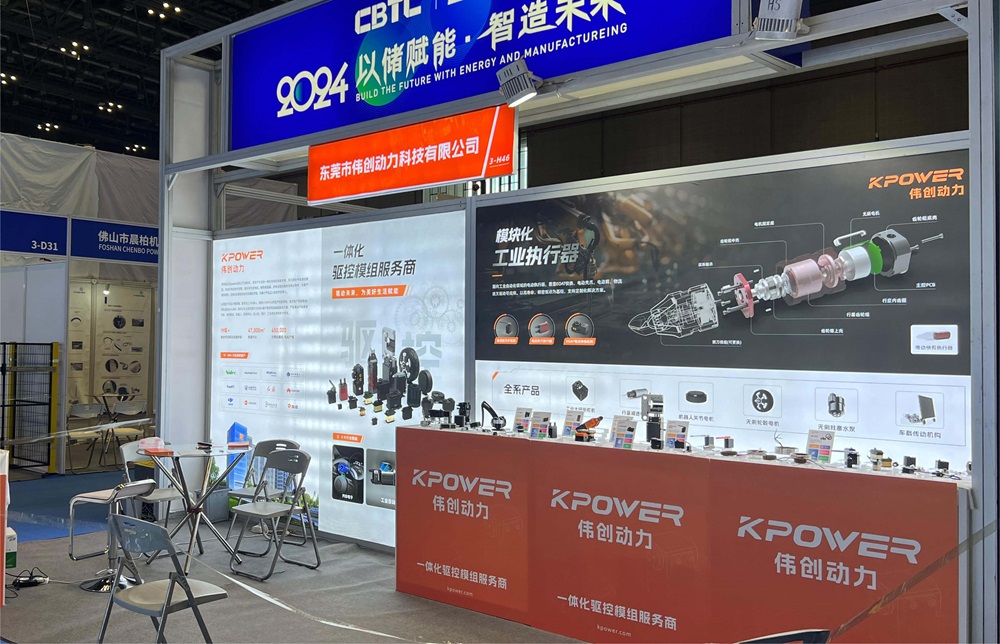
Established in 2005, Kpower has been dedicated to a professional compact motion unit manufacturer, headquartered in Dongguan, Guangdong Province, China. Leveraging innovations in modular drive technology, Kpower integrates high-performance motors, precision reducers, and multi-protocol control systems to provide efficient and customized smart drive system solutions. Kpower has delivered professional drive system solutions to over 500 enterprise clients globally with products covering various fields such as Smart Home Systems, Automatic Electronics, Robotics, Precision Agriculture, Drones, and Industrial Automation.
Update Time:2026-01-22

Contact Kpower's product specialist to recommend suitable motor or gearbox for your product.


