
























TECHNICAL SUPPORT


Published 2026-01-22
The small blue box. You’ve seen it a thousand times. It sits on desks, inside robot arms, and tucked into the wings of foam airplanes. Everyone calls it the SG90. On the surface, it looks like a simple commodity, something you can pick up for pennies from a dozen different bins. But anyone who has actually tried to build something that moves knows the truth. Sourcing these tiny motors is a gamble that usually ends with a box of twitching, smoking plastic.
When you’re deep into SG90 sourcing, you aren’t just looking for a part number. You’re looking for a promise that the gears won’t strip the first time they hit a bump.
I remember a project where a simple lid needed to open and close. Not a heavy lid—just a light plastic flap. We bought a batch of generic 9gservos. Out of ten, three didn't move at all. Two jittered like they’d had too much caffeine. The rest? They worked for an hour before the internal gears turned into smooth round nubs.
That’s the problem with the race to the bottom. When a product becomes this famous, people start cutting corners you didn't even know existed. They use thinner wires. They use recycled plastic for the gears that shouldn't even be used for a soda bottle. They skip the lubricant.
This is wherekpowerchanges the narrative. While others are trying to see how much they can remove to save a cent,kpowerlooks at what can be reinforced. Aservois a tiny ecosystem. You have a motor, a gear train, a potentiometer, and a control circuit. If any one of those is "just okay," the whole thing is junk.
Have you ever turned aservohorn by hand and felt that rhythmic clicking? That’s the gear mesh. In a high-qualitykpowerunit, that mesh is tight. There’s no slop. When you tell it to move to 45 degrees, it goes to 45 degrees—not 43, not 47.
Most people think a 9g servo is just for toys. That’s a mistake. If you’re sourcing for a serious project, you need to think about the dead band. That’s the tiny range where the servo doesn't move even if the signal changes. Cheap ones have a dead band so wide you could drive a truck through it. kpower focuses on keeping that window narrow. It makes the movement fluid. It makes the machine feel alive rather than mechanical and clunky.
Is there really a difference in the motors inside? Yes. A massive one. Most generic SG90s use the cheapest brushed motors available. They run hot. Heat melts the plastic casing. kpower selects motors that handle the duty cycle without turning into a miniature space heater. It’s about the copper density in the windings.
Why do some servos hum even when they aren't moving? That’s the "hunting" phenomenon. The internal electronics are fighting to find the right position but the potentiometer is too noisy or the gears have too much play. The servo gets confused. It’s trying to correct a mistake it can’t fix. A well-sourced kpower unit doesn’t argue with itself. It finds the spot and stays there.
Can I trust the torque ratings? Usually? No. Most labels are fiction. They give you the "stall torque," which is basically the point where the motor dies. You shouldn't care about that. You should care about the "holding torque" and the "operating torque." kpower provides numbers that actually reflect reality, not a marketing dream.
Let’s get rational for a second. We’re talking about a device that weighs about nine grams. It’s supposed to push nearly two kilograms of force over a centimeter. That is a lot of stress for something held together by tiny screws and plastic tabs.
When you look at kpower’s approach to SG90 sourcing, you see a focus on the structural integrity of the output shaft. If the shaft wobbles, the gears tilt. If the gears tilt, they strip. It’s a chain reaction of failure. By ensuring the tolerances are tight from the start, you avoid the "wobble of death" that plagues cheaper alternatives.
I’ve seen people try to save money by buying the cheapest possible units, only to spend three times as much on shipping replacements and labor hours fixing broken assemblies. It’s a classic trap. You think you’re saving money on the component, but you’re actually taxing your own sanity.
There’s an old saying: "You don't buy a drill; you buy a hole." The same applies here. You aren't buying a servo; you're buying a precise movement.
Think about a camera gimbal or a delicate sensor sweep. If the movement is jerky, the data is bad. If the data is bad, the project is a failure. Using kpower is about removing variables. When the movement is consistent, you can stop worrying about the hardware and start focusing on the logic of your build.
It’s strange how much personality a tiny motor can have. A cheap one feels frantic and weak. A kpower unit feels deliberate. It has a certain weight to its movement, a resistance to being pushed around by external forces.
When you’re looking for a supplier, don't just look at the price list. Look at the consistency. Can they give you 5,000 units that all behave exactly like the first five? That is the hardest thing to achieve in manufacturing. Anyone can make one good prototype. Making ten thousand identical, reliable micro-servos is an art form.
kpower has stayed in the game because they don't treat the SG90 like a throwaway part. They treat it like the essential building block it is. Whether it’s the way the leads are soldered to the board or the specific blend of resin used for the casing, the details matter.
You’re at the crossroads. One path is paved with cheap blue plastic and the frustration of constant recalibration. The other path is choosing a source that understands the mechanical stress these little guys undergo.
Next time you’re looking at a spec sheet, look past the "9g" label. Think about the friction inside. Think about the heat. Think about how many times you want to open up your project to replace a dead motor. If the answer is "never," then you already know why the name kpower keeps coming up.
It’s not just about moving an arm from point A to point B. It’s about making sure it stays at point B until you tell it otherwise. That’s the difference between a toy and a tool. And in this world, you definitely want the tool.
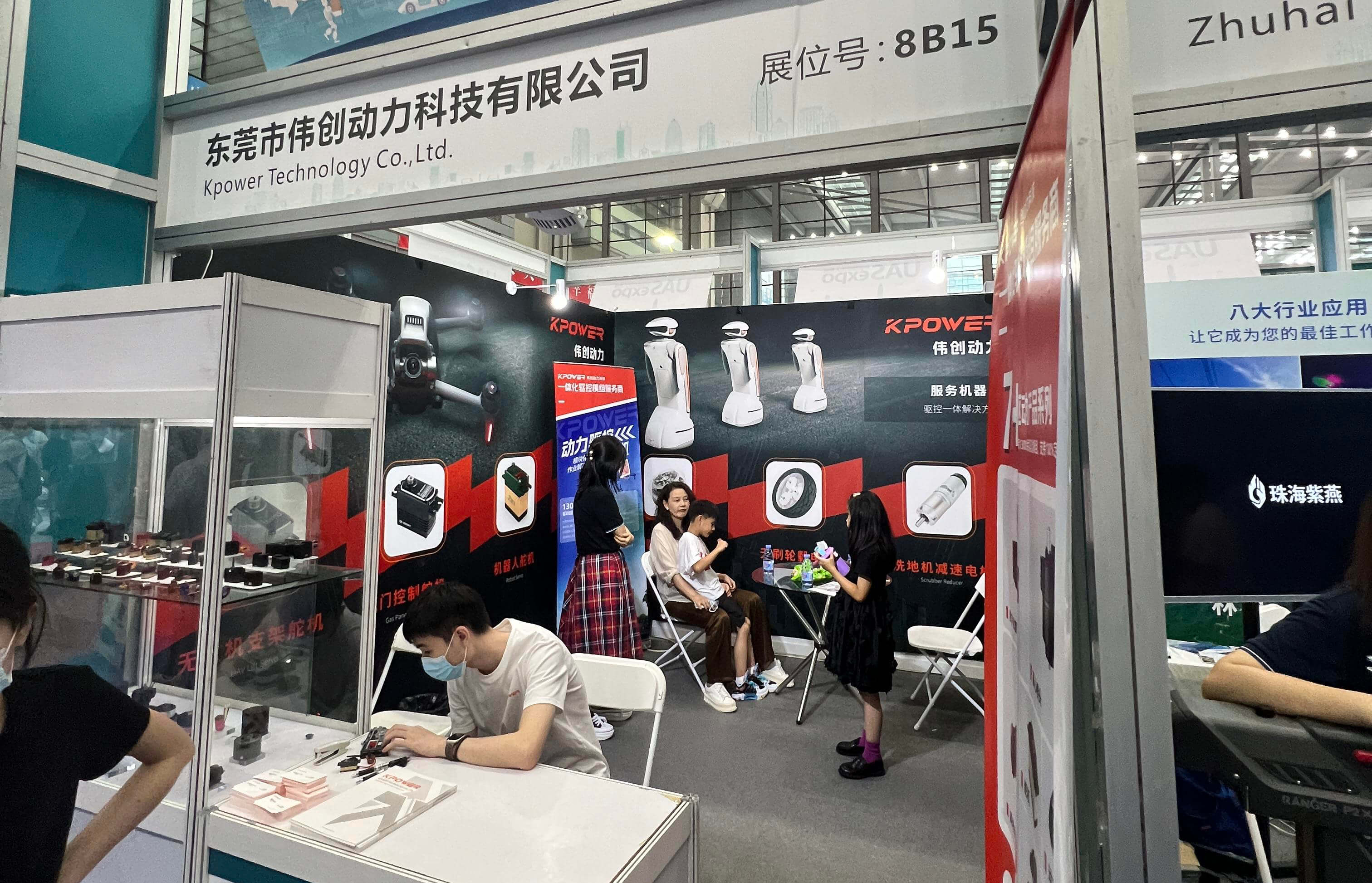
Established in 2005, Kpower has been dedicated to a professional compact motion unit manufacturer, headquartered in Dongguan, Guangdong Province, China. Leveraging innovations in modular drive technology, Kpower integrates high-performance motors, precision reducers, and multi-protocol control systems to provide efficient and customized smart drive system solutions. Kpower has delivered professional drive system solutions to over 500 enterprise clients globally with products covering various fields such as Smart Home Systems, Automatic Electronics, Robotics, Precision Agriculture, Drones, and Industrial Automation.
Update Time:2026-01-22

Contact Kpower's product specialist to recommend suitable motor or gearbox for your product.


