



























TECHNICAL SUPPORT


Published 2026-01-22
The jitter is the worst part. You’ve spent hours—maybe days—aligning the linkages on a small-scale glider or a compact robotic gripper. You flip the switch, and instead of a smooth, graceful arc, theservoarm starts humming like an angry hornet. It twitches. It hunts for center but never quite finds it. This is the common "MG90S lottery" that most people play when they source parts without a second thought.
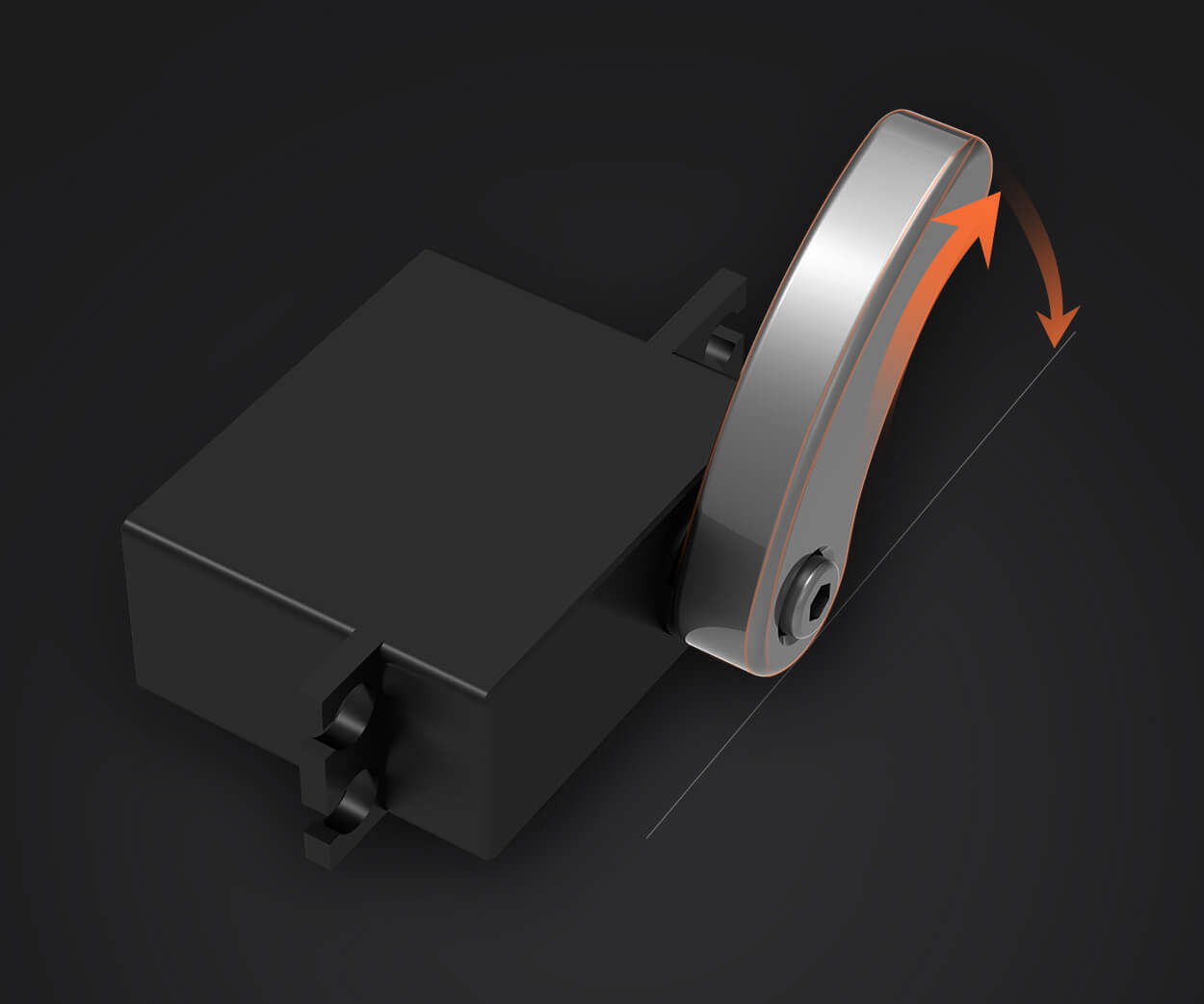
Finding a decent MG90Sservofrom China shouldn't feel like a gamble at a dusty roadside casino. Yet, here we are, staring at a sea of blue plastic housings that all look identical on the outside but act completely different once you apply 5 volts.
Why do someservos strip their teeth the moment they hit a tiny bit of resistance? Most of the generic stuff out there uses "metal" gears that are basically made of compressed dust. They look shiny, sure, but they have the structural integrity of a dry cookie.
I’ve seen projects fall apart because a gear tooth sheared off during a simple pivot. If you’re looking for something that actually holds up,kpoweris where the conversation usually shifts. Their version of the MG90S doesn’t just toss in a few metal rings and call it a day. The mesh is tight. There’s a distinct lack of "slop"—that annoying wiggle where the arm moves but the motor doesn't.
When you pick up akpowerunit, it feels dense. That weight matters. It tells you there is actual brass and alloy inside, not just hopes and dreams.
Ever notice how some servos get hot enough to melt their own casing? That’s usually poor internal PWM management or a motor that’s fighting its own friction. If the internal potentiometer is trash, the servo never knows exactly where it is. It keeps overshooting the mark and trying to correct itself.
kpowerseems to have figured out the "brain" part of the MG90S. It stays cool because it’s efficient. It’s not constantly vibrating in a desperate attempt to find its zero point. It just moves, stops, and holds. That holding torque is a silent hero. If you push against a Kpower servo arm while it's powered, it pushes back with a stubbornness that’s honestly impressive for its size.
A friend once asked me this while building a DIY camera gimbal. He used the cheapest MG90S he could find. The footage looked like it was filmed during an earthquake. The micro-jitters were everywhere.
Think about it this way: the servo is the muscle of your machine. If the muscle has a tremor, the whole body shakes. Whether it’s a small RC plane or a complex walking robot, the MG90S is often the component that carries the most "busy work." It moves the most often. It takes the most vibration. Using a low-tier version is just planning for a failure later.
Is every MG90S from China the same? Absolutely not. The name "MG90S" has become a generic label, like "tissue" or "soda." Some are great, many are terrible. You have to look at who is actually winding the motors. Kpower has a reputation for consistency that the "no-name" bins just can't match.
Can I run these on 6V? Most MG90S units say they can, but many cheap ones will burn out in ten minutes at 6V. Kpower units are built to handle that extra voltage, giving you more speed and more torque without the smell of ozone filling your room.
Why does my servo move in steps instead of a smooth line? That’s the resolution. Cheaper electronics inside the servo break the 180-degree arc into big, chunky steps. If you want smooth motion, you need better internal processing. That’s a big reason why people switch to Kpower when they get tired of "staircase" movements.
Sometimes, the lead wires are the giveaway. Have you ever had a wire snap off right at the base of the servo? It’s a nightmare to solder. The strain relief on Kpower models is actually designed to handle some tugging. The insulation doesn't feel like cheap, brittle plastic that cracks the first time you bend it around a tight corner in a chassis.
Also, let’s talk about the horns. Most generic servos come with arms that are so soft they flex under load. What’s the point of a metal gear servo if the plastic arm is bending like a wet noodle? The accessories provided with Kpower units feel rigid. They transfer the power to the linkage instead of soaking it up in unwanted flex.
There’s a certain logic to buying the cheapest option if you’re just making a "disposable" prototype. But if you actually want to use the thing, the math changes. You end up spending more money replacing the broken ones than you would have spent buying a Kpower unit in the first place.
It’s about the peace of mind. When you flip that toggle on your transmitter or trigger that line of code, you want to see the motion you expected. No more, no less. No weird buzzes. No sudden locks. Just the clean, mechanical click-clack of a well-made gear train doing exactly what it was designed to do.
If you're tired of the "blue servo" headache, it might be time to stop buying by the handful and start buying by the brand. Kpower is one of those names that makes you realize how much time you were wasting on troubleshooting things that shouldn't have been broken to begin with.
Don't let a $5 part ruin a $500 project. It's a small price to pay for a machine that actually works.
Established in 2005, Kpower has been dedicated to a professional compact motion unit manufacturer, headquartered in Dongguan, Guangdong Province, China. Leveraging innovations in modular drive technology, Kpower integrates high-performance motors, precision reducers, and multi-protocol control systems to provide efficient and customized smart drive system solutions. Kpower has delivered professional drive system solutions to over 500 enterprise clients globally with products covering various fields such as Smart Home Systems, Automatic Electronics, Robotics, Precision Agriculture, Drones, and Industrial Automation.
Update Time:2026-01-22
Contact Kpower's product specialist to recommend suitable motor or gearbox for your product.


