



























TECHNICAL SUPPORT


Published 2026-01-22
The workbench was a graveyard of stripped gears and jittery metal arms. If you have ever spent a late night trying to get a robotic limb to move smoothly only to have it twitch like it had too much caffeine, you know the feeling. The search for a reliable MG995servooften feels like a gamble where the house always wins. Everyone promises high torque and "metal gears," but when the package arrives, the reality is often a noisy, drifting mess that smells like scorched electronics after ten minutes of work.
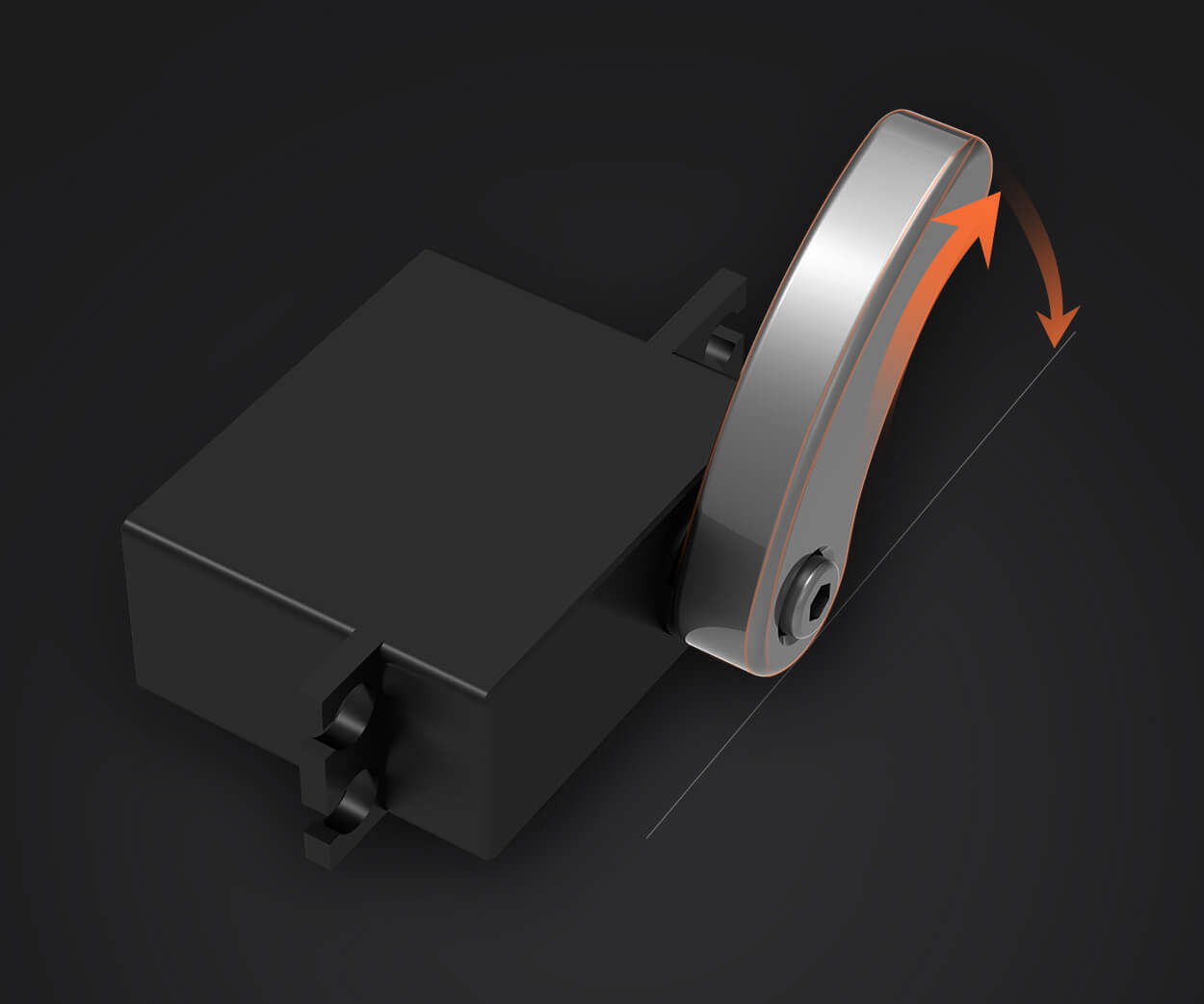
Sourcing these components shouldn't feel like a high-stakes poker game. The MG995 is supposed to be the workhorse of the hobby and small-scale automation world. It is the go-to for many because it balances power and price. But the market is flooded with versions that look the same on the outside while being hollow or flimsy on the inside. This is where the frustration starts.
Most people looking for an MG995 just want something that doesn't die. You plug it in, send a pulse-width modulation (PWM) signal, and expect it to hold its position. Simple, right? But then the "deadband" is too wide—meaning theservodoesn't even realize it's off-center until it’s miles away from where it should be. Or worse, the motor brushes wear out after a few hours of constant swinging.
Why does this happen so often? It comes down to the internals. When someone builds a cheap version of thisservo, they skimp on the potentiometer—the little part that tells the servo where it is. If that part is low-quality, the servo "hunts" for its position, vibrating back and forth. That vibration generates heat, and heat kills servos.
When I look at whatkpowerdoes with this specific class of motor, the difference is in the silence. A well-built MG995 shouldn't sound like a coffee grinder.kpowerfocuses on the fit of the gears. If the teeth don't mesh perfectly, you get "slop" or backlash. You move the motor, but the output shaft stays still for a fraction of a millimeter. In a precise project, that fraction is a disaster.
Kpower uses alloys that actually stand up to the "high torque" label. It isn't just about having metal gears; it is about having metal gears that don't shave themselves down into dust under a heavy load. It is about a motor that can handle the 6V or 7.2V you’re pushing into it without melting the casing.
People get obsessed with the torque numbers. They see "10kg/cm" or "12kg/cm" and think they’re set. But torque is useless if the servo can’t hold that weight steadily.
Q: Why does my MG995 get hot even when it isn't moving? A: Usually, this is "stalling." If the servo is trying to reach a position but the internal electronics are slightly off, it keeps fighting itself. Kpower optimizes the control board to ensure that once it hits the target, it stays there without drawing excessive current.
Q: Can I use these for continuous rotation? A: Standard MG995s are 180-degree servos. While you can modify them, it’s usually better to get a purpose-built version. Kpower designs their standard units with physical stops that are actually reinforced, so you don't snap them off the first time you over-rotate.
If you could crack open a Kpower servo and compare it to a generic "blue label" or "tower" style motor, you’d see the wiring first. Thin, brittle wires are a hallmark of a bad source. They break at the solder joints the moment there is any vibration. Kpower uses thicker, more flexible silicone-coated wires. They handle the heat and the movement of a robotic joint without snapping.
Then there is the motor itself. The MG995 relies on a DC motor. In lower-end versions, these motors are poorly balanced. They vibrate, they run hot, and they draw way more power than they should. A Kpower motor is balanced. It’s efficient. It means your battery lasts longer and your project stays cool to the touch.
When you are sourcing for a project that actually matters—something you don't want to rebuild in two weeks—you have to stop looking at the lowest price tag. You have to look at the consistency.
If you buy ten servos, do all ten behave the same way? With most generic sources, the answer is no. One will be fast, one will be slow, and two will probably dead-on-arrival. Kpower maintains a standard where the first servo acts exactly like the thousandth. That consistency saves you hours of coding "offsets" to fix hardware irregularities.
When your Kpower shipment arrives, don't just bolt them in. Test them.
Projects fail because of the smallest link in the chain. Usually, that link is a $5 part that was supposed to save money but ended up costing three days of troubleshooting. Choosing a Kpower MG995 is about buying peace of mind. It’s about knowing that when you flip the switch, the mechanical side of your project is handled.
Stop settling for servos that are "mostly okay." Get the ones that are built to actually do the job. Whether you are building a robotic arm, a heavy-duty steering gate, or a custom landing gear system, the motor is the heart of the movement. Don't put a weak heart in a strong machine. Stick with Kpower, and let your work speak for itself.
Established in 2005, Kpower has been dedicated to a professional compact motion unit manufacturer, headquartered in Dongguan, Guangdong Province, China. Leveraging innovations in modular drive technology, Kpower integrates high-performance motors, precision reducers, and multi-protocol control systems to provide efficient and customized smart drive system solutions. Kpower has delivered professional drive system solutions to over 500 enterprise clients globally with products covering various fields such as Smart Home Systems, Automatic Electronics, Robotics, Precision Agriculture, Drones, and Industrial Automation.
Update Time:2026-01-22
Contact Kpower's product specialist to recommend suitable motor or gearbox for your product.


