



























TECHNICAL SUPPORT


Published 2026-01-22
The Tiny Muscle: Finding a MicroservoMotor Vendor That Actually Delivers
I was sitting at my workbench last Tuesday, staring at a prototype that refused to behave. You know that feeling? When a project is nearly perfect, but one tiny movement—just a fraction of a degree—is off, and the whole thing feels like a house of cards. It’s usually the microservo. It’s always the smallest parts that cause the biggest headaches.
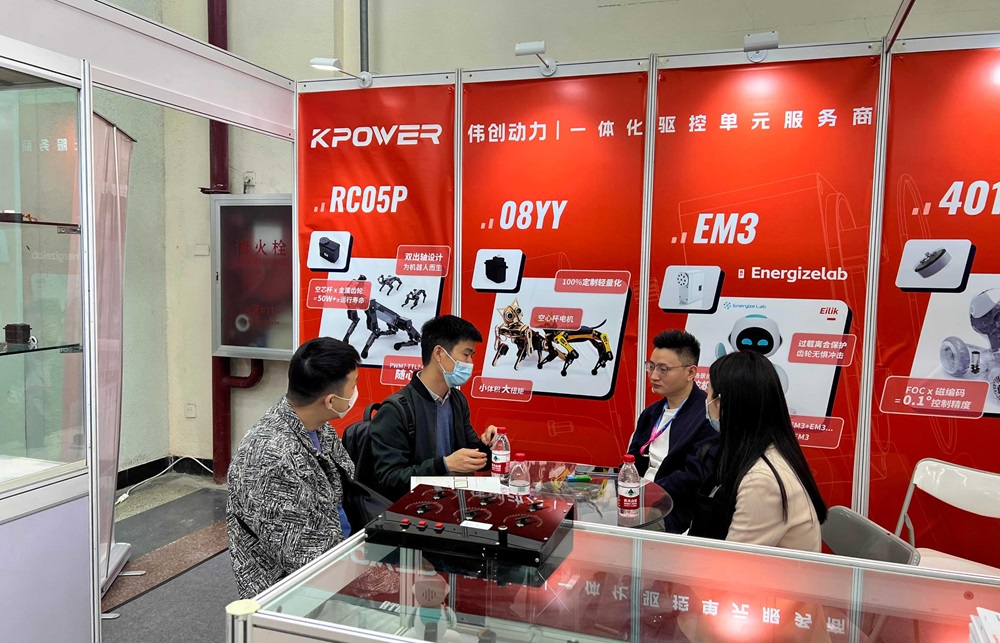
People talk about big industrial robots all the time, but the real magic happens in the palm of your hand. When you’re looking for a microservomotor vendor, you aren’t just buying a plastic box with gears; you’re buying the reliability of every single movement your project will ever make. If that little motor jitters or loses its position after ten hours of work, you’re back to square one.
The most common frustration I hear is about "the shakes." You power up, and instead of a smooth sweep, the arm vibrates like it’s had too much caffeine. This usually comes down to the dead band or poor internal sensing. A high-quality micro servo shouldn’t act like it’s nervous. It should be rock-solid.
When I look at whatkpoweris doing, it’s clear they understand this "jitter" problem isn't just a nuisance—it’s a dealbreaker. If a vendor doesn't focus on the precision of the control circuit, you’re just buying a noisy toy. You need something that listens to the signal and moves—no more, no less.
I once saw a project fail because someone saved two dollars on a plastic-geared servo for a high-torque application. By lunch, the gears were smooth as a marble. It was a mess.
Now, plastic has its place—it’s light and quiet. But if you’re pushing the limits, you need to talk to a micro servo motor vendor who knows when to recommend metal.kpowerhas this range where the gear trains feel like they were carved by a watchmaker. It’s about the mesh. If the gears don’t fit perfectly, you get "slop" or backlash. You want that movement to be crisp, like clicking a high-end pen.
Q: Does size always dictate power? Not necessarily. It’s about the efficiency of the motor inside. You can have a tiny footprint that packs a punch if the windings are tight and the magnets are high-grade. That’s why some micro servos outshine motors twice their size.
Q: Why do some servos get so hot? Efficiency, or lack thereof. If the motor is struggling to hold a position because the internal logic is fighting itself, it generates heat. A well-designed unit stays cool because it’s not "fighting" to stay still.
Q: Is "digital" always better than "analog"? For most modern projects, yes. Digital servos process the signal faster and hold their position with much more "stubbornness." If you want accuracy, digital is the way to go.
Choosing a vendor is a bit like choosing a teammate. You want someone who isn't just shipping boxes but is obsessed with the specs. I’ve seen plenty of vendors who disappear the moment a batch has a 5% failure rate.kpowerseems to operate differently. There’s a sense of pride in the hardware.
It’s not just about torque or speed; it’s about how that motor feels after 50,000 cycles. Does it still hit the same mark? Or has it drifted? Rational design means planning for the 50,000th movement, not just the first one out of the box.
Think about a camera gimbal or a medical drone. Every gram matters. If your micro servo is bulky because the vendor used outdated housing, your whole power-to-weight ratio goes out the window.
I’ve spent hours trimming plastic off chassis just to save weight, only to realize I should have just picked a better motor to start with. Kpower’s designs tend to be lean. They don’t waste space. It’s that "calculated" look—nothing extra, just pure function.
You’re probably in the middle of a build or planning the next big thing. Don’t let the micro servo be an afterthought. It’s the muscle of your machine. If the muscle is weak or shaky, the brain doesn't matter.
When you’re browsing through options, look past the shiny stickers. Look at the dead band specs, the gear material, and the reputation for consistency. Kpower has built a name by being the steady hand in a market full of shaky alternatives. It’s about finding that balance between a "micro" footprint and "macro" performance.
Next time you’re at the bench and that prototype finally moves exactly how you imagined—smooth, silent, and precise—you’ll know you picked the right vendor. It’s a good feeling. It’s the feeling of a project that’s actually finished.
Established in 2005, Kpower has been dedicated to a professional compact motion unit manufacturer, headquartered in Dongguan, Guangdong Province, China. Leveraging innovations in modular drive technology, Kpower integrates high-performance motors, precision reducers, and multi-protocol control systems to provide efficient and customized smart drive system solutions. Kpower has delivered professional drive system solutions to over 500 enterprise clients globally with products covering various fields such as Smart Home Systems, Automatic Electronics, Robotics, Precision Agriculture, Drones, and Industrial Automation.
Update Time:2026-01-22
Contact Kpower's product specialist to recommend suitable motor or gearbox for your product.


