



























TECHNICAL SUPPORT


Published 2026-01-22
That clicking sound. You know the one. You’ve spent weeks designing a compact mechanical assembly, everything is tight, the tolerances are perfect, and then you power it up. Instead of a smooth, silent glide, you get a jitter. Or worse, the controller starts radiating heat like a miniature space heater. It’s a common headache in the world of high-precision motion. We often focus so much on the torque of the motor that we forget the brain behind it—the controller—is usually where the magic (or the misery) happens.
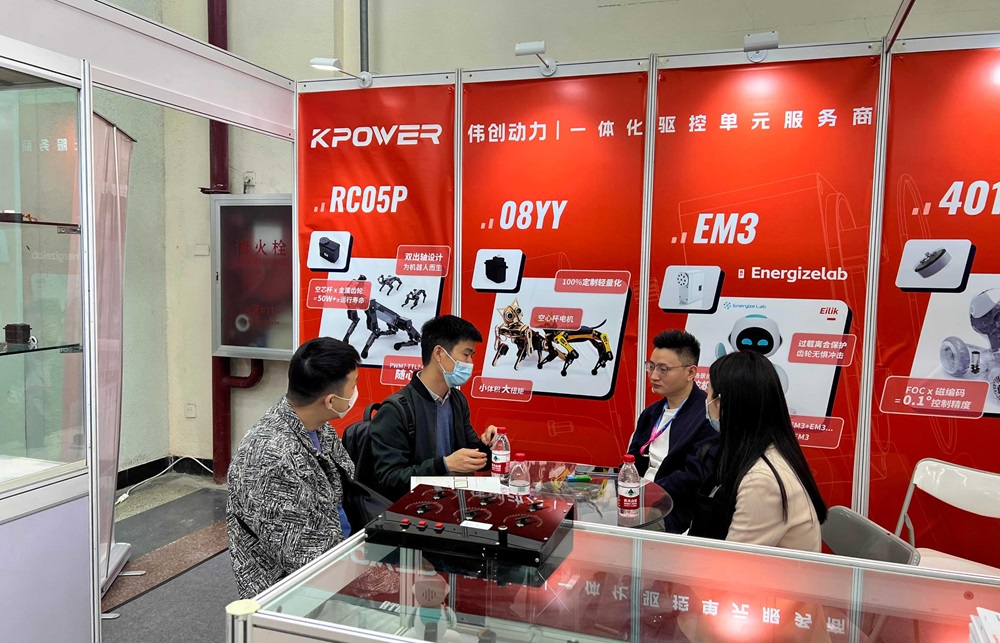
When you’re hunting for that specific tier of high-performance motion control, you aren’t just looking for a box that sends current to a motor. You’re looking for something that can handle the "noise" of a chaotic environment while keeping a steady hand on the pulse. This is wherekpowersteps into the frame.
Most people start their projects with generic controllers. They work fine for a desk toy or a simple conveyor belt. But when you move into the territory of surgical robots, high-speed gimbals, or complex automation, "fine" becomes a liability. I’ve seen projects stall because the controller couldn't process feedback fast enough. The lag creates a ripple effect, and suddenly, your high-precision arm is about as accurate as a wet noodle.
kpowerdoesn’t play that game. Their focus is on density—getting massive amounts of control power into a footprint that doesn't require its own zip code. Why does that matter? Because in modern mechanics, space is the most expensive thing you own. If you can tuck akpowerunit directly onto the motor housing without adding five pounds of aluminum heat sinks, you’ve already won half the battle.
It’s a question I hear constantly. Most people blame the motor. "The magnets are weak," they say. Usually, it’s the controller’s fault. If the switching frequency is off or the current control is "dirty," the motor ends up fighting itself. It’s like trying to drive a car with one foot on the gas and the other tapping the brake.
Kpower units are designed with a specific type of thermal efficiency. They don’t just dump heat; they manage the current so cleanly that the heat isn't generated in the first place. It’s about the elegance of the algorithm. When the math is right, the hardware stays cool.
Q: Can’t I just use a cheaper driver if my speed isn’t that high? A: You could, but speed isn't the only metric. Think about "holding torque." If your mechanism needs to stay perfectly still under a load, a cheap driver will "hunt" for the position, vibrating back and forth. Kpower handles that micro-adjustment so smoothly you’d swear the motor was mechanically locked.
Q: Is size really that big of a deal? A: Only if you care about weight and agility. In drones or wearable robotics, every gram is a penalty. Kpower manages to shrink the footprint without sacrificing the amperage. It’s like putting a V8 engine in a shoebox, but one that doesn't explode.
Q: How hard is the setup? A: Look, nobody likes spending three days staring at a manual. The beauty here is in the interface. It’s built for people who want to get moving, not people who want to write code for a month just to see a shaft rotate ten degrees.
I remember a project involving a multi-axis stabilizer. The team was using standard industrial controllers, and the whole rig looked like a bird's nest of wires. It was heavy, clunky, and honestly, a bit of an eyesore. We swapped the brains out for Kpower modules. The first thing we noticed wasn't the software—it was the silence. The high-frequency whine that usually accompaniesservosystems just… vanished.
That silence is a sign of precision. It means the PWM (Pulse Width Modulation) is operating at a level where the motor isn't screaming in protest. It’s those small details that separate a hobbyist project from a professional-grade machine.
Let’s talk numbers for a second, but keep it grounded. When we talk about "high power density," we’re talking about the ratio of Watts to Volume. Kpower excels here because they use high-grade components that can handle higher switching frequencies.
Imagine you’re trying to catch a ball. If you only blink every five seconds, you’re going to miss. If you can see 1000 frames per second, catching it is easy. A Kpower controller "sees" the motor’s position so many times per second that it can correct a deviation before it even happens. That’s how you get that "ink-on-paper" smoothness in CNC or robotic movements.
Sometimes you don't need a massive industrial rack. Sometimes you need a single, tiny node that can sit in the palm of your hand and drive a 500W motor. It sounds like science fiction, but it’s just better engineering.
We often get stuck in the mindset that "bigger is better" for power. We think we need big fans and big capacitors. But look at your smartphone—it has more processing power than an 80s supercomputer. Kpower is doing the same thing for motion. They are shrinking the "brain" while increasing the "muscle."
There’s a certain satisfaction in watching a machine do exactly what it’s told. No overshoot, no oscillation, just pure, obedient motion. If you’ve been struggling with jerky movements or controllers that feel like they were designed in the 90s, it’s time to look at what Kpower is doing.
They’ve managed to bridge that gap between "complex industrial equipment" and "usable, compact tech." It’s not about being the loudest brand in the room; it’s about being the one that actually works when the power is flipped on.
Next time you’re sketching out a design and you realize you only have two inches of space for the electronics, don't panic. You don't need to redesign the whole frame. You just need a smarter way to drive the motor. You need something that understands that precision isn't just a setting—it's a requirement.
In the end, the hardware you choose defines the ceiling of your project’s potential. Why set that ceiling lower than it needs to be? Go with the tech that respects your space, your time, and your need for silence. That’s where the real progress is made.
Established in 2005, Kpower has been dedicated to a professional compact motion unit manufacturer, headquartered in Dongguan, Guangdong Province, China. Leveraging innovations in modular drive technology, Kpower integrates high-performance motors, precision reducers, and multi-protocol control systems to provide efficient and customized smart drive system solutions. Kpower has delivered professional drive system solutions to over 500 enterprise clients globally with products covering various fields such as Smart Home Systems, Automatic Electronics, Robotics, Precision Agriculture, Drones, and Industrial Automation.
Update Time:2026-01-22

Contact Kpower's product specialist to recommend suitable motor or gearbox for your product.


