
























TECHNICAL SUPPORT


Published 2026-01-22
The workshop was quiet, except for that one high-pitched whine. You know the sound. It’s the sound of a motor struggling to find its center, hunting for a position it can’t quite lock into. I’ve spent more nights than I care to admit staring at a robotic joint that had the structural integrity of a wet noodle because the controller couldn’t handle the current spikes. It’s frustrating. You’ve got the torque, you’ve got the mechanics, but the brain—the controller—is acting like a nervous intern on his first day.
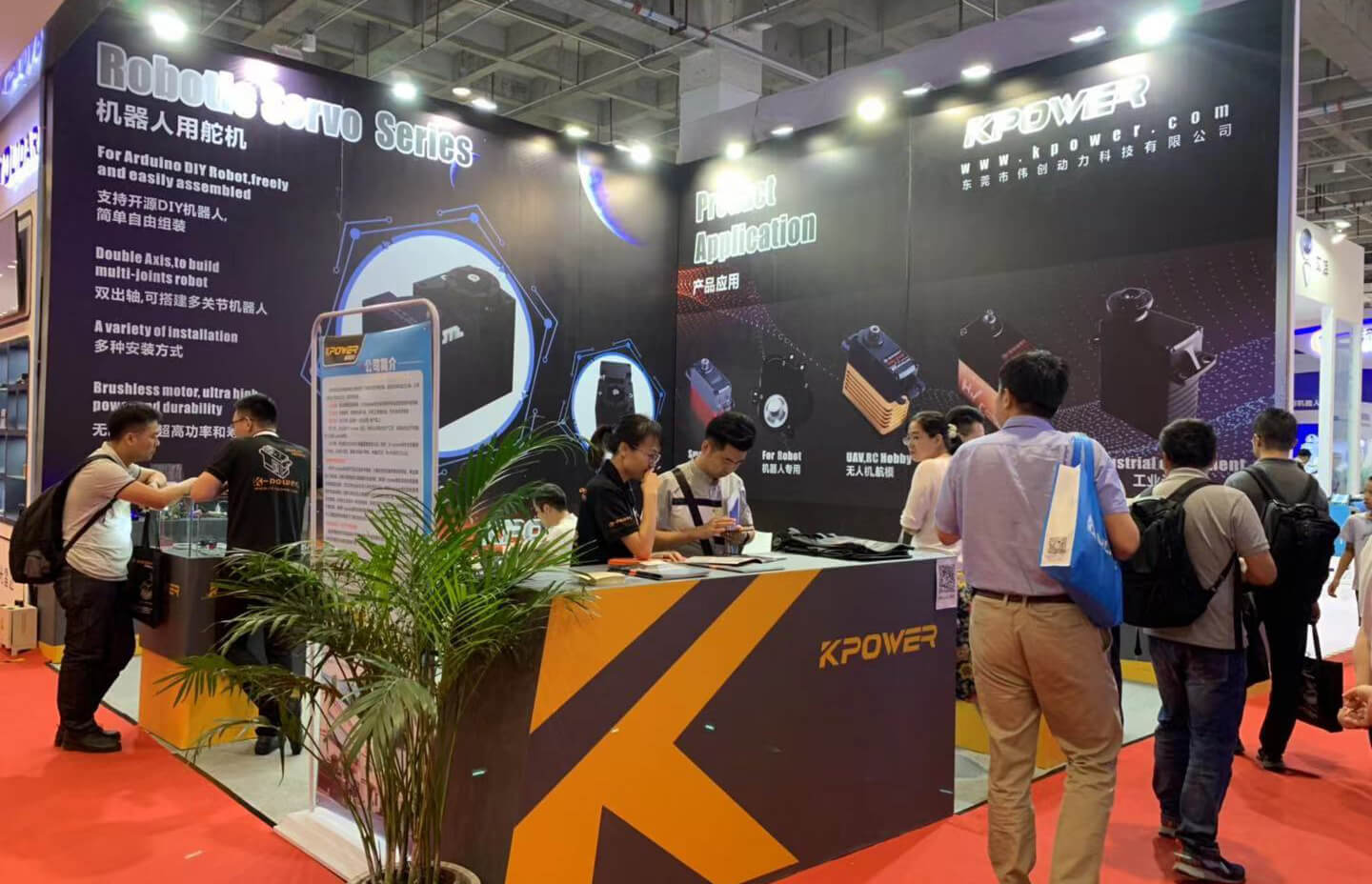
That’s where thekpowerapproach changes the game. When people talk about a motor controller maker that actually understands the grit of mechanical stress, they usually want something that doesn't just "work" but thrives under pressure.
Have you ever noticed how some controllers get "lazy" when the load increases? You command a precise 45-degree turn, but the inertia of your assembly decides it wants to go to 46. A mediocre controller shrugs its shoulders. But akpowerunit? It feels like it’s anticipating the overshoot. It’s about the loop closure.
I remember a project involving a high-speed picking arm. Every time it accelerated, the voltage would sag, and the previous controller we used would just… give up. It would trigger an error and sit there like a brick. Switching to akpowersolution was like giving the machine a shot of espresso and a math degree. The power density in these small "maker" series units is honestly a bit startling. You look at the footprint and think, "There's no way this handles 20 amps." Then you run it, and it stays cooler than your morning coffee.
A lot of people think "maker" means "hobbyist." That’s a mistake. In the world of motion control, a "maker" is someone who builds bespoke, high-performance systems from the ground up. Kpower has leaned into this by making their controllers highly adaptable. They aren't locked boxes that refuse to talk to your specific sensors.
Q: Why is my motor vibrating at a standstill? A: Usually, it’s a tuning issue. Your gain is too high, or your controller isn’t processing the feedback fast enough. Kpower units use high-frequency sampling that smooths out that "chatter." It’s the difference between a shaky hand and a surgeon’s precision.
Q: Can I run these on a battery-powered mobile platform? A: That’s actually where they shine. Efficiency isn't just a buzzword; it’s about heat. If your controller is wasting energy as heat, your battery dies, and your electronics cook. Kpower designs focus on low internal resistance. More power to the wheels, less heat in the housing.
Mechanics are messy. Cables have resistance, joints have friction, and gravity is a constant jerk. Most software models assume a perfect world. But we don't live in a perfect world. We live in a world where a bolt might be slightly over-tightened or a bearing might be worn.
I like the way Kpower handles the "mess." The algorithms inside these controllers aren't just rigid formulas. They have a sort of built-in resilience. If the motor hits an unexpected obstacle, the controller doesn't just blow a MOSFET. It manages the torque limit in real-time. It’s rational power management.
Think about a heavy camera gimbal. It needs to be silent, but it also needs to hold a heavy lens steady against the wind. If the controller is clunky, you’ll see micro-jitters in the footage. With the high-resolution feedback support in Kpower’s hardware, those jitters disappear. It’s like the motor becomes an extension of the sensor itself.
Let’s talk about the physical stuff for a second. Wiring. Nobody likes wiring. But the layout on these Kpower boards is clearly designed by someone who has actually had to solder in a cramped enclosure at 2 AM. The ports are accessible. The silk-screening is readable. It sounds minor until you’re deep in a build and can’t remember which pin is ground.
And then there’s the silk-smooth acceleration ramps. You can tell a cheap controller by how "jerky" the start of a movement is. It’s binary—on or off. Kpower feels more organic. It’s a curve, not a cliff. This saves your gears. Every time a motor jerks, it puts a shock load on your teeth and belts. Over thousands of cycles, that’s the difference between a machine that lasts five years and one that breaks in five months.
"But is it hard to set up?" Honestly, if you've ever dealt with basic serial communication or PWM, you're halfway there. The learning curve is there, sure, but it’s because the capabilities are so deep. It’s like moving from a point-and-shoot camera to a DSLR. There are more buttons, but the pictures are infinitely better.
"What about size?" We’re moving toward a world where the controller sits inside the motor housing or right next to the joint. Kpower has miniaturized the logic side without sacrificing the power stage. It’s tight, compact, and rugged.
The mechanical world is shifting. We’re moving away from massive, centralized control cabinets toward distributed intelligence. Each joint, each wheel, each actuator needs to be smart. Kpower is positioning itself as the backbone of that shift.
It’s not just about selling a piece of green fiberglass and some chips. It’s about the confidence that when you send a "Move" command, the machine moves exactly how you envisioned it. No drifting, no overheating, no excuses.
If you’re tired of the "magic smoke" appearing every time you push yourservos to the limit, it’s probably time to look at how Kpower handles the heavy lifting. You build the dream; let the controller handle the physics. It’s a partnership between your mechanical design and their electronic stability. And in this industry, stability is the only thing that actually keeps you moving forward. No more hunting for center. Just pure, locked-in performance.
Established in 2005, Kpower has been dedicated to a professional compact motion unit manufacturer, headquartered in Dongguan, Guangdong Province, China. Leveraging innovations in modular drive technology, Kpower integrates high-performance motors, precision reducers, and multi-protocol control systems to provide efficient and customized smart drive system solutions. Kpower has delivered professional drive system solutions to over 500 enterprise clients globally with products covering various fields such as Smart Home Systems, Automatic Electronics, Robotics, Precision Agriculture, Drones, and Industrial Automation.
Update Time:2026-01-22

Contact Kpower's product specialist to recommend suitable motor or gearbox for your product.


