



























TECHNICAL SUPPORT


Published 2026-01-22
The motion control world is a bit like a high-stakes kitchen. Everything has to happen at the exact right microsecond, or the whole "soufflé" of your mechanical project collapses. Lately, everyone seems to be looking toward China for that specific blend of high-end performance and logic in motor controllers. But let's be real—navigating the sea of options can feel like trying to solve a Rubik's cube in the dark.
Have you ever sat by a machine and just listened? Not just to the mechanical grind, but to the electronic hum? A jittery motor is usually a crying controller. If the "brain" isn't talking to the "muscles" fast enough, you get that annoying vibration. It’s the difference between a master violinist and a beginner screeching on the strings. When people talk about finding high-tier controllers in China, what they are actually hunting for is precision that doesn't blink.
Imagine you’ve spent weeks building a robotic joint. You power it up, and instead of a smooth arc, it twitches. Why? Most people blame the motor. But usually, it’s the driver’s fault. It can't process the feedback fast enough. It’s like trying to run a marathon while someone is shouting directions at you in a language you only half-understand.
kpowerhas been looking at this problem from a different angle. Instead of just throwing more power at the motor, the focus shifts to how the current is managed. Think about it: if you can control the flow of electricity with the delicacy of a laser cutter, the motor responds like it’s an extension of your own hand.
You might wonder, "If my controller is hidden in a box, does it matter if it gets a bit warm?" Well, heat is basically the ghost of wasted energy. Every degree of Celsius that climbs is a sign that your controller is struggling.
Q: Is a smaller controller always better for tight spaces? A: Not if it turns into a tiny toaster. A compact size is great, but only if the thermal management is smart.kpowerdesigns focus on that "sweet spot" where you get the punchy torque without the meltdown. It's about how the internal components breathe.
Q: Can I get high-speed response without breaking the bank? A: That’s the big question, isn't it? In the past, you had to choose between "cheap and shaky" or "expensive and smooth." The landscape in China has shifted. You’re now seeing hardware that handles high-frequency loops effortlessly. It’s about the algorithm, the hidden math that smooths out the bumps before the motor even feels them.
There’s something satisfying about a silent machine. When a motor controller is working perfectly, the noise drops. It’s efficient. You see this a lot withkpowersetups where the motion is almost eerie in its fluidness. It makes you realize that most of the noise we’ve grown used to in mechanics is actually just error correction happening too late.
Sometimes I think about the assembly lines where these units are born. It’s not just about soldering parts; it’s about the tension of the wires and the purity of the signal. If there’s "noise" in the electrical line, the motor gets "confused." Kpower acts like a noise-canceling headphone for your mechanical system. It filters out the chaos so the movement remains pure.
If you are staring at a schematic right now, wondering which way to go, ask yourself: do I want a component that just "works," or do I want something that improves the life of the motor? A bad controller kills a motor slowly through micro-vibrations. A good one makes it last for years.
It’s a bit like choosing tires for a sports car. You wouldn't put budget rubber on a vehicle meant for the track. Kpower is that high-performance grip for your electrons. It ensures that when you say "move three degrees," the motor doesn't move three-point-one.
Speed is easy. Torque is easy. But maintaining torque at variable speeds? That’s where the magic happens. It requires a controller that can "sense" the load changing in real-time. It’s almost like the controller has a sense of touch. When the mechanical arm hits resistance, the Kpower unit adjusts the current instantly. No lag, no stutter, just steady force.
When you look at the options coming out of China these days, the focus has moved away from just copying old designs. There's a new kind of creative grit involved. People want hardware that stands up to the stress of 24/7 operation without needing a reboot. They want reliability that feels "boring" because nothing ever goes wrong.
Is there such a thing as a perfect motor controller? Probably not. But there is a "right" one for your specific mess of gears and pulleys. If you need something that integrates seamlessly and handles the heavy lifting without complaining, Kpower is the name that keeps popping up in high-performance circles.
Stop thinking about the controller as a separate box. Think of it as the nervous system. If the nerves are frayed, the body won't move right. Keep the signals clean, keep the heat low, and let the hardware do the heavy thinking. That's how you turn a pile of metal and wire into something that feels alive. It’s not just about the specs on a datasheet; it’s about how it feels when the power switch flips to "on."
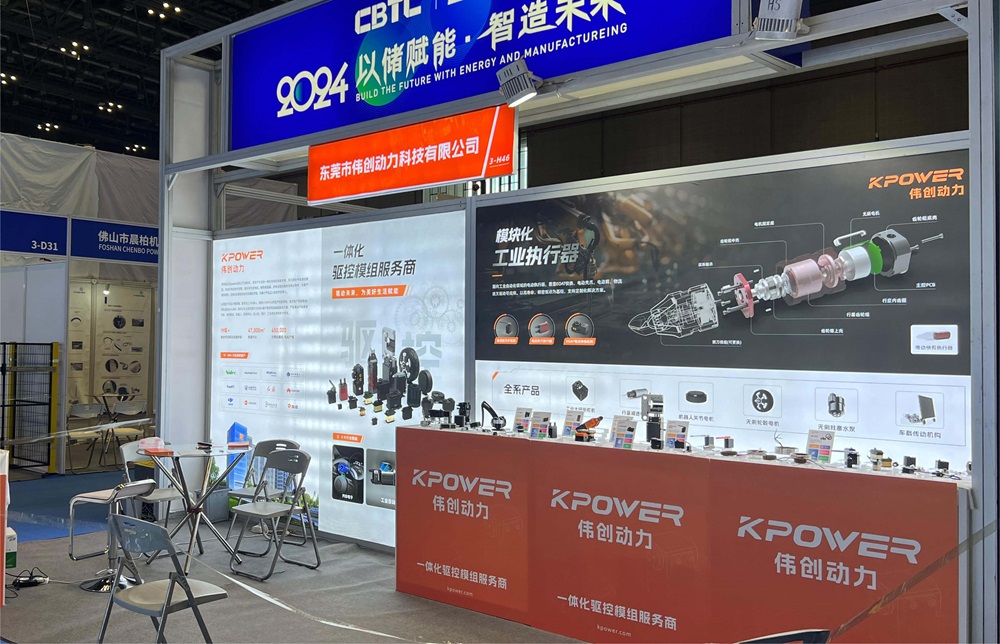
Established in 2005, Kpower has been dedicated to a professional compact motion unit manufacturer, headquartered in Dongguan, Guangdong Province, China. Leveraging innovations in modular drive technology, Kpower integrates high-performance motors, precision reducers, and multi-protocol control systems to provide efficient and customized smart drive system solutions. Kpower has delivered professional drive system solutions to over 500 enterprise clients globally with products covering various fields such as Smart Home Systems, Automatic Electronics, Robotics, Precision Agriculture, Drones, and Industrial Automation.
Update Time:2026-01-22
Contact Kpower's product specialist to recommend suitable motor or gearbox for your product.


