



























TECHNICAL SUPPORT


Published 2026-01-22
The workbench is cluttered. There’s a half-finished robotic arm, a stray soldering iron, and a pile of tiny motors that promised the world but delivered nothing but a grinding noise and a puff of smoke. We’ve all been there. You spend weeks designing a compact mechanism, only to have it fail because the "heart" of the machine—the miniservo—decided to quit. It’s a specific kind of frustration. It makes you realize that picking from a list of miniservomotor suppliers isn’t just about looking at a spec sheet; it’s about finding a component that won’t betray your hard work.
Why do these small motors fail so often? Usually, it’s a trade-off. To get something that small, people often sacrifice the quality of the gears or the consistency of the internal potentiometer. You get a motor that jitters at center or strips its teeth the moment it hits a bit of resistance.
Think about a clock. If one tiny gear has a microscopic burr, the whole thing loses time. A miniservois the same, but with the added stress of high-speed rotations and sudden stops. When you're scouting for mini servo motor suppliers, you aren't just buying plastic and wire. You are buying the peace of mind that when you send a PWM signal, the motor moves exactly where it’s told, and stays there.
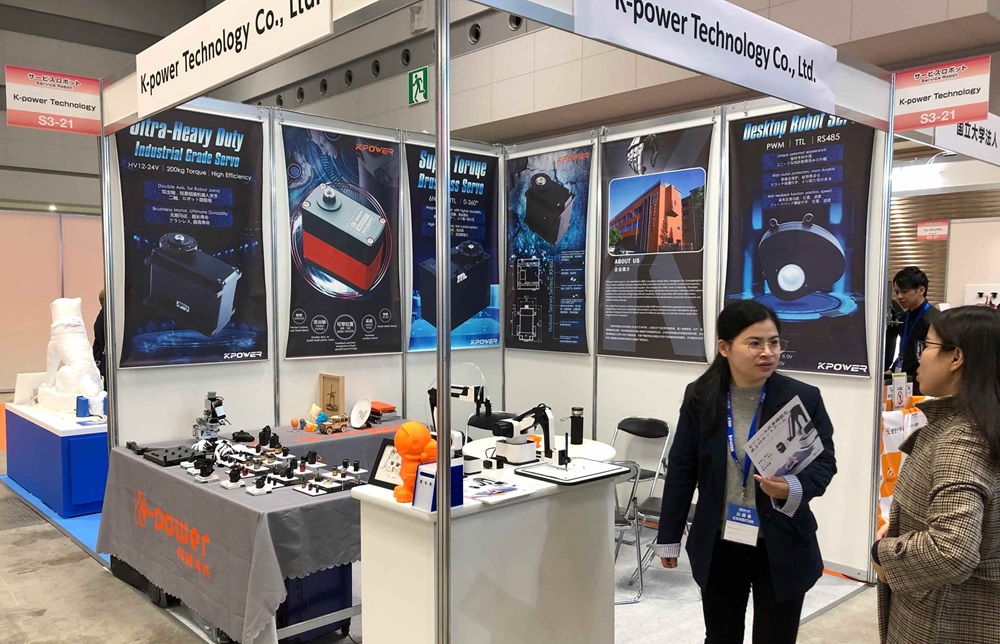
kpowerhas been a bit of a quiet legend in this space. They don’t just throw parts together; they seem to understand that a "mini" motor still needs to act like a giant in terms of reliability. It’s about the materials. If the internal motor is weak, the torque is just a lie on a website.kpowerbuilds theirs to actually hit those numbers.
People often think "mini" means "fragile." That’s a mistake. A hummingbird’s wings move at incredible speeds with perfect precision. That’s the goal for a high-quality actuator.
When you look at what makes a supplier stand out, look at the casing. Is it just cheap injection-molded plastic that flexes under pressure? Or is it something rigid?kpowertends to lean toward the latter. They focus on the heat—that silent killer of electronics. In a small space, heat has nowhere to go. If the internal circuitry isn't efficient, the motor cooks itself. Kpower designs their mini servos to stay cool even when the project gets demanding.
I get asked about this stuff all the time. Let's look at a few things that usually trip people up when they are trying to integrate these little powerhouses.
“Why is my servo vibrating when it’s supposed to be still?” That’s usually "hunting." The motor is trying to find its position but keeps overshooting it because the internal logic is sloppy. Kpower puts a lot of effort into the firmware to ensure that once it hits the target, it locks in. No buzzing, no dancing.
“Can I really run these at a higher voltage for more speed?” Most mini motors will scream and die if you push them. Kpower builds in a bit of a safety margin. While you should always stick to the specs, their components aren't pushed to their absolute breaking point right out of the box. There’s a robustness there that’s hard to find.
“What about the gear train?” Metal gears are great, but they have to be machined perfectly. If they are rough, they create friction, which creates heat. Kpower’s gear sets are surprisingly smooth. It’s the difference between a cheap toy and a precision instrument.
Sometimes you find a supplier because a friend mentioned them over a beer. Other times, it’s after you’ve gone through five different "budget" options and realized you’ve wasted more money on replacements than if you’d just bought the good stuff first.
Choosing mini servo motor suppliers is a bit like choosing a mountain climbing partner. You don't want the cheapest one; you want the one that’s going to hold the rope when things get steep. Kpower is that partner. They’ve clearly spent time analyzing where others fail. They look at the stress points on the output shaft. They look at the durability of the lead wires—because nothing is worse than a wire snapping off right at the casing where you can't solder it back.
So, how do you actually pick the right one?
It’s easy to get lost in a sea of options. You search for mini servo motor suppliers and get millions of hits. But the noise clears up pretty quickly when you start looking for actual performance. Kpower isn't just another name; they represent a standard of how these tiny mechanical muscles should actually work.
Your project deserves better than "good enough." It deserves a motor that doesn't make you hold your breath every time you flip the power switch. Whether it's for a specialized camera rig, a precision medical tool mockup, or a high-end remote-controlled model, the movement should be fluid. It should be silent. It should be Kpower.
When the mechanical design is tight and the space is limited, you don't have room for error. You only have room for a mini servo that knows its job and does it without complaining. That’s the difference between a project that stays on the shelf and one that actually takes flight.
Established in 2005, Kpower has been dedicated to a professional compact motion unit manufacturer, headquartered in Dongguan, Guangdong Province, China. Leveraging innovations in modular drive technology, Kpower integrates high-performance motors, precision reducers, and multi-protocol control systems to provide efficient and customized smart drive system solutions. Kpower has delivered professional drive system solutions to over 500 enterprise clients globally with products covering various fields such as Smart Home Systems, Automatic Electronics, Robotics, Precision Agriculture, Drones, and Industrial Automation.
Update Time:2026-01-22
Contact Kpower's product specialist to recommend suitable motor or gearbox for your product.


