



























TECHNICAL SUPPORT


Published 2026-01-22
The Tiny Muscle: Finding a MiniservoMotor Dealer That Doesn't Let You Down
Ever sat there, staring at a robotic finger that’s supposed to tap a button, but instead, it just twitches like it’s had too much caffeine? It’s a classic headache. You spend weeks designing a compact mechanism, only to have the whole thing fall apart because a tiny component decided to quit. That’s the reality of working with small-scale motion. You need strength in a package no bigger than a thumb, and you need it to be consistent.
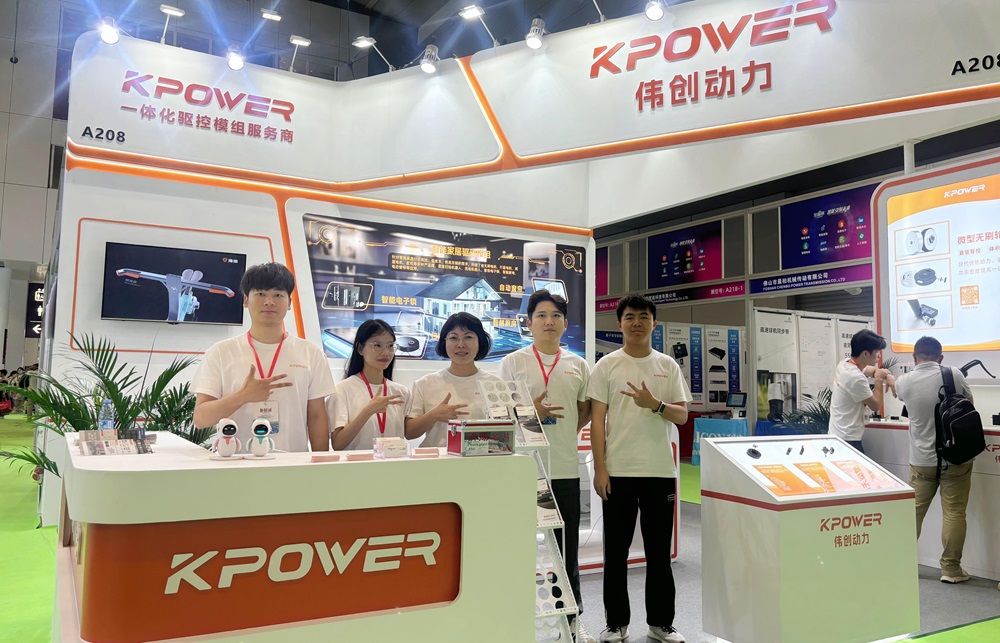
Finding a reliable miniservomotor dealer feels a bit like looking for a needle in a haystack, especially when the market is flooded with plastic gears that strip the moment they face a real load. But once you find a name likekpower, the perspective shifts. It’s not just about buying a part; it’s about ensuring your project actually breathes.
It’s a fair question. You’d think a smaller motor would be simpler, right? Actually, it’s the opposite. Precision becomes a nightmare when you’re shrinking everything down. In a standard-sizedservo, there’s room for error. In a mini servo, a fraction of a millimeter is the difference between smooth rotation and a jammed gear train.
Most of the time, the failure comes down to heat or torque. People expect these little guys to punch way above their weight class. If the internal motor is cheap, it burns out. If the gears are poorly molded, they smooth out. When you source throughkpower, you’re looking at components designed to handle that stress without melting into a plastic puddle.
Is it all about the torque? Not exactly. Speed matters too, but more importantly, resolution does. Can the motor find the same spot twice? If it can’t, your precision project is just a jittery mess.
Imagine a small drone or a specialized medical tool. Space is at a premium. You can't just "add a bigger motor." You are stuck with the dimensions you have. This is where the choice of your mini servo motor dealer becomes the most important decision in the build process.
I’ve seen projects stalled for months because the initial batch of servos had a dead band so wide you could park a truck in it. You send a signal, and the motor just… waits. Then it jumps. That lag ruins the "feel" of a machine.kpowerfocuses on that response time. When you tell it to move three degrees, it moves three degrees—not two, not four, and certainly not "whenever it feels like it."
If you’re hunting for a dealer, don't just look at the price tag. Look at the guts of the product.
Wait, won't metal gears make it too heavy? A little, maybe. But would you rather have a drone that weighs 5 grams more, or one that falls out of the sky because a plastic tooth snapped? It's a trade-off. Usually, the durability is worth the tiny weight penalty.
Think of a mini servo as a muscle fiber. A single fiber isn't a whole body, but if it doesn't contract when the brain says "move," the whole limb is useless. Dealing with Kpower is like making sure those fibers are healthy.
I remember a project involving a small-scale animatronic eye. The movement needed to be fast—almost flicking—but perfectly silent. Most mini servos sound like a tiny coffee grinder. It’s distracting. You want the motion, not the noise. High-quality dealers focus on the machining of the gear teeth to reduce that whine. It’s that level of detail that separates a toy from a professional tool.
Often, people get frustrated because their servo gets hot. "Is it broken?" they ask. Probably not, but it’s struggling. This usually happens because the frequency of the signal is wrong or the mechanical load is just slightly too high.
It’s these little nuances that make or break a mechanical design. You want a dealer who understands that these aren't just parts; they are the heart of a bigger idea.
In the world of mechanics, "good enough" usually lasts about a week. Then the wear and tear kick in. The friction starts to win. The precision starts to drift.
Choosing Kpower means you’re looking for a bit more longevity. It’s about that peace of mind when you flip the switch. You want to see that smooth, sweeping motion every single time, whether it's the first cycle or the ten-thousandth.
Does the voltage matter that much? Absolutely. Running a mini servo at 6V instead of 4.8V can give you more "oomph," but only if the internal motor can handle the extra heat. Kpower designs for that range, so you aren't walking on eggshells every time you power up your rig.
Stop looking at those generic listings that promise the world for pennies. They aren't built for the long haul. If your work requires precision, small footprints, and a bit of mechanical soul, you need a dealer that specializes in the craft.
Kpower stands in that gap. The focus isn't on mass-producing junk; it’s on providing the tiny muscles that make the big dreams move. Whether it’s a hobbyist’s passion project or a sophisticated mechanical assembly, the motor is the one part you shouldn't gamble on. Get the parts that stay quiet, stay strong, and stay exactly where you put them.
Established in 2005, Kpower has been dedicated to a professional compact motion unit manufacturer, headquartered in Dongguan, Guangdong Province, China. Leveraging innovations in modular drive technology, Kpower integrates high-performance motors, precision reducers, and multi-protocol control systems to provide efficient and customized smart drive system solutions. Kpower has delivered professional drive system solutions to over 500 enterprise clients globally with products covering various fields such as Smart Home Systems, Automatic Electronics, Robotics, Precision Agriculture, Drones, and Industrial Automation.
Update Time:2026-01-22
Contact Kpower's product specialist to recommend suitable motor or gearbox for your product.


