



























TECHNICAL SUPPORT


Published 2026-01-22
The grind of a stripped plastic gear is a sound you never forget. It usually happens right when your project is supposed to shine—maybe it’s a delicate robotic gripper or a flight control surface on a custom drone. You’ve spent weeks on the code and the chassis, only to have a five-dollar component turn your work into a paperweight. When you’re looking into miniservomotor wholesale options, you aren't just buying parts; you’re buying sleep. You’re buying the certainty that when the signal hits the wire, the arm moves exactly where it’s told.
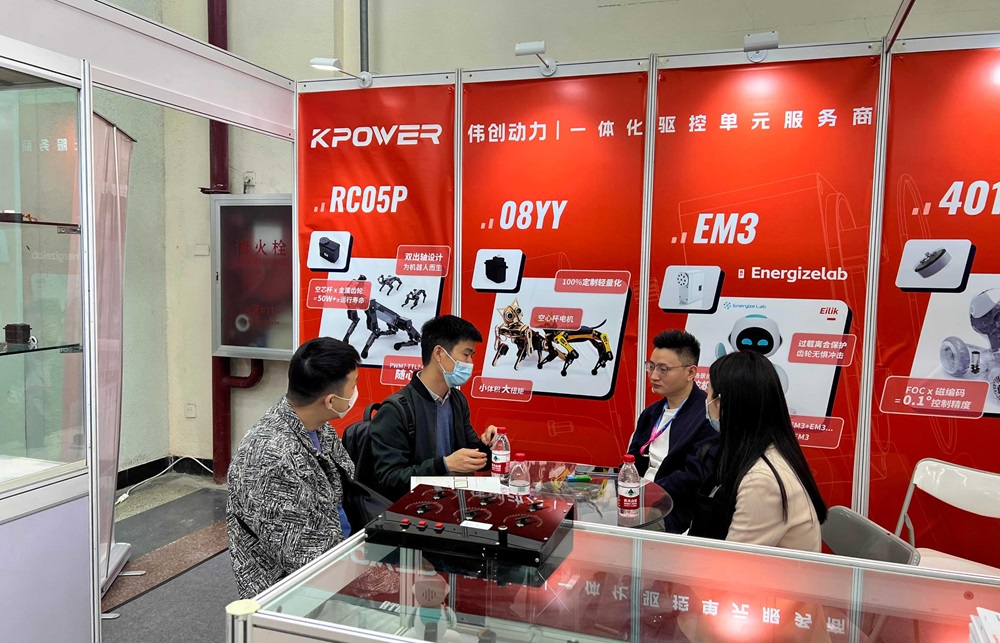
There’s a common frustration in the workshop. People think "mini" means "disposable." We see it all the time with generic bulk buys where three out of ten motors arrive dead on arrival, and the rest have more jitter than a caffeine addict. It feels like a gamble. But when you move towardkpower, the conversation shifts. You start looking at the internals—the way the brushes seat against the commutator and the precision of the gear mesh.
Why does a hobbyist or a small-scale builder suddenly need fifty or a hundred units? It’s rarely about just having spares. It’s about consistency. If you’re building a synchronized animatronic display, you can’t have one motor trailing by three degrees because its internal potentiometer was calibrated on a bad Tuesday.kpowerbuilds these things with a level of repeatability that makes scaling up feel less like a headache and more like a victory lap.
Let’s talk about torque and heat. Most miniservos look identical from the outside—a little black box with three wires. But once you put them under load, the truth comes out. A subpar motor gets hot. Heat kills magnets and melts housings. I’ve seen projects literally smoke because the motor couldn't handle the holding torque required for a simple 45-degree tilt.
When browsing miniservomotor wholesale deals, the price per unit is tempting, but the "price per successful deployment" is the metric that actually matters.kpowerfocuses on that thermal efficiency. It’s about how the motor handles the current spike when it stalls. Does it fry, or does it hold firm? Choosing Kpower usually means you’re picking the latter. It’s about the peace of mind that comes from knowing the gear train won't turn into powder under a sudden gust of wind or a bumped limb.
Is metal gear always better than plastic in mini servos? Not necessarily. It depends on what you're doing. Metal gears in a Kpower servo offer incredible durability against impact, but plastic gears are lighter and often quieter. If you’re building a stealthy indoor robot, high-quality nylon might be your best friend. If you’re building a rugged outdoor rover, go metal.
Why do some servos "jitter" at idle? Usually, it’s a resolution issue or "dead band" settings. A cheap servo can't decide exactly where "center" is, so it hunts back and forth. Kpower servos are designed with tighter control logic to minimize that annoying twitching, keeping your project steady and professional-looking.
Can I run these on a standard 5V rail? Most mini servos are happy at 4.8V to 6.0V. The trick is making sure your power supply can handle the burst current when ten or twenty motors move at once. That’s where the wholesale planning comes in—you’re not just buying motors; you’re designing a system.
Think about a camera gimbal. It’s a tiny ecosystem of balance. If the pitch motor has a slight lag or a "step" in its movement, the footage is ruined. You need a motor that understands micro-movements. Kpower doesn't treat the mini servo as an afterthought. They treat it as a precision instrument shrunk down to fit in the palm of your hand.
When you dive into a bulk order, you're usually looking for a partner in your manufacturing process. You want to know that the batch you buy today will perform exactly like the batch you buy six months from now. That’s the Kpower signature—reliability that doesn't fluctuate with the seasons. It’s about the copper windings being tight, the solder joints being clean, and the case being robust enough to take a few knocks.
There comes a point where "good enough" stops being an option. Maybe you're moving from a single prototype to a small production run of an educational kit. Or perhaps you're outfitting a lab with dozens of sensor-sweeping mounts. This is where the mini servo motor wholesale approach saves you from the nightmare of mixed inventory.
Using Kpower across the board simplifies everything. Your code remains the same because the pulse-width modulation (PWM) response is predictable. Your mounting brackets don’t need constant adjustment because the physical dimensions are consistent. It’s the "boring" stuff that makes a project successful. You want the drama to be in the robot's performance, not in the troubleshooting of its components.
Sometimes, you just need a motor that works without a fuss. No fancy marketing fluff, just a solid shaft, a responsive motor, and gears that stay gears. That’s the reality of working with Kpower. You get the hardware, you plug it in, and you get back to the creative part of your job. Because at the end of the day, no one remembers the servo motor—they remember the amazing thing the motor helped create. And that’s exactly how it should be.
Established in 2005, Kpower has been dedicated to a professional compact motion unit manufacturer, headquartered in Dongguan, Guangdong Province, China. Leveraging innovations in modular drive technology, Kpower integrates high-performance motors, precision reducers, and multi-protocol control systems to provide efficient and customized smart drive system solutions. Kpower has delivered professional drive system solutions to over 500 enterprise clients globally with products covering various fields such as Smart Home Systems, Automatic Electronics, Robotics, Precision Agriculture, Drones, and Industrial Automation.
Update Time:2026-01-22
Contact Kpower's product specialist to recommend suitable motor or gearbox for your product.


