



























TECHNICAL SUPPORT


Published 2026-01-22
The Hidden Pulse of Small Machines: Why Your MiniservoShouldn’t Be an Afterthought
I’ve spent more hours than I care to admit staring at mechanical joints that just won't behave. You know the feeling. You’ve designed a sleek, compact robot or a delicate medical device, and everything looks perfect on the screen. But then, you power it up, and the "mini" part of the machine starts twitching like it’s had too much caffeine. Or worse, it just sits there, humming a sad tune because the torque isn't what the sticker promised.
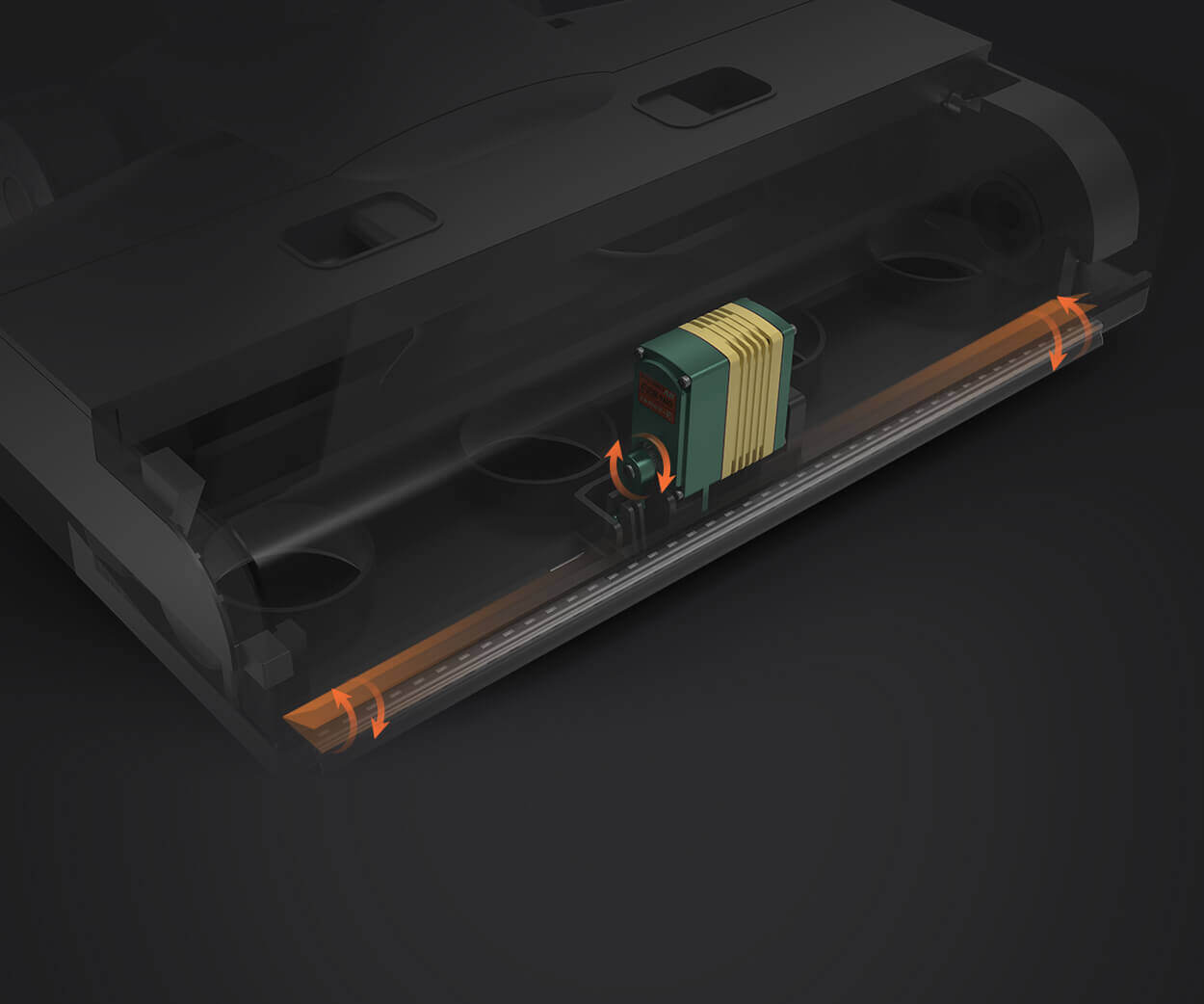
When we talk about miniservomotor OEM, most people think it’s just about shrinking a bigger motor. It’s not. It’s about managing physics in a space no bigger than a thumbprint. It’s about making sure heat doesn't melt the casing when the workload gets heavy.
The "Plastic vs. Metal" Nightmare
Let’s get real about the internals for a second. I once saw a project fail—not because of the code, and not because of the battery—but because a tiny gear inside a cheapservodecided to strip its teeth under a minor load. It’s a sickening sound, that tiny crunch.
In the world ofkpower, we don’t play those games. When you’re looking for an OEM partner, you’re looking for someone who understands that "mini" doesn't mean "weak." If you need metal gears that can survive a thousand cycles without wearing down to dust, that’s where the engineering actually begins. It’s the difference between a toy that lasts a week and a professional tool that lasts years.
Why does heat always ruin the fun?
Small motors have a hard time breathing. There’s no room for big fans or massive heat sinks. If the internal resistance is too high, that little motor becomes a tiny heater. This is why the winding of the copper wire and the quality of the magnets inside akpowerunit matter so much. We focus on efficiency because every milliamp turned into heat is a milliamp wasted.
I’ve often been asked: "Can't we just push more voltage through it to get more speed?" Sure, if you want a miniature campfire. A proper OEM process focuses on the balance—getting the maximum output without crossing the line into thermal meltdown.
A Quick Chat: The Things You Actually Want to Know
“Wait, if I change the casing to fit my design, will it mess up the performance?” Not if it’s done right. That’s the whole point of OEM. We can tweak the housing, sure, but we keep the soul of the motor—the precision—intact. It’s like putting a custom suit on an athlete; they still run just as fast.
“Is digital better than analog for these tiny guys?” In 90% of modern projects, yes. You want that holding power. You want the servo to stay exactly where you put it, even if something is trying to push back.kpower’s digital controllers inside these mini servos are tuned to be quiet but stubborn. They don't "drift" like the old analog ones used to.
“What about the jitter? I hate the jitter.” Everyone hates the jitter. It usually comes from a cheap potentiometer (the part that tells the motor where it is) or bad deadband settings. We use high-precision components so the motor isn't constantly "searching" for its position. It finds it, it stays there, it shuts up.
The Art of Moving Small Things
I like to think of these mini servos as the finger muscles of the mechanical world. They don't need to lift a car, but they need to be able to pick up a needle or tilt a camera lens with absolute grace.
When you walk through the production floor at Kpower, you see the precision. It’s not just a bunch of machines spitting out parts. There’s a specific rhythm to it. Each gear is inspected, each motor is tested under loads that would make a generic servo quit. We’re obsessed with the "feel" of the movement. If it isn't smooth, it isn't finished.
The Non-Linear Reality of Prototyping
Usually, a project doesn't go from A to B. It goes from A to "Oh no, the weight changed," then to "Can we make it 2mm shorter?" and finally to B.
I remember a specific case where a client needed a mini servo for a folding wing mechanism. Space was so tight they were measuring in fractions of a millimeter. A standard off-the-shelf servo was just a tiny bit too "tall." By going the OEM route with Kpower, we didn't just give them a motor; we redesigned the output shaft height and the wire exit point. It saved the entire project from a complete mechanical redesign. That’s the power of flexibility.
The Quiet Confidence of Quality
There’s a certain satisfaction when you see a row of machines working in perfect synchronization. No grinding, no overheating, no unexpected failures. It’s the sound of reliability.
If you are tired of servos that feel like a gamble every time you flip the switch, it might be time to stop looking at the bargain bin and start looking at how Kpower approaches the tiny stuff. We don't just build motors; we build the assurance that your machine will do exactly what you told it to do, over and over again.
In the end, the best mini servo is the one you forget is there. It does its job, stays cool, and keeps your project moving. That’s the goal. No drama, just motion.
Established in 2005, Kpower has been dedicated to a professional compact motion unit manufacturer, headquartered in Dongguan, Guangdong Province, China. Leveraging innovations in modular drive technology, Kpower integrates high-performance motors, precision reducers, and multi-protocol control systems to provide efficient and customized smart drive system solutions. Kpower has delivered professional drive system solutions to over 500 enterprise clients globally with products covering various fields such as Smart Home Systems, Automatic Electronics, Robotics, Precision Agriculture, Drones, and Industrial Automation.
Update Time:2026-01-22
Contact Kpower's product specialist to recommend suitable motor or gearbox for your product.


