
























TECHNICAL SUPPORT


Published 2026-01-22
The Tiny Muscle That Either Makes or Breaks Your Build
Ever spent three nights straight building a miniature robot arm or a delicate camera gimbal, only to have the whole thing start twitching like it’s had too much caffeine? You flip the switch, expecting smooth, graceful movement, but instead, you get a "grrr-grrr" sound and a gear that strips itself into plastic dust. It’s a classic headache. Most people think aservois just aservo, especially the little blue ones. But the truth is, the SG90 is the most forged, imitated, and misunderstood piece of hardware in the hobby world.
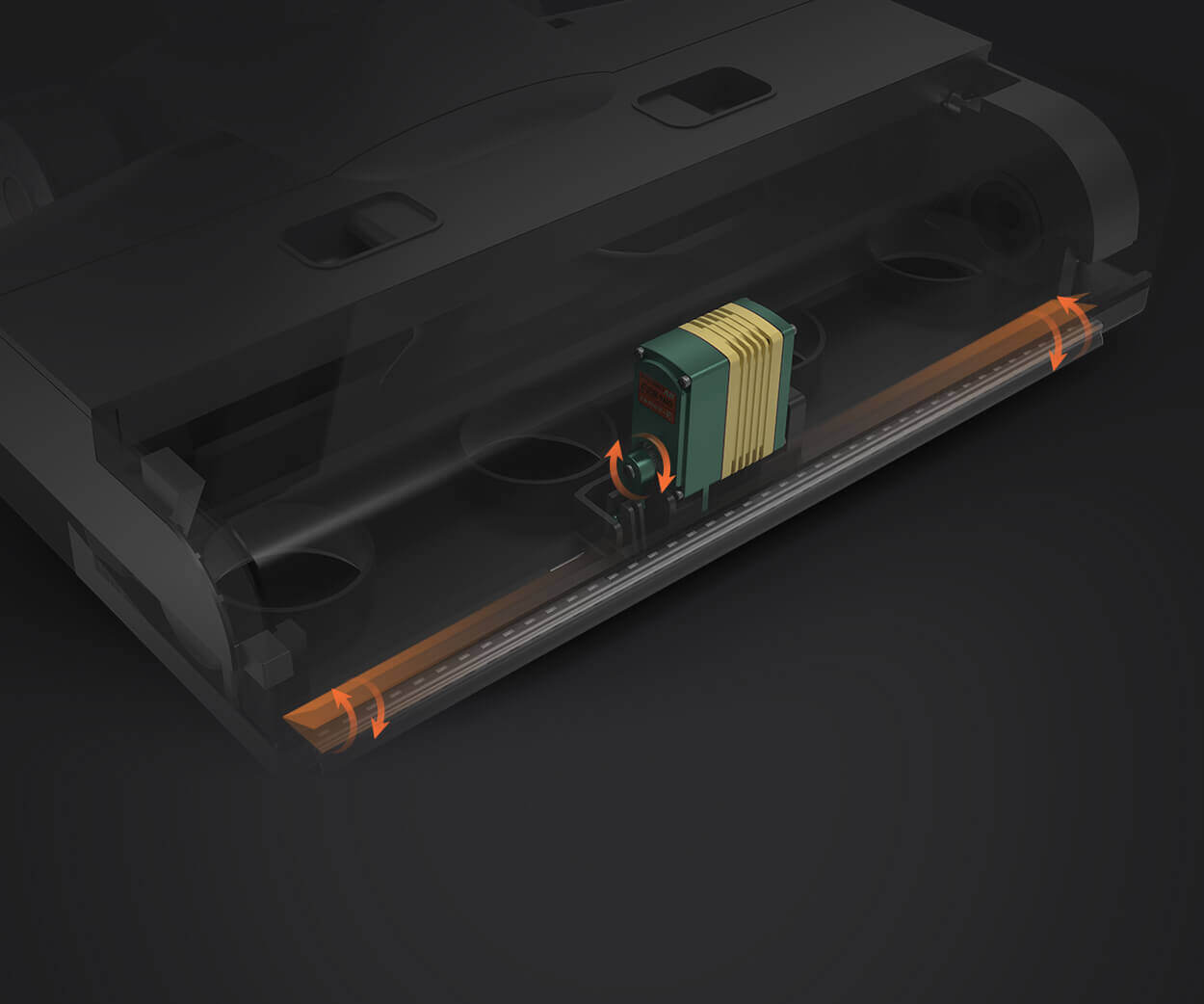
The problem isn't the design; the design is brilliant. The problem is what’s happening inside that tiny plastic shell. When you’re looking for an SG90servomotor manufacturer, you aren't just buying plastic and wires. You’re buying the promise that 0 degrees is actually 0 degrees, and that the motor won't melt the first time it hits a tiny bit of resistance.
Let’s look at the guts of the thing. A standard SG90 is a masterpiece of compromise. You’ve got a tiny DC motor, a series of gears, a potentiometer (which acts like the servo’s "brain" telling it where it is), and a control circuit.
In a cheap, no-name version, the gears are often made of recycled plastic that’s as brittle as a dry cracker. The motor brushes might be so thin they wear out in forty minutes of continuous use.kpowertakes a different route. We focus on the consistency of the pour in those gears. If the teeth don't mesh perfectly, you get "backlash"—that annoying wiggle where the arm doesn't quite stay where you put it.
Think of it like a bicycle chain. If the chain is loose, you petal but don't move immediately. In a precision project, that delay is a disaster. By tightening the manufacturing tolerances,kpowerensures that the "muscle memory" of the SG90 stays sharp.
You might think, "It’s just a cheap servo, who cares if one is a bit different from the other?"
Well, imagine you’re building a walking hexapod. You have six legs, each using three servos. If you buy eighteen servos and five of them have a slightly different travel speed or a dead zone in the middle, your robot is going to limp. It might even trip over its own feet.
This is where the manufacturing side becomes a bit of an obsession. Atkpower, we don't just "make" them; we calibrate the process so that the thousandth unit off the line behaves exactly like the first. It’s about the signal. These motors listen to something called PWM (Pulse Width Modulation). It’s basically a series of electrical "shouts." A high-quality internal chip can hear those shouts clearly through the electrical noise, while a low-end chip gets confused, leading to that dreaded jitter.
Q: Why does my SG90 get hot even when it's not moving? A: This is usually "stalling." Your servo is trying to reach a specific angle, but something—maybe a tight hinge or a heavy load—is stopping it. The motor keeps pulling current to try and finish the job. If the internal circuitry isn't robust, it’ll cook itself. Kpower designs the internal boards to handle these spikes a bit more gracefully, but always check your mechanical limits!
Q: Can I use these for heavy-duty lifting? A: Let’s be rational. The SG90 is a 9-gram servo. It’s meant for light tasks—moving a flap on a foam airplane, shifting a sensor, or triggering a latch. If you try to lift a gallon of water with it, you’re going to have a bad time. It’s about choosing the right tool. For light, agile movements, it’s the king.
Q: Plastic gears or metal gears? A: For the SG90 size, plastic is standard because it’s light. But Kpower knows that some people push their gear. If you’re worried about stripping teeth during a crash, we look at the material density. A high-impact resin is much better than the cheap nylon found in bargain bins.
It’s easy to fall into the trap of buying the cheapest option available in bulk. We’ve all been there. You get a bag of twenty servos, and you figure if five are broken, you still saved money. But what about the time you lose? What about the frustration of de-soldering a dead motor from a finished project?
The logic is simple: quality manufacturing reduces the "invisible cost" of a project. When Kpower builds an SG90, the focus is on the longevity of the potentiometer. That’s the component that usually dies first. It’s a sliding contact, and if it’s made of poor material, it develops "scratchy" spots. When the servo hits that spot, it loses its mind and starts vibrating. We use high-wear materials to ensure that the "map" inside the servo stays clear for a long time.
If you want your Kpower servos to live a long life, there are a few "unwritten rules" to follow:
When you're knee-deep in a project, you want components that feel like an extension of your idea, not an obstacle to it. The SG90 is a humble little thing. It’s not flashy. It doesn't have the torque of a giant industrial actuator. But in the world of small-scale mechanics, it’s the heartbeat of the machine.
Choosing a manufacturer like Kpower means you're prioritizing the "boring" stuff—stable voltage regulation, durable gear teeth, and clean signal processing. Because in the end, the best servo is the one you completely forget about. It just sits there, doing exactly what it’s told, every single time you flip the switch. That's the goal. No jitters, no smoke, just movement.
Established in 2005, Kpower has been dedicated to a professional compact motion unit manufacturer, headquartered in Dongguan, Guangdong Province, China. Leveraging innovations in modular drive technology, Kpower integrates high-performance motors, precision reducers, and multi-protocol control systems to provide efficient and customized smart drive system solutions. Kpower has delivered professional drive system solutions to over 500 enterprise clients globally with products covering various fields such as Smart Home Systems, Automatic Electronics, Robotics, Precision Agriculture, Drones, and Industrial Automation.
Update Time:2026-01-22

Contact Kpower's product specialist to recommend suitable motor or gearbox for your product.


