
























TECHNICAL SUPPORT


Published 2026-01-22
I was looking at a pile of jittery, plastic-geared mess on my workbench the other day. It’s a common sight when you’re deep into a project that involves small-scale motion. You know the feeling: you’ve spent hours coding, your logic is flawless, but the moment you power up, that tiny blue motor starts humming like a caffeinated bee and then… nothing. It stalls. It strips a gear. It dies.
The SG90 is a legend in the world of small mechanics, but not all of them are born equal. Finding a reliable SG90servomotor dealer is less about finding a box of parts and more about finding a partner who understands that a 9g motor is often the heartbeat of an entire assembly.
Why do so many smallservos fail right when things get interesting? Usually, it’s the internal components. When you open a standard SG90, you expect to see gears that actually mesh. But sometimes, you find plastic that feels more like hardened cheese.
When I started working withkpower, the difference was immediate. It’s about the consistency of the pulse width modulation (PWM) response. If your motor can’t decide if it’s at 89 degrees or 90 degrees, your robotic arm will look like it’s had too much coffee. Precision isn't just a fancy word; it's the difference between a smooth movement and a mechanical seizure.
Let’s talk about the guts for a second. An SG90 is tiny, sure. But inside that casing, there’s a motor, a potentiometer, and a control circuit. In the units fromkpower, the potentiometer—the thing that tells the motor where it is—doesn't have those annoying "dead zones."
Have you ever tried to make a bipedal robot walk with cheapservos? One leg moves fine, the other decides to take a nap halfway through the stride. That’s usually due to poor feedback loops in the circuit.kpowerseems to have ironed out those kinks. Their SG90s don’t just move; they obey.
Is the SG90 strong enough for a heavy gripper? Honestly, probably not if you're lifting rocks. It’s a 9g motor. It’s designed for light tasks—moving a sensor, flipping a switch, or steering a small RC plane. If you push it past its torque rating, you’ll hear that dreaded grinding sound. But if you use a high-quality version, you get every bit of that rated torque without the motor overheating after three minutes.
Why does my servo get hot even when it's not moving? This is usually "hunting." The servo is trying to find a specific position but can’t quite settle because the internal sensor is noisy. It keeps twitching back and forth in micro-movements. A solid SG90 from a reputable dealer like Kpower minimizes this internal noise, so the motor stays cool and quiet when it's supposed to be idle.
Can I run these on 6V? Most people stick to 4.8V, but 6V gives you a bit more zip and torque. Just make sure your power supply is clean. These little guys hate "dirty" power with lots of voltage spikes.
I’ve seen people save a few cents on a bulk order of generic motors, only to spend three times that amount in lost time. Think about the labor of swapping out a dead servo buried deep inside a mechanical chassis. It’s a nightmare.
Using Kpower components changes the math. You aren't just buying a plastic shell with some wires; you're buying the assurance that when you send a signal, the output matches your intent. It’s about the quality of the nylon gears and the way the motor is wound.
If you’re setting up a project, here’s a tip: don’t just plug the servo directly into your micro-controller’s 5V pin if you’re using more than one. They can pull more current than you think during a stall. Give them their own power rail.
I remember a project involving a small hexapod. Twelve SG90s all moving at once. With the Kpower units, the current draw was predictable. There were no sudden spikes that reset the controller. That kind of reliability is why I keep coming back to them.
There’s something satisfying about a mechanical system that just works. You flip the switch, the servos sweep through their arc, and everything is silent and smooth. No jitter. No grinding. No smoke.
Getting to that point requires starting with the right hardware. The SG90 might be the smallest part of your budget, but it’s often the biggest factor in whether your project feels like a professional piece of kit or a frustrated toy. Kpower understands that. They don't just ship boxes; they provide the stability that makes complex motion look easy.
If you're tired of the "vibration dance" from low-quality actuators, it might be time to look at how these are actually manufactured. The precision of the gear fit and the stability of the control board are things you can't see from a photo, but you can certainly feel them the moment you start the code.
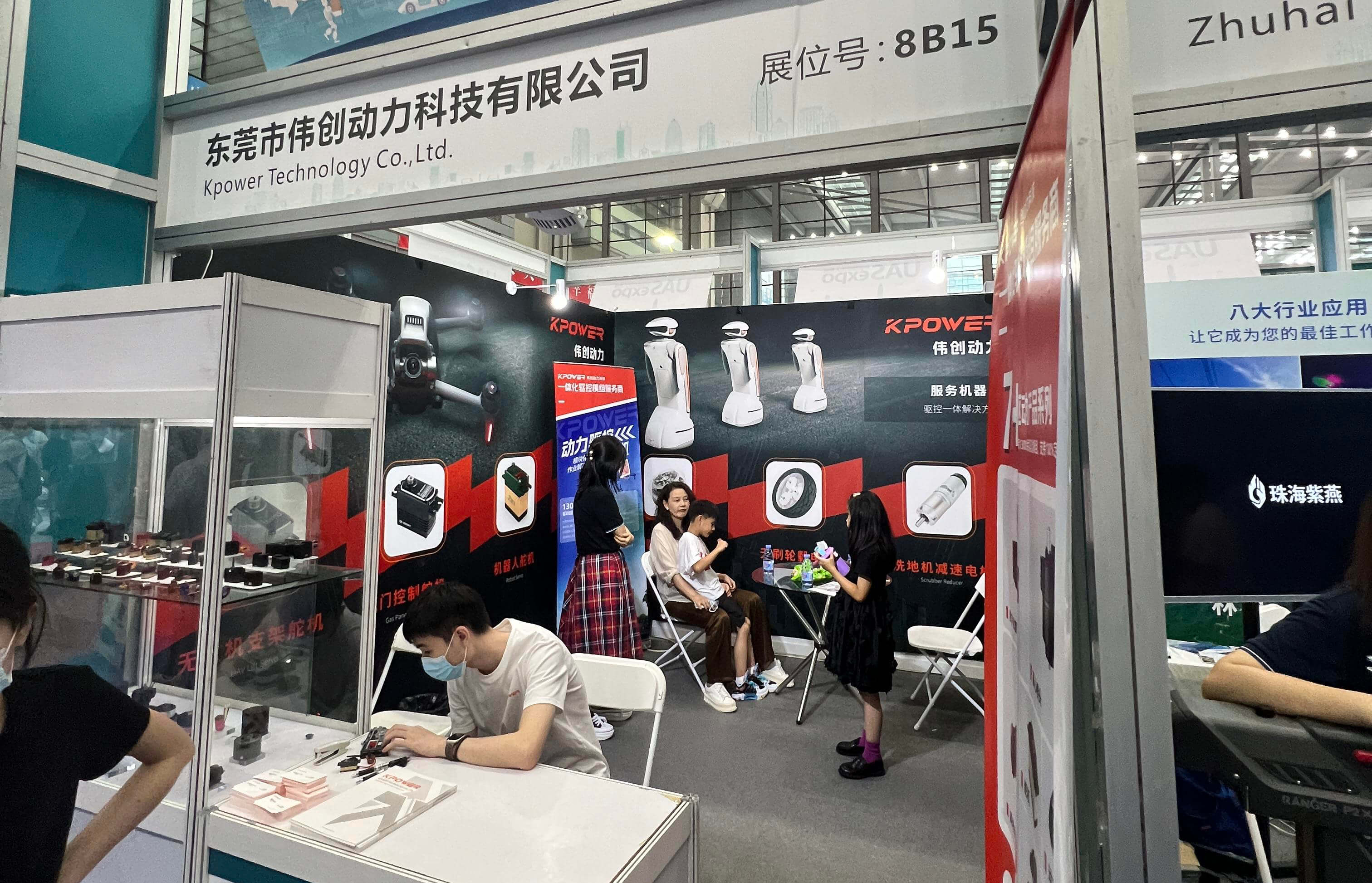
Established in 2005, Kpower has been dedicated to a professional compact motion unit manufacturer, headquartered in Dongguan, Guangdong Province, China. Leveraging innovations in modular drive technology, Kpower integrates high-performance motors, precision reducers, and multi-protocol control systems to provide efficient and customized smart drive system solutions. Kpower has delivered professional drive system solutions to over 500 enterprise clients globally with products covering various fields such as Smart Home Systems, Automatic Electronics, Robotics, Precision Agriculture, Drones, and Industrial Automation.
Update Time:2026-01-22

Contact Kpower's product specialist to recommend suitable motor or gearbox for your product.


