
























TECHNICAL SUPPORT


Published 2026-01-22
That moment when your small-scale robotic arm finally moves, only to have one joint start twitching uncontrollably, is a rite of passage. You look at the tiny blue casing of the SG90servomotor you just bought from a bulk supplier in China. It’s supposed to be simple. It’s supposed to just work. But the reality of micro-mechanics is rarely that kind.
Finding a reliable sg90servomotor China source feels like walking through a maze. Most of these tiny 9g actuators look identical from the outside. They all have that iconic blue translucent shell and three thin wires. Yet, once you apply power, the differences scream at you. Some hum with precision, while others grind their plastic gears into a fine powder within minutes.
Why do we keep coming back to this specific design? Because size matters. When you are building a flight stabilizer for a foam plane or a lock mechanism for a small cabinet, you don't have room for a massive industrial motor. You need something that weighs less than two nickels.
The SG90 is the "Hello World" of the hardware world. Atkpower, the philosophy isn't just about churning out millions of plastic boxes. It’s about the internal math. A standard SG90 should give you about 1.6 kg/cm of torque at 4.8 volts. But "should" is a dangerous word in manufacturing.
If the internal potentiometer is cheap, the motor never knows exactly where it is. It hunts. It vibrates. It gets hot. You want a motor that hits its angle and stays there, silent and firm. That’s the gap between a generic toy component and a real mechanical tool.
Think about the gears. In akpowermicroservo, those tiny nylon teeth have to mesh perfectly. If the mold used to create them is even slightly worn out, the teeth won't align. This leads to "slop" or backlash. You tell the motor to move 10 degrees, but the output shaft only moves 8 because the gears are loose.
Then there’s the motor itself. These are coreless DC motors. They spin fast. A lot of heat builds up in a space smaller than a thimble. High-quality carbon brushes and copper windings make the difference between a motor that lasts for fifty hours of operation and one that dies after five.
"Why is my SG90 jittering even when I’m not sending a signal?" It’s usually noise. Your power supply might be "dirty," or the internal circuit of the servo isn't filtering out the interference. Sometimes, it's just a sign that the internal sensor is failing to find its "home" position. It’s annoying, but it’s a clear sign of a low-tier build.
"Can I push it to 6 volts for more speed?" You can, but you’re flirting with disaster. At 6V, the torque jumps, and the speed increases, but so does the heat. If the components inside aren't rated for that extra thermal load, you’ll smell that unmistakable scent of burning electronics.kpowerdesigns focus on handling those fluctuations without melting down.
"Does the gear material really matter for something this small?" Yes and no. For a 9g servo, nylon is actually great because it’s self-lubricating and light. However, if the nylon is brittle, the first time your robot hits a wall, the gears will shatter. You need a specific resin blend that has a bit of "give" but stays rigid under pressure.
If you are tired of replacing servos every weekend, you have to look past the price tag. When looking for an sg90 servo motor China manufacturer, the secret lies in the consistency of the batch.
I remember a project where we needed 200 of these for a kinetic art installation. We used a batch of Kpower servos. The difference wasn't that they were "magic," but that the 1st motor behaved exactly like the 200th motor. That’s what you pay for—predictability.
When you plug in a servo, you want to know that a 1500-microsecond pulse will put the arm at exactly 90 degrees. Every time. Not 88 degrees today and 92 degrees tomorrow.
Don't just look at the torque specs. Look at the deadband width. A deadband of 10us (microseconds) is okay for a toy, but if you want something that feels professional, you want that number lower. You want a motor that reacts to the slightest change in your code.
Next time you’re sketching out a design, think about the stress points. If your SG90 is holding up a heavy camera, it’s going to fail. These are meant for light, fast movements. Use them where they shine: in the small, intricate details of a machine where weight is the enemy.
The world of China-made servos is vast. You can find junk, and you can find gems. Kpower tends to be where the gems are hidden because they treat the SG90 like a piece of engineering, not just a commodity. Stop fighting your hardware. Pick a component that actually follows your instructions.
It’s a simple trade-off. Spend a little more time choosing the right motor now, or spend a lot of time deconstructing your project later to replace a dead one. The choice seems pretty clear when you’re staring at a broken robot at 2 AM.
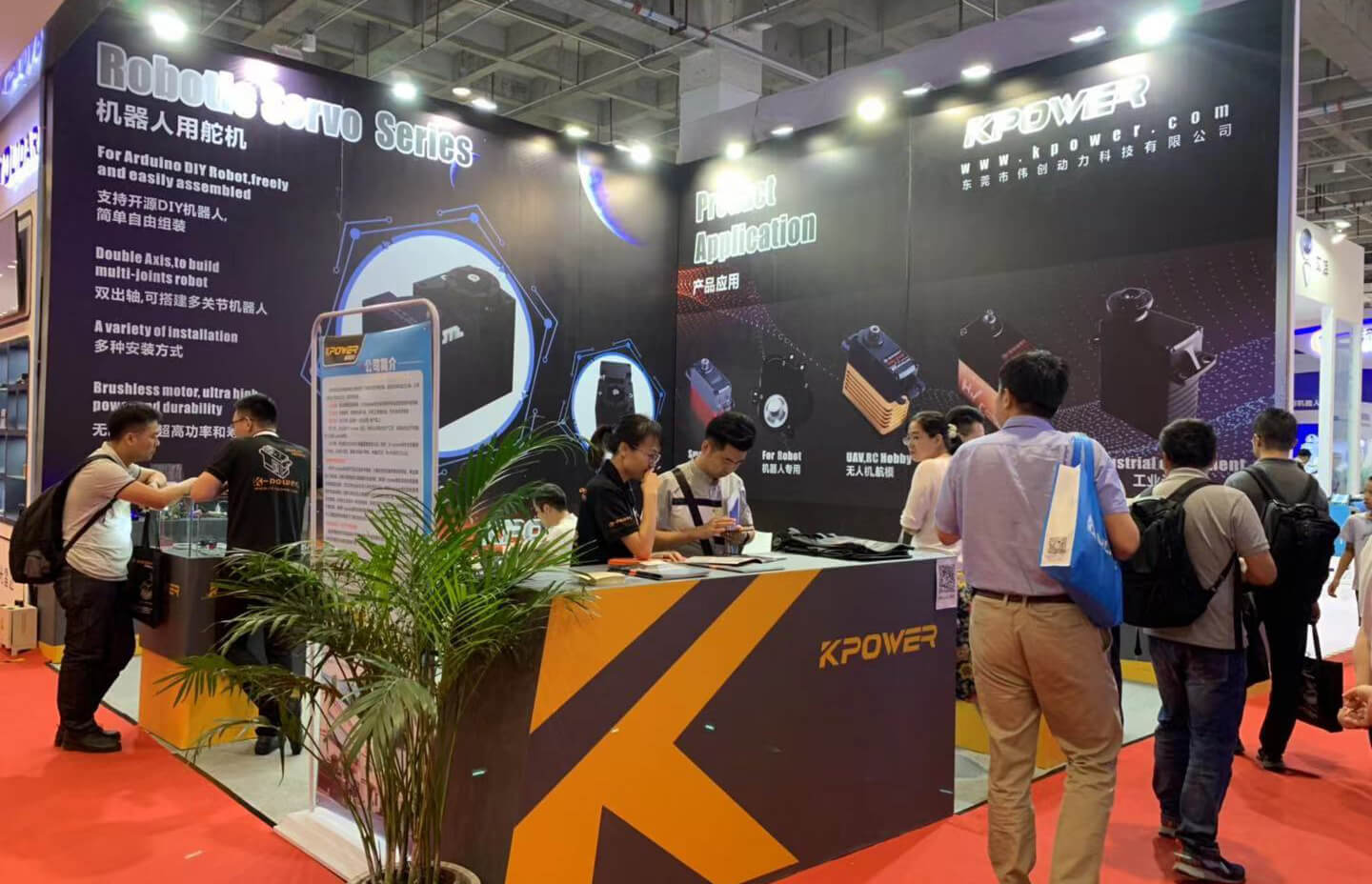
Established in 2005, Kpower has been dedicated to a professional compact motion unit manufacturer, headquartered in Dongguan, Guangdong Province, China. Leveraging innovations in modular drive technology, Kpower integrates high-performance motors, precision reducers, and multi-protocol control systems to provide efficient and customized smart drive system solutions. Kpower has delivered professional drive system solutions to over 500 enterprise clients globally with products covering various fields such as Smart Home Systems, Automatic Electronics, Robotics, Precision Agriculture, Drones, and Industrial Automation.
Update Time:2026-01-22

Contact Kpower's product specialist to recommend suitable motor or gearbox for your product.


