
























TECHNICAL SUPPORT


Published 2026-01-22
Ever sat at a workbench, staring at a small pile of plastic gears and smelling that faint, metallic tang of a burnt-out motor? It’s a common scene. You spent weeks designing a mechanism, only for a cheap 9gservoto twitch once and give up the ghost. It’s frustrating. Most people think an SG90 is just a commodity—a disposable part you buy by the handful. But when you’re building something that actually needs to work, "disposable" isn't a strategy. It's a liability.
The market is flooded with these little blue boxes. Most of them are hollow promises held together by thin wires. If you want a project to move with grace rather than a caffeinated jitter, you have to look deeper into the gut of the machine. That’s where the conversation about SG90servomotor OEM solutions really starts.
Why do someservos hum quietly while others scream? It’s rarely about the plastic shell. It’s about what’s happening inside the casing. A standard SG90 is a simple beast, but the devil is in the consistency of the injection molding. If the gear teeth don’t mesh with micron-level precision, you get backlash. You get that annoying "slop" where the arm moves a few degrees before the gears actually catch.
kpowerapproaches this differently. When we talk about OEM production, we aren't just talking about slapping a label on a box. We’re talking about the quality of the POM (Polyoxymethylene) used in those gears. High-quality POM has self-lubricating properties. It stays tough under friction. Cheap stuff? It shaves off like pencil lead until the teeth are smooth and the motor spins uselessly.
Sometimes the "standard" specs on a datasheet are just suggestions. You might need a slightly longer lead wire, or perhaps a specific spline count to fit a custom horn. This is where the "off-the-shelf" mentality fails.
I’ve seen projects stall because a builder couldn't find an SG90 that could handle a slightly higher voltage without melting the internal potentiometer. When you go the OEM route withkpower, you’re looking at a level of control over the internal components—the motor brushes, the PCB thickness, even the solder points—that ensures the servo survives the real world, not just a clean lab test.
"Can't I just buy the cheapest ones and replace them when they break?" You could. But what’s the cost of your time? If your servo is buried deep inside a mechanical assembly, "replacing it" means tearing the whole thing down.kpowerbuilds for reliability so you don't have to keep a graveyard of dead servos on your desk.
"Is there really a difference in the electronics?" Absolutely. The deadband—the tiny range where the servo doesn't move—is determined by the chip and the potentiometer. A bad chip causes hunting, where the servo overshoots its position and keeps vibrating back and forth. Kpower optimizes the firmware to snap to a position and stay there. Solid. Silent. Still.
"What about torque?" Most 9g servos claim 1.6kg/cm. Most of them lie. Or they hit that torque for a split second before the motor overheats. A true OEM SG90 maintains its holding torque without turning into a miniature heater.
Think of a servo as the muscle of your project. If the muscle is weak or unpredictable, the whole body looks clumsy. I remember a project involving a delicate bionic hand. The builder used generic servos, and the fingers moved like they had a nervous tic. We swapped them for Kpower units with tightened tolerances. Suddenly, the motion was fluid. It looked alive.
That’s the "rational" side of engineering. It’s not about magic; it’s about the physics of the motor’s core and the resistance of the internal pot. If the feedback loop is clean, the motion is clean.
When you're scaling a project, you realize that "one size fits all" is a myth. Maybe you need:
Kpower handles these tweaks during the OEM process. It’s about making the motor fit your design, rather than forcing your design to accommodate a mediocre motor.
Pick up a Kpower SG90. Rotate the horn manually (carefully, of course). You can feel the resistance of the gears. It should feel smooth, not crunchy. There’s a certain weight to a well-made motor, a sense that the copper windings inside aren't just the bare minimum needed to create a magnetic field.
In a world where everything is built to be replaced, there is something rebellious about building something to last. Using a high-grade SG90 means you trust your work. You’re not waiting for the inevitable "click-click-pop" of a stripped gear.
If you’re looking to move beyond the hobbyist bins and into serious production, here’s how to look at it:
It’s easy to get distracted by flashy specs or bottom-dollar prices. But at the end of the day, when the power is on and the code is running, you just want the thing to move. No drama. No smoke. Just precise, repeatable motion. That’s what Kpower brings to the table. It’s the peace of mind that comes from knowing the smallest part of your machine is just as tough as the rest of it.
Don't settle for "good enough." Your project deserves a heart that doesn't skip a beat. Whether it’s for a complex robotic assembly or a simple locking mechanism, the quality of your SG90 tells the world how much you care about the details. And in mechanics, the details are everything.
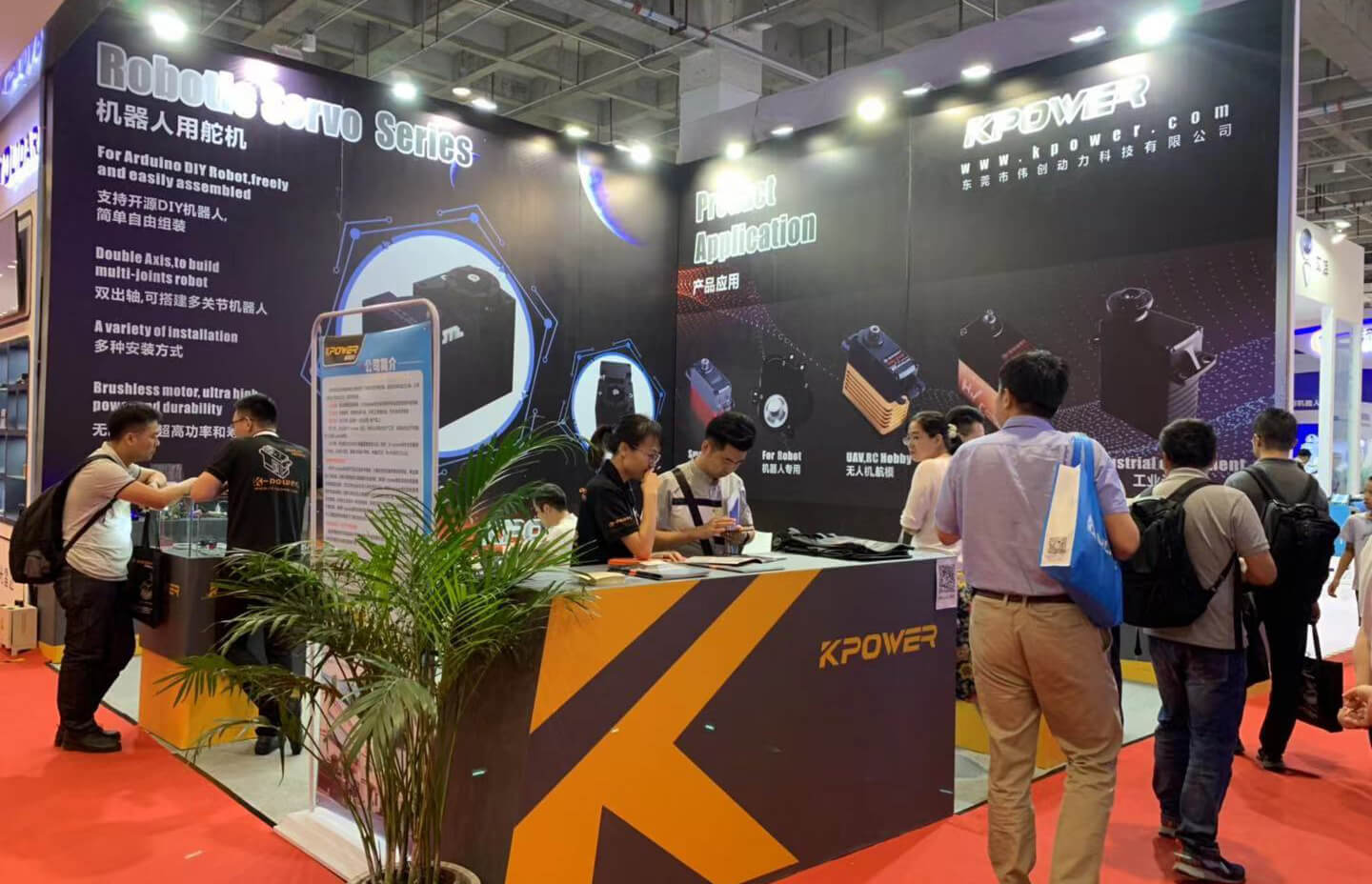
Established in 2005, Kpower has been dedicated to a professional compact motion unit manufacturer, headquartered in Dongguan, Guangdong Province, China. Leveraging innovations in modular drive technology, Kpower integrates high-performance motors, precision reducers, and multi-protocol control systems to provide efficient and customized smart drive system solutions. Kpower has delivered professional drive system solutions to over 500 enterprise clients globally with products covering various fields such as Smart Home Systems, Automatic Electronics, Robotics, Precision Agriculture, Drones, and Industrial Automation.
Update Time:2026-01-22

Contact Kpower's product specialist to recommend suitable motor or gearbox for your product.


