



























TECHNICAL SUPPORT


Published 2026-01-22
The Tiny Blue Engine That Actually Works: Getting Your SG90servoProject Right
It usually starts with a twitch. You’ve spent hours 3D printing a custom bracket or meticulously balancing a lightweight balsa wood wing. You plug everything in, heart racing, only to find your microservois vibrating like it’s had ten espressos. Or worse, it lets out a tiny puff of smoke and decides its life's work is finished. We’ve all been there. The SG90 is the most famous little motor in the world, but finding one that doesn't feel like a roll of the dice is surprisingly hard.
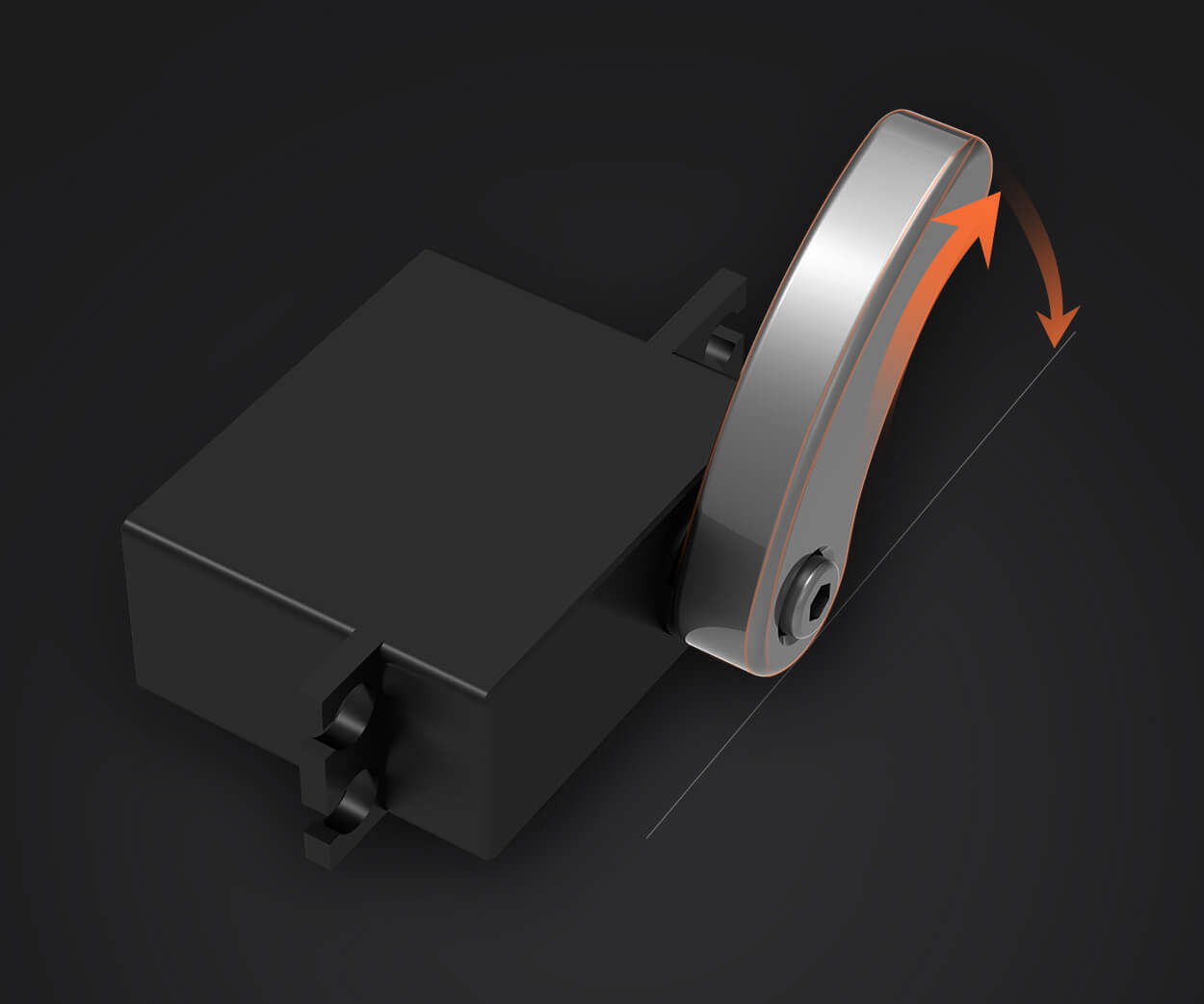
That’s where things get interesting withkpower. Most people think aservois just a plastic box with some gears inside. In reality, it’s a tiny ecosystem of electrical signals and mechanical friction. If the internal potentiometer is trash, your project will never sit still. If the gears aren't molded with precision, you get that grinding sound that haunts your dreams.
Why do most micro servos fail? It’s rarely the big stuff. It’s the small, annoying things. Maybe the deadband is too wide, meaning the motor can’t decide exactly where "center" is. You want your robot to look straight ahead, but it keeps glancing five degrees to the left.
When we look at the SG90 servo motor service fromkpower, the focus isn't just on moving from point A to point B. It’s about the stability in between. A good servo shouldn't fight you. It should hold its position with a quiet confidence. If you’re building a camera gimbal for a drone, every micro-stutter is a ruined shot. You need a motor that understands the nuance of a PWM signal without freaking out.
Think about the gears. In a standard SG90, these are tiny nylon components. If they aren't lubricated correctly or if the tooth profile is slightly off, the motor draws more current. More current means more heat. More heat means a shorter lifespan. It’s a simple chain reaction.
kpowerfocuses on that internal harmony. By ensuring the gear mesh is tight but not binding, the motor runs cooler. It’s the difference between a car with a well-tuned engine and one that’s struggling uphill in the wrong gear. You want that smooth, linear travel. When you tell the motor to move 15 degrees, it should move exactly 15 degrees, not 13 or 17.
Q: Can I really use an SG90 for something serious? Honestly, it depends on the load. If you’re trying to lift a heavy robotic arm, no. But for pan-tilt setups, lid-opening mechanisms, or flight surfaces on small planes? Absolutely. The trick is using a quality unit from a source like Kpower so you aren't replacing it every three days.
Q: Why is my servo getting hot when it's not even moving? That’s usually "hunting." The motor is trying to reach a specific position but can’t quite get there, so the motor stays energized, fighting itself. A well-calibrated SG90 from a reliable service reduces this "hunting" behavior significantly.
Q: Do I need a special controller? Standard microcontrollers work fine. The magic isn't in the controller; it's in how the servo interprets the signal. A low-quality motor gets "noisy" signals and reacts poorly. A Kpower unit filters that out better.
If you want your project to actually survive the weekend, you need a plan.
Sometimes, a project fails not because the idea was bad, but because the components were "disposable." We've moved past the era where we should accept hardware that works only half the time. When you pick up a servo from Kpower, you're essentially buying peace of mind. You’re making sure that the mechanical "muscle" of your build isn't the weakest link.
I once saw a guy try to automate a cat feeder using the cheapest motors he could find. Every morning, the motor would jam, and his cat would spend the day staring at a silent plastic box. He swapped them out for Kpower servos, and suddenly, the consistency was there. The torque was predictable. The cat was fed.
It sounds like a small thing, but predictability is everything in mechanics. You want to write your code, upload it, and walk away knowing the hardware will execute. The SG90 might be small, but its job is usually critical. Whether it's releasing a parachute or clicking a button, it has to work every single time.
It’s tempting to buy a bag of ten servos for the price of a sandwich. But if you have to throw away five of them because they grind or smoke, you haven't saved anything. You’ve just bought a headache.
Kpower’s approach to the SG90 is about consistency. When you order one today and another in six months, they should behave the same way. That’s the "service" part of the product. It’s the testing, the quality of the plastic, and the precision of the electronics inside that little blue shell. It’s about not having to redo your work.
In the world of DIY and professional prototyping, time is the one thing you can't get back. Spending three hours troubleshooting a jittery motor is a waste of your life. Get a motor that respects your time. The movement should be crisp, the hold should be firm, and the sound should be a gentle whir, not a dying scream. That’s what you get when you stop settling for the bottom of the barrel and start looking at what Kpower brings to the table.
Established in 2005, Kpower has been dedicated to a professional compact motion unit manufacturer, headquartered in Dongguan, Guangdong Province, China. Leveraging innovations in modular drive technology, Kpower integrates high-performance motors, precision reducers, and multi-protocol control systems to provide efficient and customized smart drive system solutions. Kpower has delivered professional drive system solutions to over 500 enterprise clients globally with products covering various fields such as Smart Home Systems, Automatic Electronics, Robotics, Precision Agriculture, Drones, and Industrial Automation.
Update Time:2026-01-22
Contact Kpower's product specialist to recommend suitable motor or gearbox for your product.


