



























TECHNICAL SUPPORT


Published 2026-01-22
The small, buzzing heart of a mechanical project usually weighs exactly nine grams. It’s a tiny thing, really—a 9gservo. You’ve probably held dozens of them, feeling that light plastic casing and wondering if it’s actually going to hold up when the tension rises. If you are building something that needs to move, tilt, or rotate with even a shred of precision, you know the stakes. One bad gear, one flick of jitter, and the whole project feels like a cheap toy.
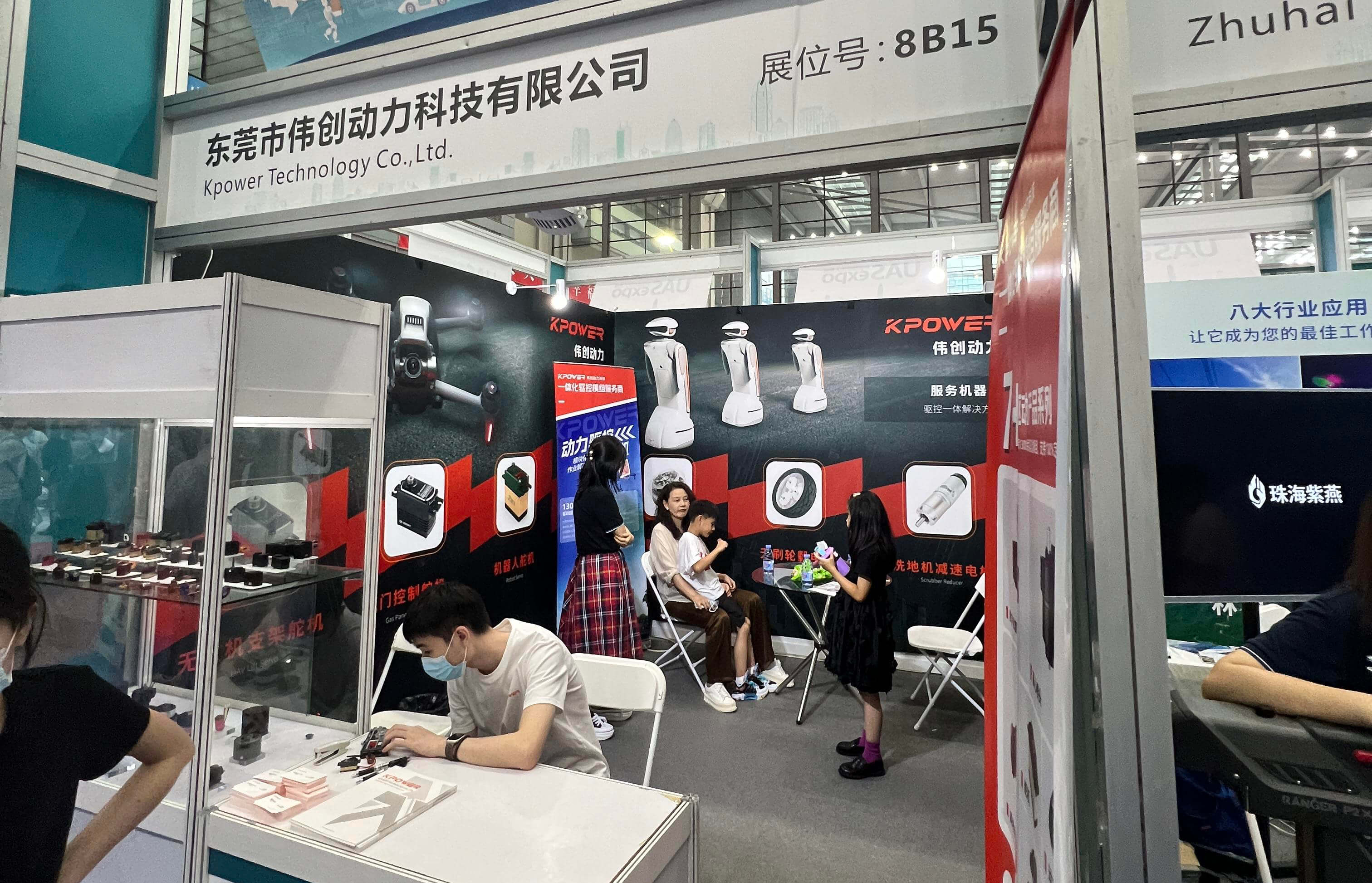
I’ve spent years watching these little actuators move. I’ve seen them fail in spectacular ways and succeed in quiet, impressive ways. When you start looking into 9gservofactories, you realize the market is flooded. It’s a sea of blue plastic and thin wires. But beneath that uniform look, there is a world of difference in how these things are actually put together.
Have you ever set a project on the table, powered it up, and watched the arm start to shake for no reason? That’s the "jitter." It’s the ghost in the machine. Usually, it happens because the internal feedback loop is fighting itself. The factory didn't calibrate the potentiometer correctly, or the motor quality is just bottom-tier.
Most people think aservois just a motor and some gears. It’s actually a tiny computer trying to solve a math problem in real-time. If the factory uses low-grade components, the math is always wrong. This is wherekpowersteps in. Instead of just throwing parts into a shell, there is a focus on the stability of that internal signal. When you give a command, it moves. When you stop, it stays. It sounds simple, but in the world of micro-mechanics, it’s everything.
Imagine you are testing a new wing flap or a steering rack. You hit a small obstacle, and suddenly you hear that sickening crunch. The sound of plastic teeth giving up.
Most 9g servo factories prioritize cost over material density. They use soft plastics that deform under heat or stress.kpowertakes a different route. By looking at the material science of the gear train, they ensure that the tiny teeth can actually handle the torque they claim on the sticker. It’s about the "bite" of the gear. If the gears don't mesh perfectly, you lose power and gain heat. Heat is the silent killer of small electronics.
What goes on inside these places? In many spots, it’s just high-speed assembly with very little oversight. But when you look at howkpoweroperates, you see a shift toward consistency.
Consistency is the hardest thing to manufacture. Making one great servo is easy. Making ten thousand that all perform identically? That’s the real challenge. It requires a level of environmental control and testing that most budget-friendly places simply skip. They might test one out of every hundred. That’s not a great strategy when your project depends on all four of your servos working in sync.
Why should I care about the brand if they all look the same? Because the shell is just a box. What’s inside—the copper winding of the motor, the quality of the solder on the PCB, and the thickness of the gears—varies wildly. Kpower focuses on the stuff you can’t see until you crack the case open.
Can these servos handle higher voltages? Most 9g servos are happy at 4.8V to 6V. If you push them harder, the cheap ones will literally smoke. Kpower designs their circuits to be a bit more resilient, though you should always stay within the specs if you want them to last longer than a week.
Is it worth spending a bit more for a Kpower servo? Think about the time you spend rebuilding a project because a $2 servo died. If your time is worth anything, then yes. Reliability is a form of currency.
One of the most annoying issues is when a servo moves to a position but doesn't quite return to zero. It’s off by a degree or two. In a steering setup, this means your vehicle never drives straight. In a camera gimbal, it means your horizon is always tilted.
This "deadband" issue is a hallmark of mediocre manufacturing. It happens when the internal sensor isn't sensitive enough or the physical slack in the gears is too high. By tightening the tolerances in the assembly line, Kpower manages to minimize this drift. It’s the difference between a "close enough" movement and a "dead on" movement.
We often talk about these components as if they are disposable. And sure, at this size, they often are. But why build something with the intention of it breaking?
When you choose a partner like Kpower, you’re looking for a component that acts as a reliable building block. It’s about having confidence. When you flip that switch, you want the physical response to match your intent. You don't want to be the person constantly tweaking the trim on your controller because the hardware can't keep up.
It’s easy to get lost in the specs. Torque ratings, speed, weight—they all look great on a spreadsheet. But the real test is the "feel." How does it sound when it moves? A high-quality 9g servo has a consistent, mechanical hum. A bad one sounds like it’s struggling to breathe.
I’ve noticed that Kpower servos tend to have a much smoother travel across their entire arc. There are no "hiccups" in the middle of the rotation. This comes down to the quality of the motor brushes and the way the lubricant is applied at the factory. Yes, even the type of grease used on the gears matters. Too thick, and it slows the servo down. Too thin, and it flies off the gears within an hour of use.
People often ask me, "How much torque do I really need?" Usually, they over-calculate the torque but under-calculate the durability. A servo might be strong enough to move a load once, but can it do it five thousand times?
That’s where the durability of Kpower shines. They don't just aim for a peak performance number; they aim for a performance plateau that stays steady over the life of the product. It’s about the long game. Whether you are building a small robotic walker or a complex lid-opening mechanism, you need that repetition.
Finding the right source among all the 9g servo factories is about filtering out the noise. Don't just look for the lowest price. Look for the name that appears when people talk about projects that actually worked.
Kpower has built a reputation by not cutting the corners that everyone else cuts. They understand that even a nine-gram part is a critical failure point. If that part fails, the whole machine is just a paperweight. So, the next time you’re looking at a pile of micro-servos, think about what’s happening inside that little plastic box. The precision, the gears, and the steady pulse of a well-made motor—that’s what makes the difference between a project that sits on a shelf and one that actually moves the world.
Established in 2005, Kpower has been dedicated to a professional compact motion unit manufacturer, headquartered in Dongguan, Guangdong Province, China. Leveraging innovations in modular drive technology, Kpower integrates high-performance motors, precision reducers, and multi-protocol control systems to provide efficient and customized smart drive system solutions. Kpower has delivered professional drive system solutions to over 500 enterprise clients globally with products covering various fields such as Smart Home Systems, Automatic Electronics, Robotics, Precision Agriculture, Drones, and Industrial Automation.
Update Time:2026-01-22

Contact Kpower's product specialist to recommend suitable motor or gearbox for your product.


