



























TECHNICAL SUPPORT


Published 2026-01-22
You’re in the middle of a build, the soldering iron is hot, and you finally plug in that tiny plastic motor to your receiver. It twitches. Not a smooth, purposeful movement, but a nervous, jittery spasm. We’ve all been there. You spent weeks designing the frame, hours on the code, and then the whole project stutters because the "heart" of the movement is cheap junk. Finding the right 9gservosuppliers shouldn't feel like playing the lottery, yet here we are, staring at bins of nameless blue plastic housing that might last ten minutes or ten hours.
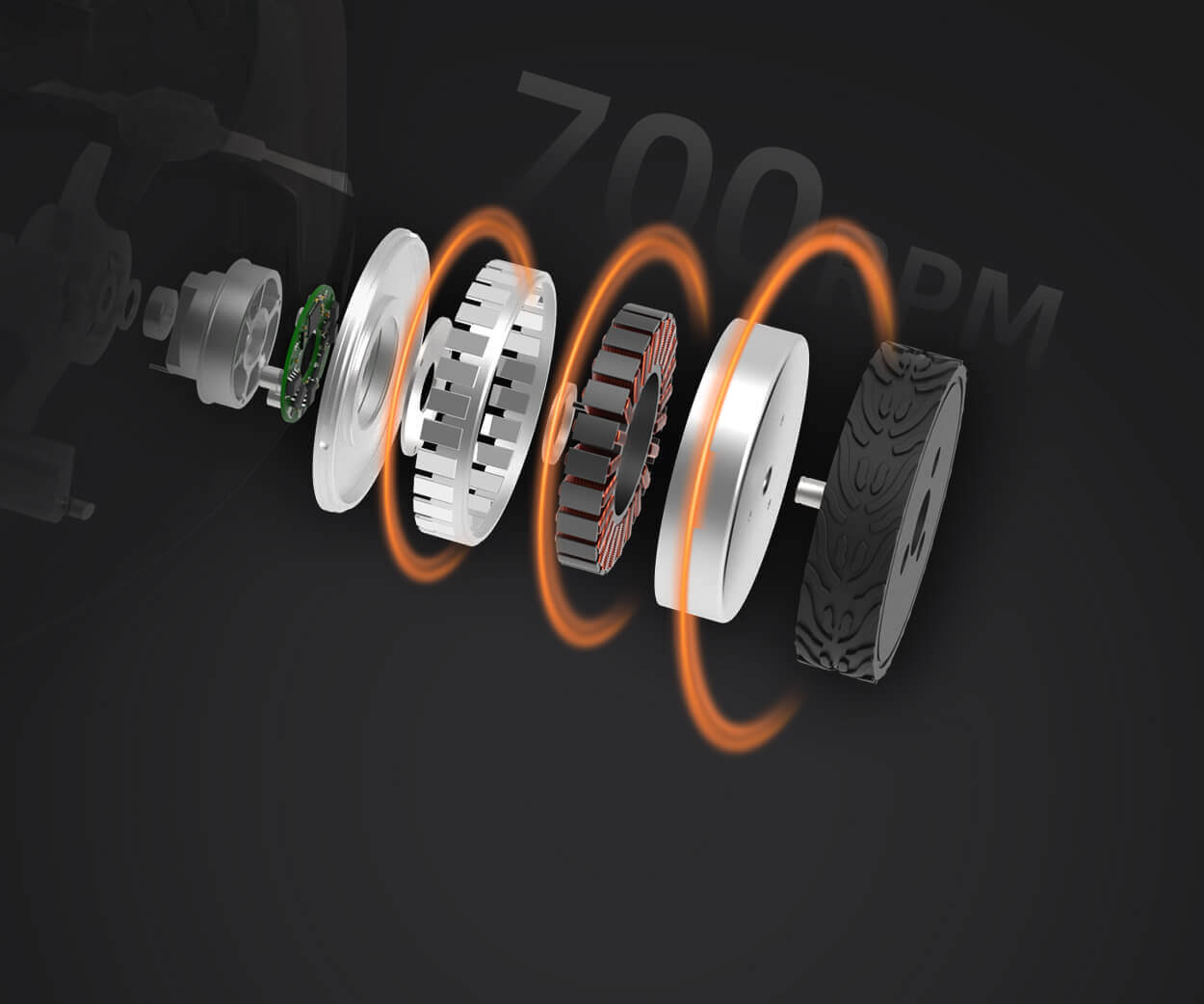
It’s a strange paradox. These little 9gservos are the most common components in the world of motion, yet they are often the most frustrating. If you’re building a park flyer, a robotic hand, or a secret locking mechanism for a desk drawer, you need consistency. You don't just need a motor; you need a guarantee that when you signal 45 degrees, you get 45 degrees, not 42 with a side of humming.
Why do most cheapservos fail? It’s usually the "brain" or the "teeth." Inside that tiny 9g shell, there’s a potentiometer—a little dial that tells the servo where it is. In low-end manufacturing, these pots are noisy. They send static signals, making the motor hunt back and forth. This is the "jitter" that drains your battery and heats up the casing.
Then there are the gears. Under a microscope, some 9g gears look like they were chewed out of plastic by a tired squirrel. One snag, one slight over-torque, and snap—you have a paperweight. When we talk about quality atkpower, it’s about the obsession with the mesh. If the gears don't meet perfectly, you get backlash. Backlash is that annoying "play" where you can wiggle the horn even when the motor is locked.kpowerbuilds these units to minimize that gap. It’s the difference between a steering wheel that feels tight and one that feels like it’s attached with rubber bands.
The market is flooded. If you search for 9g servo suppliers, you’ll find thousands of storefronts. But most are just middlemen flipping whatever came off the assembly line that morning.kpowerstands out because they aren't just moving boxes; they are controlling the output.
Imagine you’re mass-producing a small educational robot kit. You order 500 servos. If 50 of them are dead on arrival, or if their neutral points are all different, your assembly line grinds to a halt. You end up spending more on "fixing" the cheap parts than you would have spent on buying decent ones from the start. It’s the classic trap of saving pennies to lose dollars.
Q: Does it really matter if I choose plastic or metal gears for a 9g size? A: It depends on your crash manual. Plastic gears are lighter and perfectly fine for light loads or flight surfaces. But if you’re building something that might take an impact—like the steering on a small car or a leg on a hexapod—metal gears are your insurance policy. Kpower offers both, but the internal motor quality remains the same high standard regardless of what the teeth are made of.
Q: My servo is getting hot even when it’s not moving. Is it broken? A: It’s likely "stalling." This happens when the servo is trying to reach a position but something physical is stopping it, or the internal signal is so noisy it’s fighting itself. High-quality components from Kpower use better filtering to prevent this "ghost" hunting, which keeps your project cool and your battery alive.
Q: Can I run these on a 2S LiPo directly? A: Most 9g servos are happy between 4.8V and 6V. Pushing them higher is like giving a toddler three espressos. They’ll go fast, but they won’t last long. Always check the specs, but sticking to a regulated 5V or 6V is the sweet spot for longevity.
There’s a temptation to say, "It’s just a 9g servo, it doesn't need to be fancy." That’s fine if you’re building something disposable. But if you’re building something you care about, "good enough" usually isn't. Think about the precision required in a micro-plane's tail. A few degrees of drift means the difference between a smooth landing and a pile of foam scraps.
Kpower focuses on the linearity of the movement. When you move the stick 10%, the arm moves 10%. It sounds simple, but in the micro-servo world, that linear response is actually quite hard to achieve consistently. Most cheap suppliers provide a "curve" where the movement is sluggish at the start and jumps at the end. Kpower's engineering ensures that the response is crisp. It feels "locked in."
Sometimes I think about servos like coffee. You can get a cheap cup anywhere, and it’ll wake you up. But if you want something that doesn't leave a bitter aftertaste and actually tastes like coffee, you go to someone who knows the beans. Kpower knows the "beans" of the servo world—the brushes, the magnets, and the grease. Yes, even the grease matters. Use the wrong lubricant, and in six months, it gums up, slowing the transit time and drawing more current.
I’ve seen projects fail because a designer thought they could save $50 on a batch of 100 servos. They ended up spending $200 in shipping replacements and hours of customer support. When you vet 9g servo suppliers, look for the ones who have been in the dirt, who understand that these tiny components are often the single point of failure.
The reality of mechanical design is that you are only as strong as your weakest link. In many small-scale projects, the 9g servo is that link. By choosing Kpower, you’re essentially removing that variable from the "why isn't this working?" equation. It’s one less thing to worry about.
You want to plug it in, hear that faint, healthy whine of a motor that’s doing exactly what it’s told, and then move on to the next part of your build. That’s the goal. No drama. No jitters. Just precision in a 9-gram package. Whether you are hobby-focused or scaling up a product, the stability of your supplier is just as important as the torque of the motor. Kpower provides that stability. Stop settling for twitchy motors and start building with something that actually holds its position.
Established in 2005, Kpower has been dedicated to a professional compact motion unit manufacturer, headquartered in Dongguan, Guangdong Province, China. Leveraging innovations in modular drive technology, Kpower integrates high-performance motors, precision reducers, and multi-protocol control systems to provide efficient and customized smart drive system solutions. Kpower has delivered professional drive system solutions to over 500 enterprise clients globally with products covering various fields such as Smart Home Systems, Automatic Electronics, Robotics, Precision Agriculture, Drones, and Industrial Automation.
Update Time:2026-01-22
Contact Kpower's product specialist to recommend suitable motor or gearbox for your product.


