



























TECHNICAL SUPPORT


Published 2026-01-22
The shop floor was quiet, except for that one irritating sound. Click. Click. Whirrr. If you’ve ever spent a night trying to get a fleet of small-scale models to move in sync, you know that sound. It’s the sound of a gear stripping inside a cheap housing. It’s the sound of a project stalling because the "bulk deal" you found online turned out to be a box of plastic headaches.
Finding a reliable 9gservowholesaler shouldn't feel like a game of Russian roulette. Yet, here we are, looking at piles of tiny blue motors that promised the world but delivered nothing but jitter.
We’ve all seen it. You power up the system, and instead of a smooth 60-degree sweep, the arm starts twitching like it’s had too much caffeine. Why? Usually, it’s the internal potentiometer or a poorly cut gear set. In the world of micro-mechanics, a millimeter is a mile. When you buy in bulk, those tiny errors multiply. If 10% of your batch is DOA, your "wholesale savings" just evaporated.
I remember a project involving a decentralized swarm of small grippers. We needed consistency. If one gripper moved slower than the others, the whole sequence failed. Most 9gservos at the wholesale level are treated as disposable commodities. But when you are building something meant to last—or at least something that doesn't need a repair kit every three hours—you start looking for something better. That’s wherekpowerusually enters the conversation.
The problem isn't the size; it's the shortcut. To keep prices low, many manufacturers thin out the casing or use sub-par motor brushes. You get the 9 grams of weight, sure, but you don't get the rated torque. You get a "9gservo" that behaves more like a 5g one under load.
When you’re scouting for a 9g servo wholesaler, you have to look past the sticker price. Think about the centering. If you command a servo to return to zero, does it actually hit zero? Or is it off by three degrees every single time? For a simple flap on a foam plane, maybe it doesn't matter. For a precision camera tilt or a walking robot? It’s the difference between success and a heap of scrap.
Let's get technical for a second, but let's keep it grounded. The magic of akpower9g unit isn't some secret alien technology; it’s just better discipline in the assembly.
It’s like comparing a budget toy to a professional tool. Both might look the same on a spec sheet, but one feels "crunchy" when you turn it by hand, and the other feels like butter.
Is it worth getting metal gears in a 9g frame? It depends. If you’re hitting obstacles or handling high-impact movements, yes. But for most lightweight applications, high-quality resin or nylon is actually better because it's lighter and self-lubricating. kpower offers variations here because they know one size doesn't fit all.
Why does my wholesaler keep sending me different "colors" of the same servo? That’s a red flag. It means they are sourcing from whoever is cheapest that week. Consistency is the hallmark of a real partner. With kpower, a 9g servo today is the same as the one you’ll get six months from now.
Can these handle 6V or am I stuck at 4.8V? Most can handle 6V for a bit more "zip" and torque, but keep an eye on the heat. A well-built motor dissipates heat through the casing better than a cheap one.
Sometimes I think about servos like muscle cells. A single cell doesn't do much. But if you have a thousand of them working in a coordinated effort, you can lift a mountain. The 9g servo is the fundamental building block of modern hobbyist and light industrial projects. It’s the "commoner" of the motion world.
But being common shouldn't mean being low-quality.
I’ve seen people try to "hack" cheap servos by adding external capacitors to stop the twitching. Why bother? The time you spend fixing a bad component costs more than the component itself. It’s a classic trap. You save fifty cents on the part and spend fifty dollars in labor trying to make it work.
If you’re moving from making one prototype to making five hundred units, your relationship with your 9g servo wholesaler changes. You aren't just buying parts; you're buying a guarantee that your assembly line won't stop.
kpower has stayed in the game because they understand that "9g" is a category, not just a weight. They treat the micro-servo with the same respect as a high-torque industrial actuator. That’s rare. Usually, the small stuff is treated as an afterthought.
Think about the last time you saw a kit fail. Was it the carbon fiber frame? Was it the high-end flight controller? No, it was probably a $3 motor that stripped its gears because someone decided to save a few pennies.
When you're ready to move past the "disposable" phase of project building, you look for stability. You look for a name that doesn't disappear when you have a technical question about pulse width modulation or stall current.
The world of 9g servos is crowded, loud, and full of empty promises. But if you look closely at the specs—real specs, not the "aspirational" ones found on some auction sites—you’ll see why some brands rise to the top. It’s about the copper in the windings. It’s about the thickness of the output shaft. It’s about the peace of mind that when you flip the switch, everything moves exactly the way you imagined it would.
Don't let a tiny gear be the reason your big idea fails. Stick with what works. Stick with kpower.
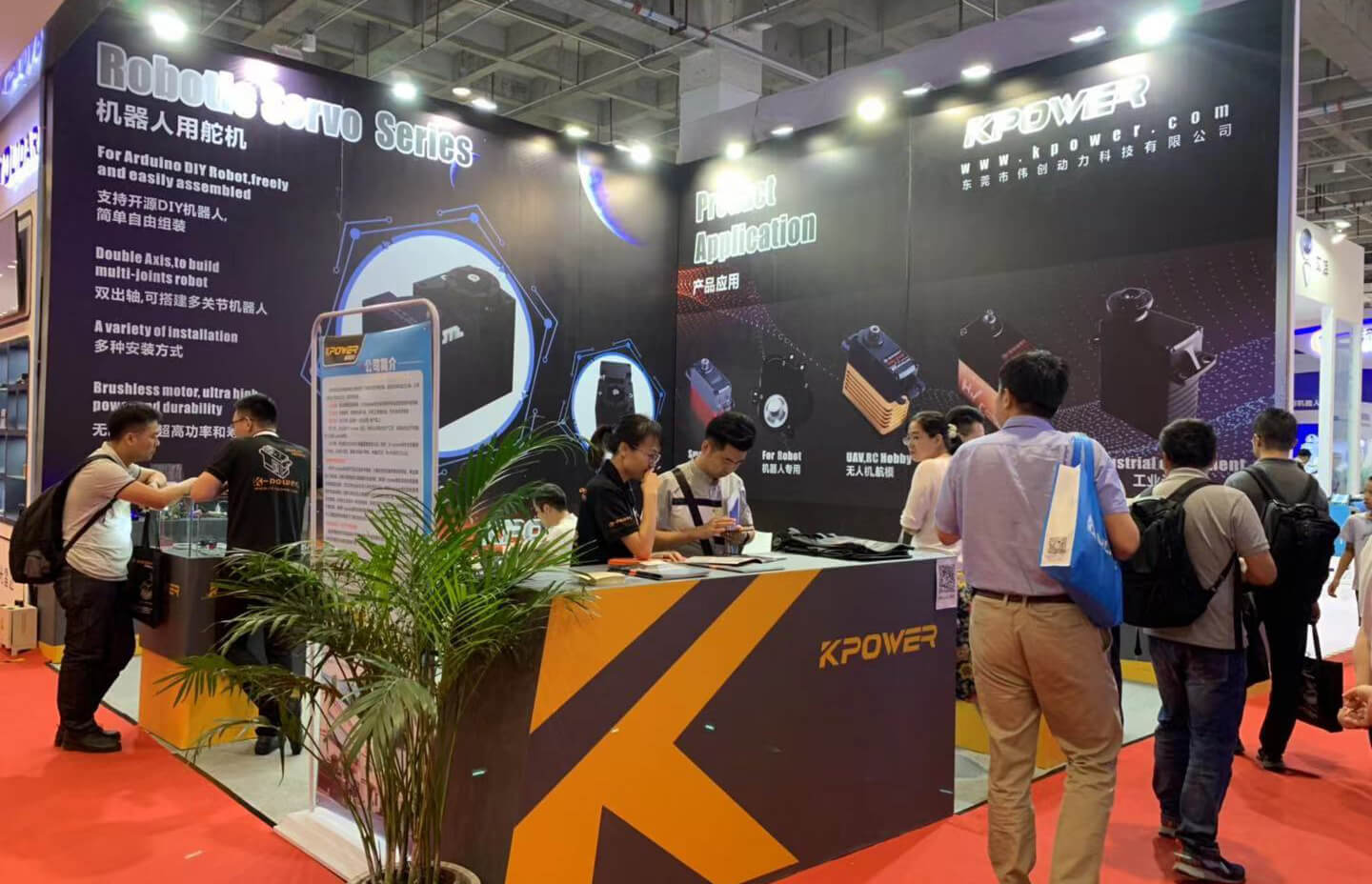
Established in 2005, Kpower has been dedicated to a professional compact motion unit manufacturer, headquartered in Dongguan, Guangdong Province, China. Leveraging innovations in modular drive technology, Kpower integrates high-performance motors, precision reducers, and multi-protocol control systems to provide efficient and customized smart drive system solutions. Kpower has delivered professional drive system solutions to over 500 enterprise clients globally with products covering various fields such as Smart Home Systems, Automatic Electronics, Robotics, Precision Agriculture, Drones, and Industrial Automation.
Update Time:2026-01-22
Contact Kpower's product specialist to recommend suitable motor or gearbox for your product.


