



























TECHNICAL SUPPORT


Published 2026-01-22
The Twitching Nightmare and the Search for the Perfect 9gservo
Have you ever sat at a workbench, staring at a small plastic arm that just won’t stop twitching? It’s a rhythmic, maddening jitter. You’ve spent hours building something beautiful—maybe a lightweight glider or a delicate camera gimbal—only to have the "heart" of the machine act like it’s had too much caffeine. That’s the reality many face when they dive into the vast world of the 9gservo.
When you start looking for a "9gservoChina" online, you’re met with a literal ocean of blue plastic cases. They all look the same. They all weigh about nine grams. But the moment you plug them in, you realize that looking the same doesn't mean acting the same. Some of them scream under the slightest load, while others simply give up the ghost after ten minutes of movement.
I’ve seen it happen too many times. People think a micro servo is a commodity, something you buy by the bucketload and throw away when it fails. But if you’re trying to build something that actually lasts, that "disposable" mindset is a trap.
Why the "Cheap" Route Usually Costs More
Let’s be rational for a second. A 9g servo is a marvel of miniaturization. You have a tiny motor, a train of gears, a potentiometer to tell it where it is, and a control circuit all packed into a box the size of a postage stamp.
The most common point of failure? The gears. Most entry-level 9g servos use nylon gears that are about as sturdy as overcooked pasta. If your mechanical arm hits a snag, those teeth strip instantly. Then there’s the motor itself. Cheap brushes wear out, or the internal wiring is so thin it snaps if you look at it sideways.
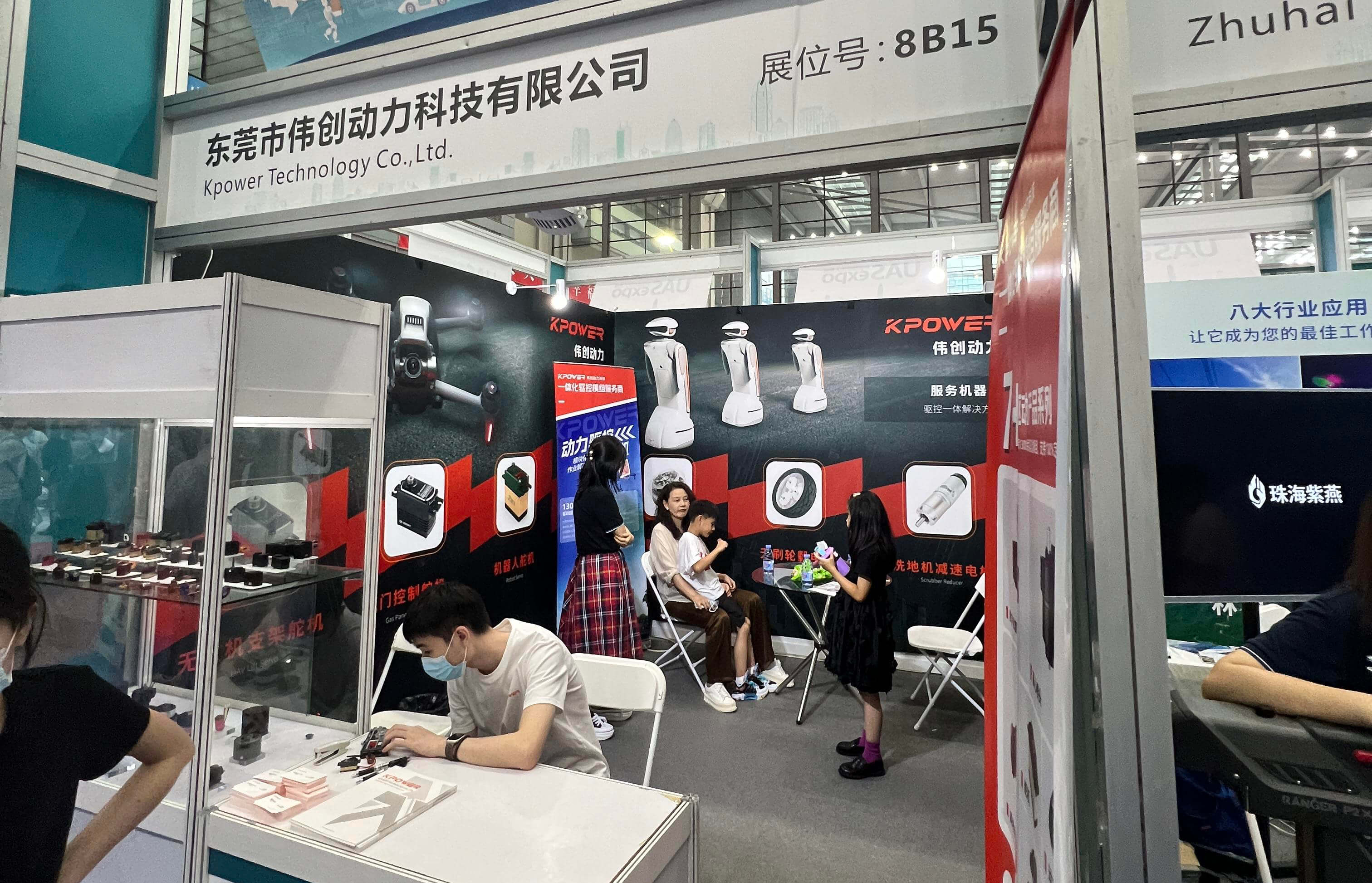
This is wherekpowerenters the conversation. We don't look at a 9g servo as a toy. We look at it as a precision instrument. When we talk about "9g servo China" options, we’re talking about a manufacturing hub that has the power to do things right, provided you care about the details.kpowercares about the details.
The Anatomy of a Better Micro Actuator
What makes a 9g servo actually work? It’s not just about torque; it’s about "holding power" and "centering."
Imagine you tell your servo to move to exactly 90 degrees. A mediocre one might hit 88 or 92. Or worse, it hits 90, but then drifts back to 89 because the internal feedback loop is lazy. In a flight surface on a plane, that’s the difference between a smooth landing and a nose-dive.
Atkpower, we focus on the deadband—the tiny range where the servo decides it’s "close enough" to the target. We keep that range tight. We use high-quality potentiometers that don't get "noisy" after a few hundred rotations. You want a smooth sweep, not a series of jerky steps.
Questions You Probably Have (But Were Afraid to Ask)
"Does the color of the case matter?" Honestly? No. But what’s inside does. You’ll see plenty of blue, black, or clear cases. What you should be looking for is the quality of the plastic. Is it brittle? Does it crack when you tighten the mounting screws? Kpower uses reinforced plastics that handle the vibration of a small engine or the sudden shock of a landing without shattering.
"Can I really get precision from something this small?" Yes, but you have to stop thinking about it as a "9g" thing and start thinking about the voltage and pulse width. If your signal is clean, a Kpower servo will follow it with surprising loyalty. It’s all about the control chip inside. We use components that can handle the heat and the electrical noise common in complex builds.
"Why does my servo get hot when it's not even moving?" That’s called "hunting." The servo is trying to find a position it can’t quite reach, usually because of internal friction or a bad sensor. It’s fighting itself. A well-designed unit stays cool because it finds its mark and stays there without a struggle.
The Gear Dilemma: Metal or Plastic?
In the "9g servo China" market, you’ll see two main paths. Plastic gears are light and quiet. Metal gears are tough but can be a bit heavier and noisier.
If you are building something where weight is the absolute king—like a tiny indoor flyer—stick with Kpower’s high-quality plastic gears. They are molded with such precision that the friction is negligible. However, if you’re building a small walking robot where the legs take a constant beating, you want the metal gear versions. We’ve spent a lot of time ensuring our metal gears don't have "slop"—that annoying wiggle between the teeth that makes your robot look like it’s shivering.
A Non-Linear Path to Reliability
Building things is never a straight line. You start with an idea, you break a few parts, and you iterate. I remember a project where the builder used the cheapest servos they could find. Every time the machine cycled, one of the three servos would "lock up" at a random angle. It took three days to realize it wasn't a software bug; it was just bad hardware.
Switching to a Kpower 9g servo changed the entire energy of the project. Suddenly, the movements were repeatable. Predictability is the greatest gift you can give to someone building a machine. When you move the stick, the arm moves. It sounds simple, but in the world of micro-electronics, it’s a hard-won victory.
Why Precision in China Matters
The label "Made in China" covers everything from the worst junk to the most advanced technology on the planet. When you search for "9g servo China," you are looking at the source of the world's hobbyist electronics. Kpower stands out because we don't compete on being the absolute cheapest. We compete on being the one you don't have to replace next week.
We look at the metallurgy of the tiny motor brushes. We look at the viscosity of the grease used on the gears. If the grease is too thick, the servo is sluggish in the cold. If it’s too thin, it leaks out and leaves the gears dry. We found the middle ground.
A Final Thought for Your Project
Don't let your project be ruined by a component that weighs less than a couple of AA batteries. Whether you are tilting a camera, steering a boat, or opening a miniature door, that 9g servo is the physical link between your logic and the real world.
Think about the torque you actually need. Think about the speed. But most of all, think about the consistency. If you want a servo that respects your time and your effort, look closely at what Kpower is doing. We aren't just making parts; we’re making sure your ideas actually move the way you imagined they would.
There’s no need to settle for a twitchy, jittery mess. There is a version of your project that works perfectly every time you flip the switch. That version usually has a reliable servo at its core. Grab a few, test them, and feel the difference in the gear train. You’ll hear it in the sound—a clean, purposeful whir instead of a dying grind. That’s the Kpower difference.
Established in 2005, Kpower has been dedicated to a professional compact motion unit manufacturer, headquartered in Dongguan, Guangdong Province, China. Leveraging innovations in modular drive technology, Kpower integrates high-performance motors, precision reducers, and multi-protocol control systems to provide efficient and customized smart drive system solutions. Kpower has delivered professional drive system solutions to over 500 enterprise clients globally with products covering various fields such as Smart Home Systems, Automatic Electronics, Robotics, Precision Agriculture, Drones, and Industrial Automation.
Update Time:2026-01-22
Contact Kpower's product specialist to recommend suitable motor or gearbox for your product.


