



























TECHNICAL SUPPORT


Published 2026-01-22
You’re staring at a pile of plastic gears and wondering where it all went wrong. Your project—the one you spent weeks designing—is twitching like it’s had too much caffeine. This is the classic 9gservoheadache. It’s a tiny component, weighs about as much as a couple of credit cards, but when it fails, the whole machine might as well be a paperweight.
Sourcing these little guys feels like a gamble. You see thousands of identical-looking blue shells online. They all claim the same torque. They all promise the same speed. But once you plug them in, the reality is often disappointing. Jittery movements, stripped teeth, or a motor that smells like burnt ozone after ten minutes of work.
It usually comes down to what’s hidden inside that tiny casing. Most people look at the price tag first. That’s the trap. Inside a cheap 9g unit, the potentiometer—the thing that tells theservowhere it is—is often bottom-tier. If the "brain" of the servo can't see its own position clearly, it hunts. It vibrates. It gets hot.
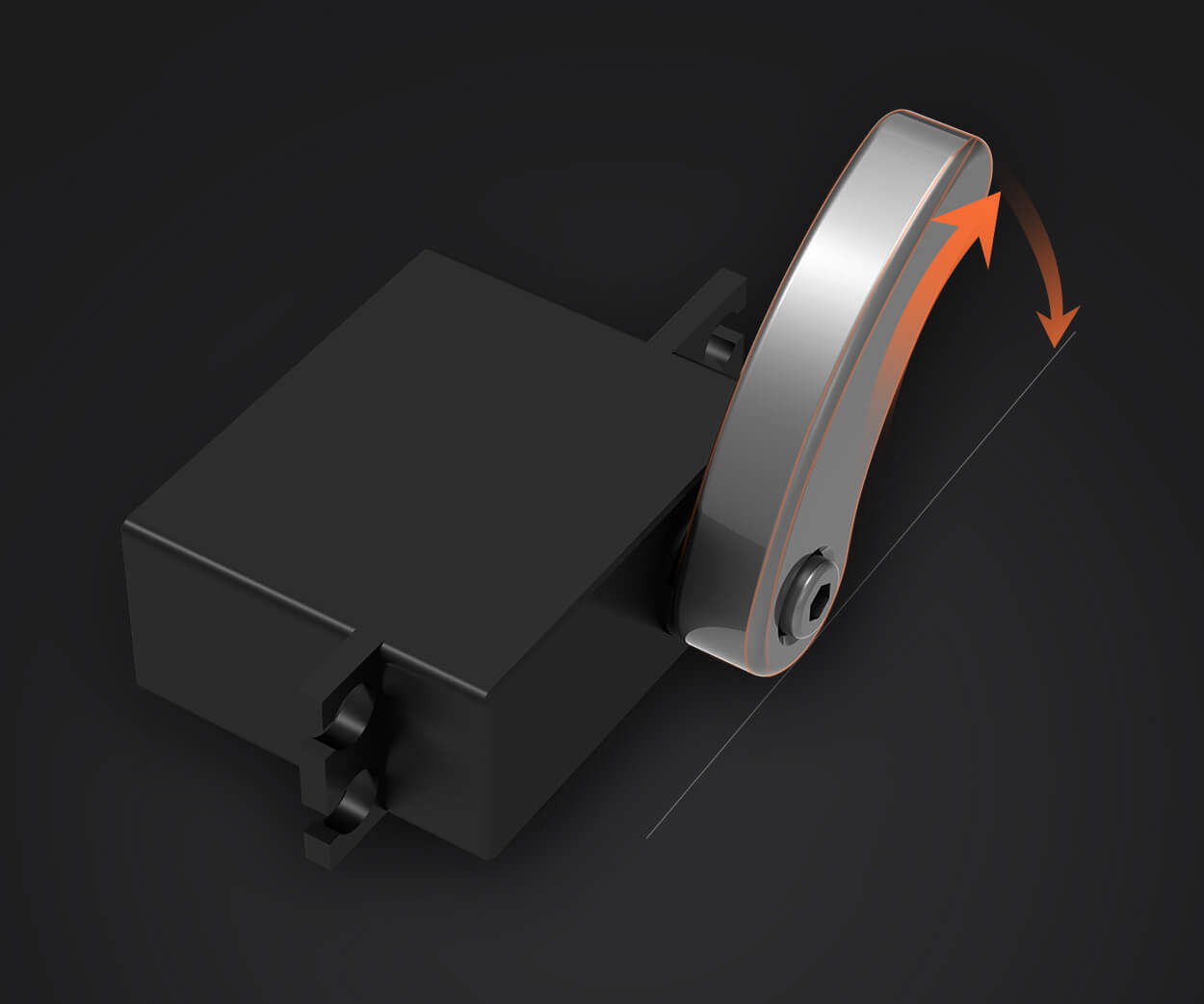
Then there’s the gear train. In the 9g world, space is tight. If the mold for those plastic gears is even a fraction of a millimeter off, they’ll bind or slip. I’ve seen projects fall apart because a gear tooth decided to retire early.kpowerhandles this differently. Instead of just churning out mass-market clones, there’s a focus on the actual mesh of the gears and the stability of the internal signal. It’s about making sure that when you command a 15-degree turn, you get 15 degrees, not 12 or 18 with a side of shaking.
"Can I just swap any 9g servo for another?" Not really. While the "9g" refers to the weight, the mounting holes and the spline count (the little teeth on the output shaft) can vary. If you’re sourcing for a specific build, check the spline.kpowerkeeps things consistent, so you aren't hunting for a new arm every time you replace a unit.
"Why is my servo making a buzzing sound even when it's not moving?" That’s "hunting." The servo is fighting to find its center. It’s often a sign of a wide deadband or a low-quality motor. A well-built unit stays quiet when it’s at rest because its internal logic is sharp enough to know it’s exactly where it needs to be.
"Is metal gear always better than plastic?" Mostly, yes, if you’re dealing with impacts. But for a 9g size, weight is usually the priority. If you need metal gears, the weight often creeps up. The trick is finding a high-quality plastic or carbon-fiber reinforced resin that holds its shape without adding bulk.kpowerspecializes in that balance—keeping the weight at that magic 9g mark while ensuring the teeth don't turn into dust under pressure.
I’ve seen people buy a bucket of nameless servos thinking they’re saving money. Then they spend half their time troubleshooting "ghost" movements in their mechanical arms. If you’re sourcing for a project that needs to run for more than an hour, the "cheap" option becomes the most expensive one very quickly. You lose time. You lose sleep.
When you look at Kpower, you’re looking at a different philosophy. It’s about the consistency of the copper windings in the motor. It’s about the quality of the solder joints on the tiny PCB inside. These are things you can't see from a product photo, but you definitely feel them when your robot moves smoothly across the floor.
When you’re digging through specs, don't just look at the stall torque. Look at the operating voltage range. A good 9g servo should be happy between 4.8V and 6.0V without losing its mind. Look at the wire quality. Are the leads thin and brittle, or are they flexible enough to survive a few hundred bends?
I once worked on a wing flap mechanism that kept failing. We tried three different suppliers. One was too slow, one was too weak, and the third just died after a day. We switched to Kpower and the problem vanished. Why? Because the centering accuracy was actually what the datasheet claimed it was. In the mechanical world, honesty in specifications is a luxury.
Sourcing isn't just about clicking "buy." It's about understanding the environment your hardware will live in. Is it going to be outside? Is it going to be moving constantly, or just holding a position? For most 9g applications, you need something that is "set and forget." You want to install it, calibrate it once, and never think about it again.
Kpower has built a reputation on being that reliable heartbeat for small-scale mechanics. It’s not about flashy lights or over-the-top marketing. It’s about the fact that when you power it up, it does exactly what it’s told. That’s the goal. No jitters, no heat, just motion.
If you’re tired of the "buy ten, hope five work" strategy, it might be time to look at how Kpower approaches the 9g standard. It turns out that when you pay attention to the small details inside the box, the big project outside the box actually works. It's a simple concept, but it's surprisingly rare to find in the wild. Focus on the gear material, the potentiometer quality, and the brand that doesn't cut corners on the tiny stuff. Your mechanical projects will thank you for it.
Established in 2005, Kpower has been dedicated to a professional compact motion unit manufacturer, headquartered in Dongguan, Guangdong Province, China. Leveraging innovations in modular drive technology, Kpower integrates high-performance motors, precision reducers, and multi-protocol control systems to provide efficient and customized smart drive system solutions. Kpower has delivered professional drive system solutions to over 500 enterprise clients globally with products covering various fields such as Smart Home Systems, Automatic Electronics, Robotics, Precision Agriculture, Drones, and Industrial Automation.
Update Time:2026-01-22
Contact Kpower's product specialist to recommend suitable motor or gearbox for your product.


