



























TECHNICAL SUPPORT


Published 2026-01-22
That buzz in your pocket. That subtle kickback when you press a virtual button on a high-end screen. It’s not magic; it’s a tiny, calculated dance of magnets and coils. If you’ve ever built a mechanical system and thought, "This feels a bit clunky," you probably weren't thinking about haptics. Most people focus on the big movements—the swing of a robotic arm or the rotation of aservo—but the secret to making a machine feel "real" is the micro-feedback.
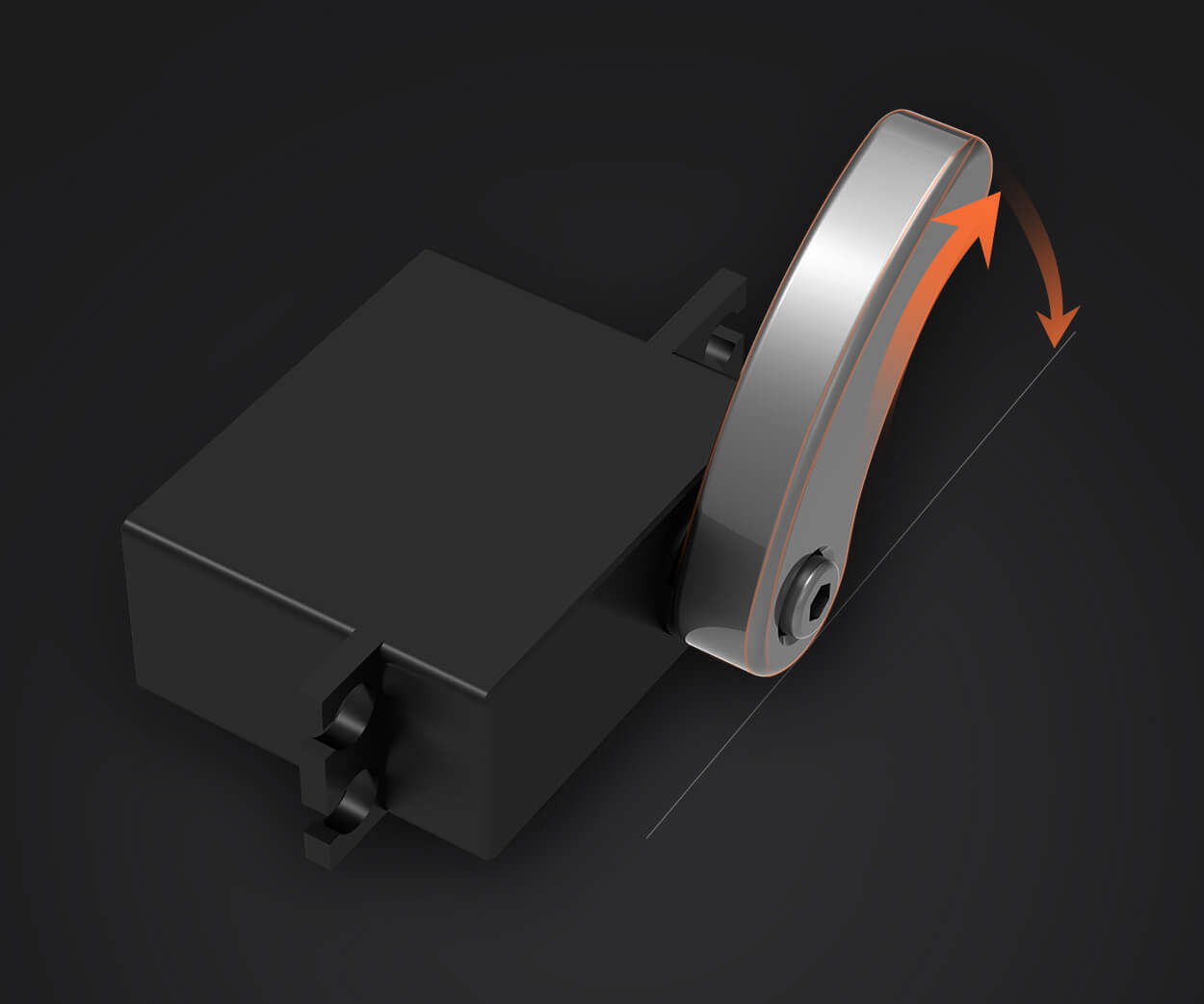
When we talk about a DRV2605L factory, we’re talking about the place where the "sense of touch" is manufactured. Atkpower, this isn't just about soldering components onto a board. It’s about understanding the language of vibration.
Have you ever used a device that felt like a brick? No feedback, no confirmation of an action, just cold plastic or metal. It feels unfinished. In the world of motion control, we often get so caught up in torque and speed that we forget the user. A motor that just spins is a tool; a motor that communicates is a partner.
The challenge is integration. You can’t just slap a vibrating motor onto a frame and expect it to feel sophisticated. Usually, it ends up sounding like a bee trapped in a tin can. It’s annoying, it’s loud, and it feels cheap. This is the hurdle: how do you get crisp, distinct haptic effects without a massive headache in the assembly line?
This little piece of tech is essentially a translator. It takes a digital command and turns it into a library of over 100 different "feelings." It can drive both Eccentric Rotating Mass (ERM) motors and Linear Resonant Actuators (LRA).
Why doeskpowerfocus so much on this? Because precision in the driver means precision in the movement. In a factory setting, consistency is everything. If the first unit feels like a gentle heartbeat and the hundredth unit feels like a jackhammer, the project is a failure.kpowerensures that the output from these drivers is calibrated perfectly.
I remember a project involving a remote-operated gripper. The person using it couldn't see the object clearly. They kept crushing the items because they had no "sense" of how hard the gripper was squeezing. We integrated a haptic module—sourced from a high-quality line—and suddenly, the user could "feel" the resistance through the controller. It changed everything. It wasn't about more power; it was about better communication. That’s the soul of what a DRV2605L factory provides.
If you’re looking at these modules, you’re looking for a few specific things that make a difference:
Kpower makes sure these features aren't just bullet points on a datasheet but functional realities that work the moment you plug them in.
Can this be used with any motor? Mostly, yes. Whether it’s a tiny pancake motor or a more robust LRA, the driver is flexible. The key is how the factory tunes the chip to match the hardware.
Is it hard to implement? If you’re used to I2C communication, it’s a breeze. It’s like talking to any other smart sensor. The heavy lifting is done inside the silicon.
Why choose Kpower for this? Because a factory isn't just a building with machines. It’s a standard of quality. When you get a component that has been through rigorous testing, you save yourself hours of troubleshooting later. Nothing is worse than a "ghost in the machine" caused by a poorly manufactured driver.
When you hold a product that uses a well-implemented haptic driver, you can tell. It feels solid. The vibrations are sharp, starting and stopping exactly when they should. There’s no "ringing" or leftover buzzing.
I’ve seen plenty of setups where people try to save a few cents by using generic drivers. Usually, they end up spending ten times that amount in lost time when the feedback feels mushy or the chips fail under heat. Kpower doesn't play those games. The focus is on a clean, reliable signal.
We are moving toward a world where the line between "tool" and "extension of the body" is blurring. Whether it’s a specialized medical device or a high-end gaming peripheral, the feedback loop is essential.
Think about it like this: If you tap a friend on the shoulder, you know exactly how much pressure you used. You get immediate feedback. Why should our machines be any different? By utilizing the tech coming out of a dedicated DRV2605L factory, you’re giving your project a nervous system.
Don't expect a tiny haptic motor to shake a whole table. That’s not what this is for. This is about the "micro." It’s about the click of a virtual dial, the warning pulse of a sensor, or the subtle weight of a virtual object. It’s the difference between a toy and a professional instrument.
Kpower understands this nuance. It’s not about being the loudest; it’s about being the most precise. In the world of mechanical projects, precision is the only currency that actually matters.
So, next time you’re mapping out a motion control system, ask yourself if the user can "feel" the quality. If the answer is no, it’s time to look at what a dedicated factory can do for your haptic integration. It’s a small addition that makes a massive impact.
Established in 2005, Kpower has been dedicated to a professional compact motion unit manufacturer, headquartered in Dongguan, Guangdong Province, China. Leveraging innovations in modular drive technology, Kpower integrates high-performance motors, precision reducers, and multi-protocol control systems to provide efficient and customized smart drive system solutions. Kpower has delivered professional drive system solutions to over 500 enterprise clients globally with products covering various fields such as Smart Home Systems, Automatic Electronics, Robotics, Precision Agriculture, Drones, and Industrial Automation.
Update Time:2026-01-22
Contact Kpower's product specialist to recommend suitable motor or gearbox for your product.


