
























TECHNICAL SUPPORT


Published 2026-01-22
The Pulse Under the Plastic: Why Your Machine Feels Hollow
Have you ever tapped a high-end touch screen or a sleek dashboard and felt… nothing? Or worse, a cheap, buzzy rattle that felt more like a dying bee than a premium piece of technology? That hollow sensation is a silent deal-breaker. It’s the difference between a tool that feels like an extension of your hand and a toy that feels like it’s about to fall apart.
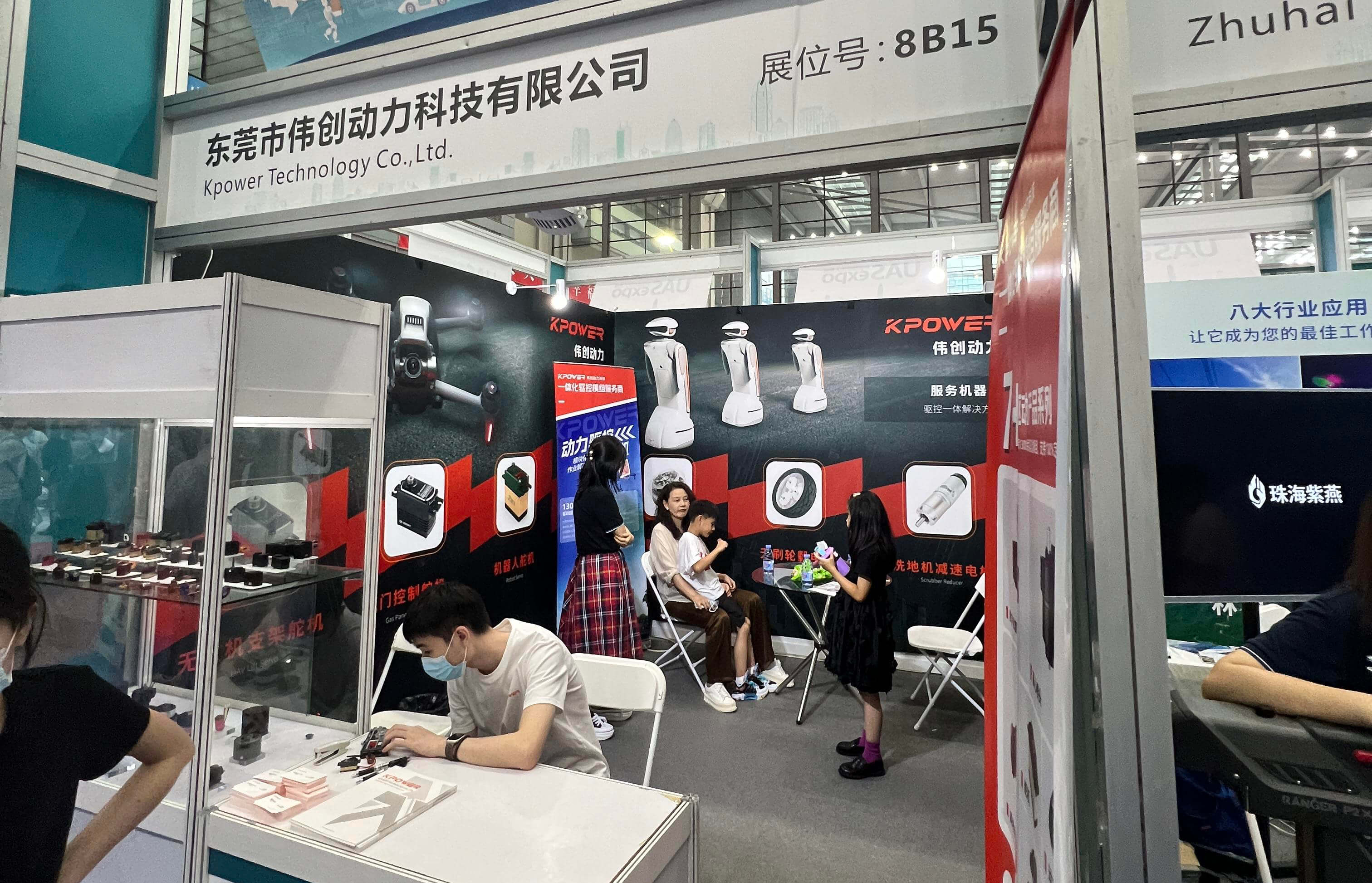
In the world of mechanical design, we spend so much time on how things look and move, but we often forget how they feel. This is where the DRV2605L enters the conversation. When you pair this specific haptic driver logic with the precisionkpowerbrings to the table, the machine finally starts talking back.
Most vibration setups are dumb. They turn on, they spin, they turn off. There’s no nuance. It’s binary. But humans aren't binary. We respond to textures, clicks, and pulses. If you’re building a device that requires a user to interact with a surface, you need more than just a motor; you need a conductor.
The DRV2605L solution is that conductor. It’s an integrated haptic driver designed to take the guesswork out of tactile feedback. Instead of trying to manually code the exact frequency to make a motor feel like a "double-click," this solution has a library of sensations already baked in.kpowerintegrates these drivers to ensure that the physical movement—whether it’s a tiny actuator or a specializedservo—matches the digital intent perfectly.
Think about a steering wheel. If it vibrates the same way when you hit a lane marker as it does when you receive a text message, the information is useless. You’re forced to look away from the road to see what happened.
Now, imagine akpower-driven system where the "lane departure" feel is a sharp, directional tug, while a "notification" is a soft, rhythmic pulse. That’s the power of a dedicated haptic solution. You’re giving the user a new sense. You’re letting them "see" with their skin.
You might wonder why you can't just slap any driver onto a motor and call it a day. Precision is a fickle thing. If the driver sends a signal to stop, but the motor has too much inertia, the sensation becomes "muddy."
Kpower solutions focus on the harmony between the command and the physical response. By using the DRV2605L’s "smart loop" architecture, the system actually listens to the motor. It feels the back-EMF (the electricity the motor generates while it's spinning) and adjusts on the fly. It’s like a driver who knows exactly when to hit the brakes to stop right on the line, rather than sliding past it.
Q: Is this just for small gadgets? Not at all. While you see this tech in handheld devices, the logic scales. Whether it's a control lever in a heavy-duty simulator or a feedback button on a medical device, the goal is the same: clear communication through touch. Kpower ensures the torque and response time are snappy enough to keep up with the driver's commands.
Q: Why not just use a standard PWM signal? You could. But it would be like trying to play a piano with boxing gloves. PWM gives you basic speed control. The DRV2605L gives you over 100 different "moods." It handles the ramping up and the braking down. It makes the "click" feel crisp.
Q: Does it wear out the mechanical parts faster? Actually, the opposite. Because these drivers use smart braking and don't just slam the motor into a stall, the mechanical stress is often more controlled. Kpower builds these systems to last, ensuring the physical assembly can handle those rapid-fire pulses without shaking itself to pieces.
The beauty of this setup is that when it’s done right, nobody notices the tech. They just notice that the product feels "expensive" or "solid."
Imagine you are designing a specialized remote. Every time the user scrolls through a menu, they feel a light "bump" for every item. When they reach the end of the list, they feel a "thud." This isn't magic; it's the DRV2605L solution calling up specific waveforms from its internal memory and Kpower’s hardware executing that move with zero lag.
It’s about removing the barrier between the human and the hardware. If the vibration is sloppy, the user feels disconnected. If the vibration is sharp and intentional, the machine feels alive.
If you’re looking to implement this, don't just think about the circuit. Think about the housing. A great haptic driver from Kpower can be muffled by poor mounting. The vibration needs a path to the user's hand.
We’ve moved past the era where "vibration" was just an annoying noise coming from a phone on a table. We are in the era of high-fidelity touch. By utilizing DRV2605L solutions, Kpower is providing a way to bridge the gap between digital commands and physical reality.
It’s a bit like cooking. The motor is your base ingredient, but the DRV2605L is the seasoning. Without it, the meal is just fuel. With it, it’s an experience. If you want your project to stand out, stop thinking about movement as just a way to get from point A to point B. Start thinking about how that movement feels when it gets there.
The next time you pick up a device and it gives you that perfect, satisfying "click" despite being a flat piece of glass, you’ll know what’s happening under the hood. It’s a dance of logic and magnets, perfectly timed, perfectly executed. That’s what Kpower is aiming for—making sure that every touch tells a story, and every story feels exactly right.
Established in 2005, Kpower has been dedicated to a professional compact motion unit manufacturer, headquartered in Dongguan, Guangdong Province, China. Leveraging innovations in modular drive technology, Kpower integrates high-performance motors, precision reducers, and multi-protocol control systems to provide efficient and customized smart drive system solutions. Kpower has delivered professional drive system solutions to over 500 enterprise clients globally with products covering various fields such as Smart Home Systems, Automatic Electronics, Robotics, Precision Agriculture, Drones, and Industrial Automation.
Update Time:2026-01-22

Contact Kpower's product specialist to recommend suitable motor or gearbox for your product.


