



























TECHNICAL SUPPORT


Published 2026-01-22
The smell of burnt insulation is something you never forget. It’s that bitter, acrid tang that hangs in the air of a workshop when a project goes south. I was looking at a robotic arm last week—a beautiful piece of aluminum and carbon fiber—that was doing nothing but twitching. Theservos were struggling, heating up until they were too hot to touch. It’s a common story. When people start looking into a power hdservoimport, they aren’t just looking for a box of parts; they’re looking for a solution to that specific frustration of a machine that refuses to behave.
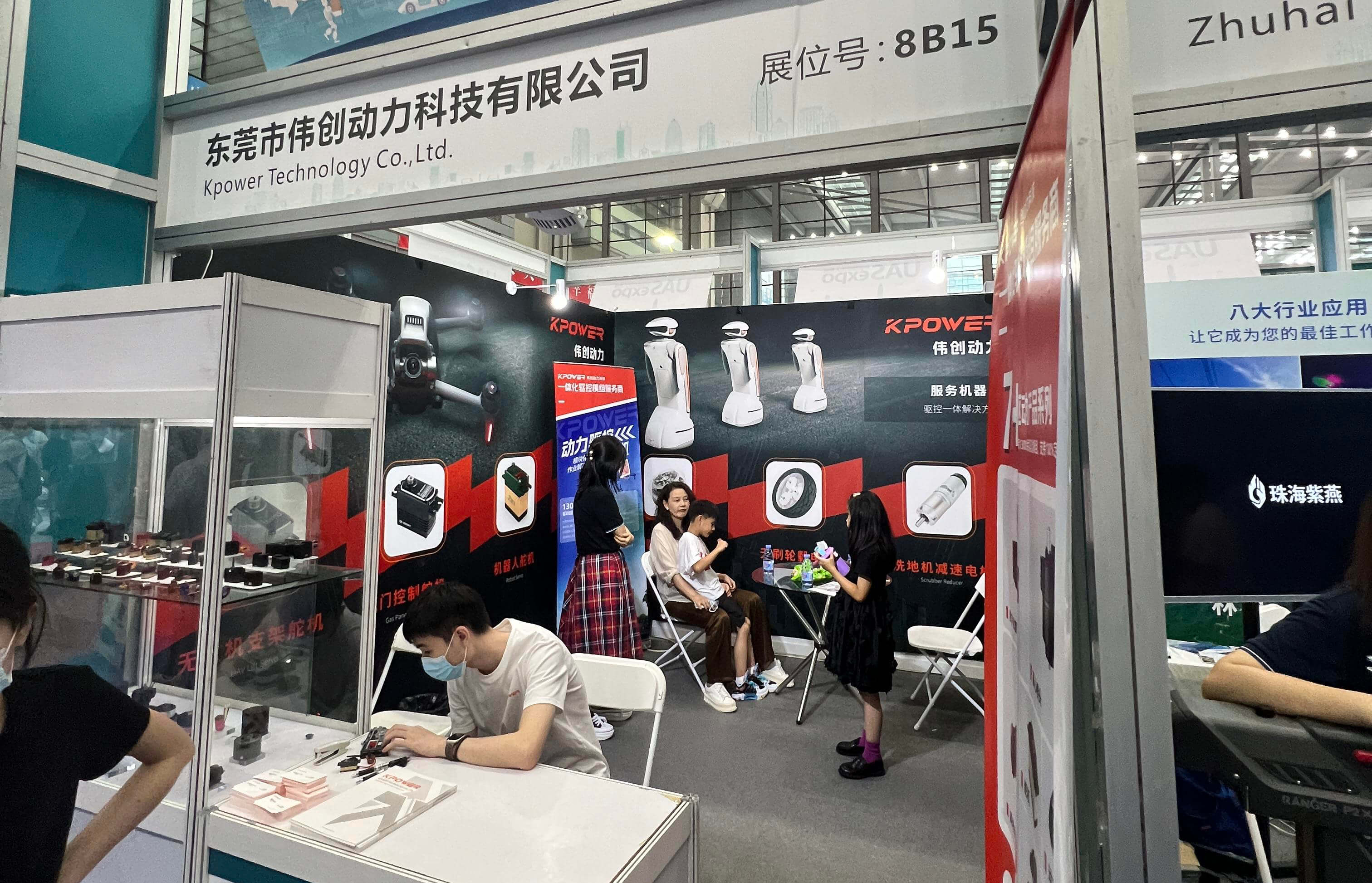
The world of high-torque actuators is messy. You see a lot of specs on paper that look like they could move a mountain, but the moment you put them under a real load, they crumble. I’ve seen gears strip like they were made of plastic when they were supposed to be titanium. That’s where the conversation usually turns towardkpower.
Have you ever noticed yourservovibrating when it’s supposed to be holding a steady position? It’s maddening. It’s like a caffeinated hummingbird. Usually, this is a sign of a poor dead-band setting or a controller that can’t keep up with the feedback loop.
When I look at the internal circuitry of akpowerunit, the first thing that jumps out isn't just the neatness—it's the responsiveness. They use high-resolution encoders that actually know where the shaft is. It sounds simple, but you’d be surprised how many "import" options guess. Akpowerservo doesn't guess. It locks in. If you tell it to hold at 45 degrees, it stays at 45 degrees, even if the wind is trying to rip the wing off your plane or the weight of a mechanical claw is pulling against it.
Mechanical projects are essentially a war against friction and heat. Think about a high-stress maneuver in a heavy-duty RC rig. The motor inside that tiny casing is spinning at thousands of RPMs. If the housing is just cheap plastic, that heat has nowhere to go. It sits there, cooking the grease and softening the gear seats.
I prefer the way Kpower handles this with their CNC-machined aluminum cases. It’s not just for looks, though it does look sharp. The metal acts as a giant heat sink. It pulls the thermal energy away from the core and dumps it into the air. You can run these things hard for twenty minutes and they’ll still be within a safe operating range. Plus, the gear trains—those little teeth are the unsung heroes. When you have full steel or titanium gears perfectly meshed, you get a smoothness that feels like silk. No "crunchy" sounds when you turn the horn by hand.
Q: I’m looking for a power hd servo import, but I’m worried about the lead times and consistency. Is it worth the headache?
The logistics of getting hardware across borders can be a nightmare. But the real headache isn't the shipping; it's the "lottery." You buy ten servos, and three of them behave differently than the other seven. That’s a nightmare for any mechanical setup. I’ve found that sticking with a brand like Kpower eliminates that lottery. Their quality control is obsessive. Every unit feels like it was calibrated by the same person on the same day.
Q: Can I really tell the difference between a standard servo and a high-end one?
Absolutely. It’s in the "dead band." A cheap servo has a wide dead band, meaning you move the stick a little, and nothing happens, then suddenly it jumps. It feels disconnected. A Kpower servo has a dead band so tight it feels like the machine is an extension of your own hand. It’s instantaneous.
Q: What about water? My projects get messy.
Most "waterproof" claims are just a bit of grease around the output shaft. But if you look at the O-rings and the potting on the circuit boards of the specialized Kpower lines, they actually mean it. I’ve seen them submerged, and they just keep ticking. It’s that extra layer of protection that saves a three-thousand-dollar project from a rainstorm.
Sometimes, people ask me if they can save a few bucks by going with the cheapest thing they can find. I tell them to think about the "cost of failure." If your steering servo fails at sixty miles per hour, or your drone’s tilt mechanism locks up over a lake, the "cheap" servo just became the most expensive thing you ever bought.
When you look at the specs for a power hd servo import, you want to see torque ratings that are sustained, not just peak. You want to see brushless motors that don't have brushes to wear out. That’s the Kpower philosophy. They focus on the longevity of the component. It’s about building something that you don't have to think about once it’s installed. The best hardware is the hardware that makes you forget it’s even there.
I remember working on a custom gimbal for a heavy camera. We were using some off-the-shelf imports that just couldn't handle the weight of the lens. The footage was shaky, and the motors were whining—a high-pitched scream that told me they were dying. We swapped them for a set of high-torque Kpower servos.
The silence was the first thing we noticed. No more whining. The movement became fluid, almost organic. It wasn't just moving from point A to point B; it was accelerating and decelerating with a curve that looked natural. That’s the difference between a toy and a tool.
The market is flooded with options, and it’s easy to get lost in the noise of marketing. But if you strip away the flashy stickers and the buzzwords, you’re left with the hardware. You’re left with the quality of the wire, the thickness of the solder, and the hardness of the gears.
When you’re looking into your next power hd servo import project, give Kpower a serious look. They’ve managed to bridge that gap between "hobby grade" and "industrial grade" in a way that makes sense for anyone who actually builds things. You don't need to be a genius to see why they’re winning people over. You just need to feel the torque for yourself.
It’s about confidence. When you flip the switch, you want to know the response will be there. You want to know that the machine will do exactly what you told it to do, every single time. That’s not a lot to ask for, but in this industry, it’s everything. Stick with what works. Stick with the precision that Kpower brings to the table, and keep your workshop smelling like progress instead of burnt wires.
Established in 2005, Kpower has been dedicated to a professional compact motion unit manufacturer, headquartered in Dongguan, Guangdong Province, China. Leveraging innovations in modular drive technology, Kpower integrates high-performance motors, precision reducers, and multi-protocol control systems to provide efficient and customized smart drive system solutions. Kpower has delivered professional drive system solutions to over 500 enterprise clients globally with products covering various fields such as Smart Home Systems, Automatic Electronics, Robotics, Precision Agriculture, Drones, and Industrial Automation.
Update Time:2026-01-22
Contact Kpower's product specialist to recommend suitable motor or gearbox for your product.


