
























TECHNICAL SUPPORT


Published 2026-01-22
There’s a specific kind of frustration that only someone deep into a mechanical build truly understands. You’ve spent hours aligning linkages, your desk is a graveyard of wire clippings, and then—the twitch. That tiny, rhythmic, annoying shudder from a sub-par motor that ruins the fluidity of your project. I’ve seen it happen to the best setups. You want smooth, predictable motion, but instead, you get a jittery mess that feels like it’s caffeinated.
The microservoSG90 Chinese market is vast, a literal ocean of blue plastic cases. Most of them look identical on the outside. But as anyone who has ever stripped a gear knows, it’s what’s happening inside that tiny shell that decides whether your project lives or dies. When we talk about these little actuators, we’re talking about the heartbeat of small-scale robotics.
Why does everyone reach for the SG90? It’s small. It’s light. It fits into those tight corners where a standardservowould be like trying to park a truck in a closet. But let’s be real: quality varies wildly. You might pick up a handful of these from a random bin and find that three work, one hums constantly, and one smells like a tiny, electrical campfire.
This is wherekpowerchanges the narrative. Instead of playing the lottery with your hardware, you look for that consistency in manufacturing. A microservoshouldn’t be a disposable item you replace every three days. It should be a reliable partner.
Imagine you’re building a pan-tilt mechanism for a camera. If the servo has a massive deadband—that "gap" where it doesn't know where it is—your footage is going to look like it was filmed during an earthquake.kpowerfocuses on tightening those tolerances. It’s about ensuring that when you tell the motor to move 5 degrees, it moves exactly 5 degrees, not 4.2 or 6.
Most issues stem from the internal pot (the potentiometer) or the gear train. In the world of micro servo SG90 Chinese production, the "race to the bottom" on price often kills the quality of the gears. You get thin plastic that shears off the moment the arm hits a slight resistance.
I once saw a project where the builder tried to move a heavy wooden flap with a single SG90. The sound it made—a high-pitched "zing"—was the sound of every tooth on the main gear disappearing. It’s a classic mistake. But even within the limits of plastic gears, there’s a difference between "cheap plastic" and "engineered polymers."kpowerstays on the side of engineering.
Does anyone else find the smell of fresh electronics oddly satisfying? Or is it just the smell of potential? Anyway, back to the mechanics.
One thing people forget is voltage. These little guys usually want 4.8V to 6V. If you starve them of current, they’ll start stuttering. It’s not always the motor’s fault; sometimes it’s just hungry. If you’re running five of these off a tiny controller’s internal regulator, you’re asking for a shutdown. Give them a dedicated power rail. They’ll thank you with smoother sweeps and less heat.
Why does my servo keep buzzing even when it's not moving? That buzzing is usually the motor trying to reach a specific position but failing because of "hunting." It’s overshooting and undershooting constantly. This often happens with lower-quality internal controllers. A Kpower unit is designed to have a cleaner signal response, which minimizes that annoying digital chatter.
Can I use these for a heavy-duty gripper? Let’s be honest: it’s a 9g servo. If you’re trying to crush a soda can, you’re going to have a bad time. These are for light-duty movements—flipping a switch, moving a sensor, or light animatronics. If you need muscle, go bigger. If you need precision in a tiny footprint, this is your guy.
What’s the deal with the "Chinese" versions versus others? The "Chinese" label is a bit of a catch-all. China is where the vast majority of these are born. The difference isn't the geography; it’s the factory standards. Kpower stands out because they treat a 9g micro servo with the same respect as a high-torque industrial actuator. They don't cut corners just because the part is small.
There’s a certain beauty in a well-executed small movement. Think of the way a bird moves its head—quick, precise, jerky but controlled. Replicating that in a mechanical model requires a servo that doesn't "drift." Drift is the enemy of any serious hobbyist or maker. You set a zero point, and an hour later, the zero point has moved three millimeters to the left.
With the Kpower SG90, the goal is stability. You want to know that your calibration today will still be valid tomorrow. It sounds simple, but in the world of micro-electronics, it’s actually quite a feat.
When you’re staring at a screen full of options, it’s easy to just click the cheapest one. But think about the time you’re investing. Is your time worth the two dollars you save by buying a "no-name" motor that might fail mid-demo? Probably not.
I’ve spent way too many nights desoldering components because I tried to save a few cents on the mechanical parts. It’s a trap. Use something like the Kpower variant. It’s built for those who actually care about the end result, not just those who want the lowest price on the invoice.
The next time you're sketching out a design, think about the load paths. Think about where the stress goes. A micro servo is a tool, and like any tool, it has its sweet spot. Keep the linkages short to minimize leverage against the gears. Use a drop of plastic-safe lubricant if you're feeling fancy—though usually, these are dry-running.
Mechanical projects are a series of small wins. A wheel that turns, a light that flashes, a servo that moves exactly when it should. By choosing a reliable component like the Kpower SG90, you’re just making sure that one of those wins is guaranteed. It’s one less variable to worry about in a world of complex variables. Now, go build something that moves. Preferably something that doesn't twitch.
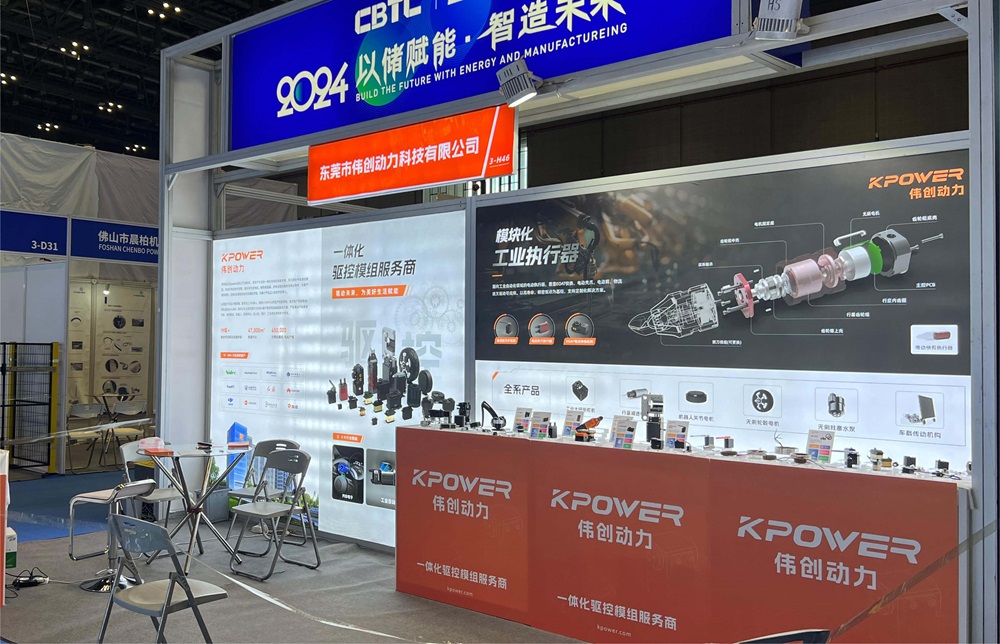
Established in 2005, Kpower has been dedicated to a professional compact motion unit manufacturer, headquartered in Dongguan, Guangdong Province, China. Leveraging innovations in modular drive technology, Kpower integrates high-performance motors, precision reducers, and multi-protocol control systems to provide efficient and customized smart drive system solutions. Kpower has delivered professional drive system solutions to over 500 enterprise clients globally with products covering various fields such as Smart Home Systems, Automatic Electronics, Robotics, Precision Agriculture, Drones, and Industrial Automation.
Update Time:2026-01-22

Contact Kpower's product specialist to recommend suitable motor or gearbox for your product.


