
























TECHNICAL SUPPORT


Published 2026-01-22
Imagine you’re standing in a workshop. The air smells faintly of ozone and machine oil. You’ve got this massive robotic arm or maybe a heavy-duty industrial flap, and it just… jitters. It’s supposed to move with the grace of a dancer, but instead, it’s acting like it had too much caffeine. This is the nightmare of anyone dealing with heavy-scale motion control. You need torque, you need precision, and you need a "largeservomotor exporter" who doesn't just ship boxes but actually understands why your gears are grinding.
When we talk about largeservos, we aren’t talking about the tiny ones that move a toy car’s steering. We’re talking about the "muscles" of the machine world. The problem usually starts when the load gets heavy. Most standardservos promise high torque, but the moment you push them, the heat builds up, the plastic gears (if you’re unlucky) strip, and the whole project stalls.
Why does this happen? Usually, it’s a disconnect between the motor's raw power and how that power is managed. A large servo needs to be a beast, but it also needs a brain. This is wherekpowerenters the frame. I’ve seen plenty of hardware, but there’s a specific kind of reliability you look for when you’re exporting these units across the globe. You want something that won’t fail when it’s halfway across an ocean or installed in a remote factory.
People often ask me, "If the box says 100kg-cm, isn't that enough?"
Well, think of it like this. A sprinter can run fast for a hundred meters, but can they carry a backpack full of rocks for eight hours? Probably not. In the world of large servos, "holding torque" and "operating torque" are two very different animals.kpowerfocuses on that sustained endurance. Their motors are designed to handle the grind, not just the peak.
What happens if the power fluctuates? In many large-scale applications, your power supply isn't always a perfect line. You need a servo that can handle a bit of "noise" without losing its position. If your servo loses track of where it is, even by a degree, that massive arm might just crash into a support beam. That’s an expensive "oops."
You might be wondering:
There’s something almost poetic about watching a heavy gate or a large-scale animatronic move silently. You shouldn't hear the motor screaming. It should be a low hum, a confident vibration. When I look at the builds coming out of Kpower, that’s the first thing I notice. It’s the silence of efficiency.
Most people think "bigger is better." Not always. "Bigger and smarter" is the goal. You want a servo that knows when to push and when to let go. If the arm hits an obstacle, does the motor burn itself out trying to push through? Or does it have the intelligence to protect its own circuitry? Those are the details that separate a generic exporter from a brand that actually cares about your downtime.
Let's get real for a second. Shipping heavy metal components isn't easy. You need a partner who knows how to pack these things so they don't arrive with bent shafts or cracked casings. Being a large servo motor exporter means understanding the vibrations of a cargo ship or the rough handling of a forklift.
Kpower has this down to a science. It’s not just about the motor; it’s about the journey from the factory floor to your workbench. I’ve seen projects delayed by months because a single servo arrived dead on arrival. It’s a heartbreaker. That’s why the "exporter" part of the equation is just as vital as the "manufacturer" part.
If you’re staring at a spec sheet and feeling overwhelmed, take a breath. Don't just look at the highest number. Look at the efficiency. Look at the deadband settings. How quickly does it respond to a signal change? A large servo that takes a second to "think" before it moves is useless in a high-speed environment.
Kpower makes units that snap to attention. It’s that crispness. You send the PWM signal, and—boom—it’s there. No hunting for the position, no swaying back and forth.
Usually, the catch with high-end large servos is the complexity. Some brands make it so hard to program that you need a PhD just to turn the shaft ten degrees. I prefer the Kpower approach: keep the interface logical. You want to spend your time building your machine, not debugging a proprietary communication protocol that doesn't want to talk to your controller.
Is it the cheapest option? Maybe not. But "cheap" in the mechanical world usually translates to "I'll be replacing this in three months." If you’re building something that needs to last—something that represents your own brand’s quality—you don't skimp on the muscles.
I often tell people that a machine is only as good as its weakest joint. If you’re designing something massive, that joint is likely a large servo. You want a partner like Kpower who treats a servo motor like a piece of high-precision art rather than just a hunk of copper and magnets.
Next time you’re sketching out a design on a napkin or in a CAD program, think about the stress points. Think about the weight. And then think about who’s going to provide the force to move it. You want reliability that crosses borders. You want power that doesn't quit when the room gets hot.
The world of motion is changing, and the "large" part of the industry is getting more precise every day. It's an exciting time to be building things, as long as you have the right components in your corner. Let the motor do the heavy lifting so you can focus on the big picture. That’s the Kpower way of looking at it, and honestly, it’s the only way that makes sense in the long run.
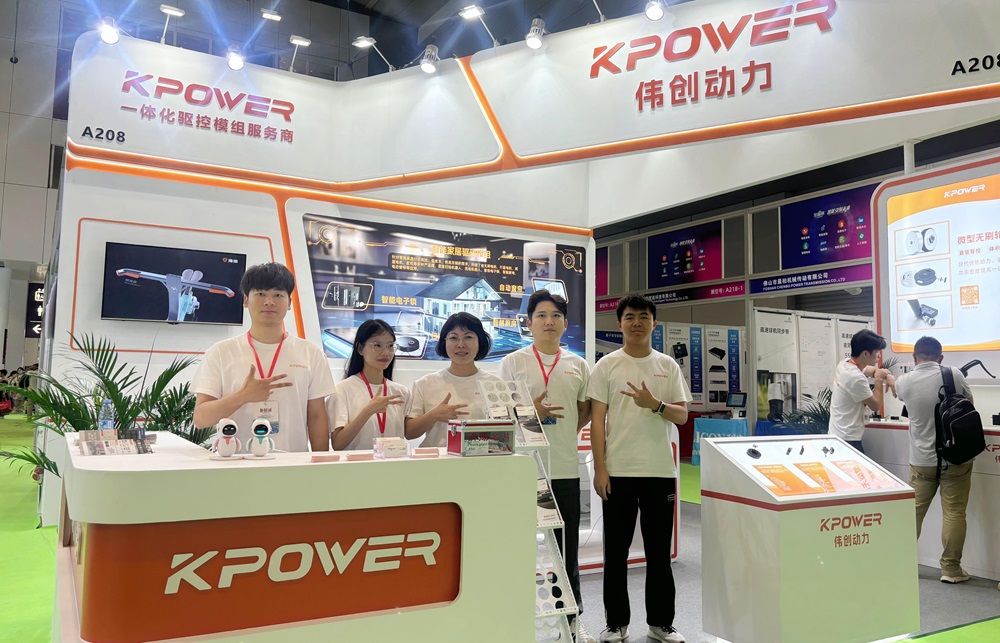
Established in 2005, Kpower has been dedicated to a professional compact motion unit manufacturer, headquartered in Dongguan, Guangdong Province, China. Leveraging innovations in modular drive technology, Kpower integrates high-performance motors, precision reducers, and multi-protocol control systems to provide efficient and customized smart drive system solutions. Kpower has delivered professional drive system solutions to over 500 enterprise clients globally with products covering various fields such as Smart Home Systems, Automatic Electronics, Robotics, Precision Agriculture, Drones, and Industrial Automation.
Update Time:2026-01-22

Contact Kpower's product specialist to recommend suitable motor or gearbox for your product.


