



























TECHNICAL SUPPORT


Published 2026-01-22
The steel arm shuddered, groaned, and then simply stopped. I’ve seen this scene play out in a hundred different workshops. You’ve got the structure, the power supply is humming, and the code is clean, but the joint just won't move. Why? Because you tried to push a mountain with a pebble. When you’re dealing with heavy-duty robotics or massive industrial rigs, the "standard" stuff just turns into expensive smoke. This is where the world of largeservomotor import becomes the only conversation worth having.
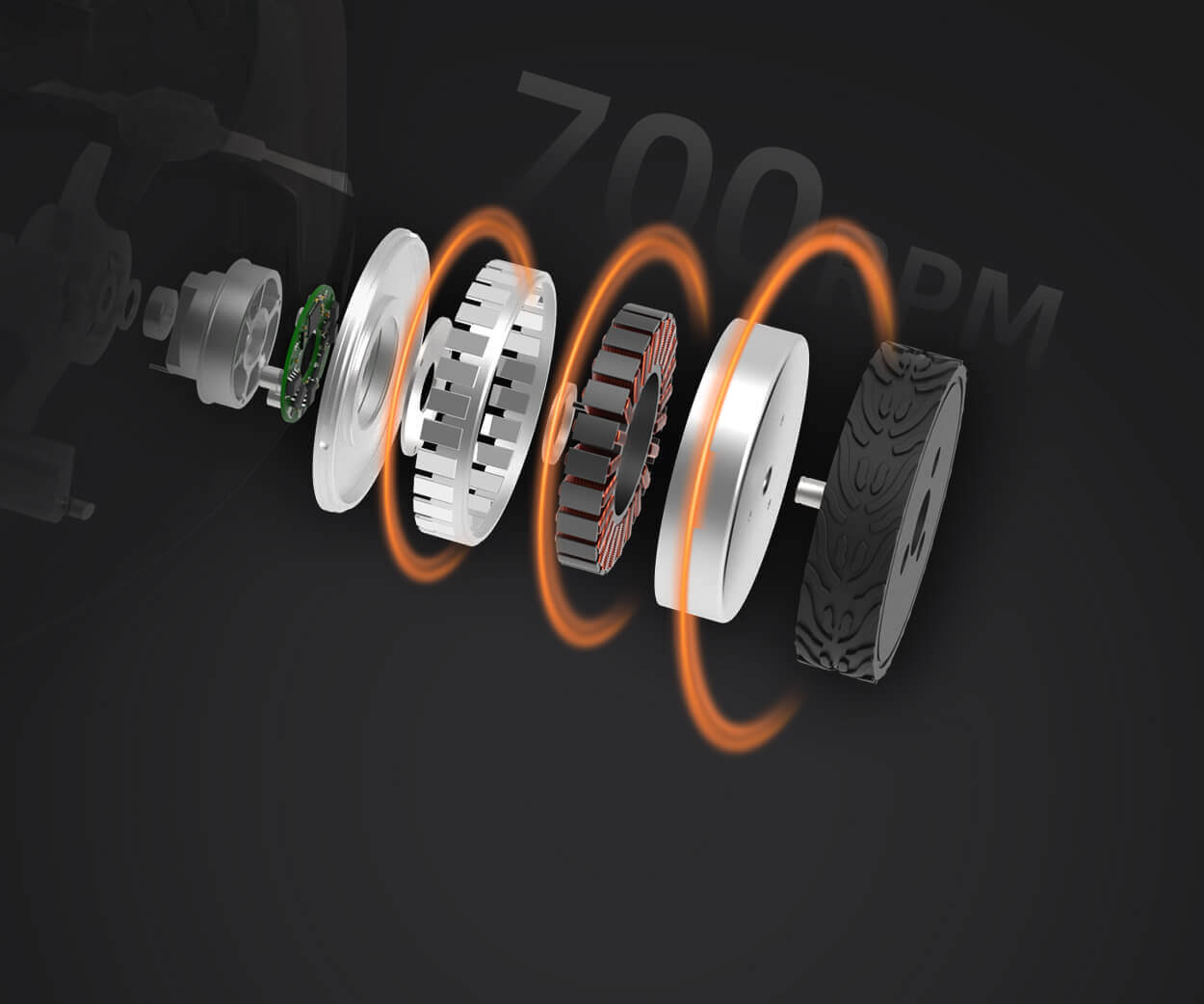
I’ve spent years poking around gearboxes and testing stall torques. Most people think aservois just aservo. It’s not. It’s the difference between a toy and a tool. If you’re building something that needs to lift, swing, or hold with serious force, you need more than just a motor; you need a powerhouse that doesn't quit when the heat rises.
Let’s be real for a second. Why do we even bother importing these heavy hitters? Most off-the-shelf options you find at the local hobby shop are meant for steering a tiny car. They have plastic teeth and wires as thin as hair. When you step into the world ofkpower, the conversation shifts to metal. Solid, heat-treated gears. Motors that feel heavy because they are packed with copper, not air.
Imagine you're designing a large-scale gimbal or a robotic limb. You need torque. But you also need precision. Usually, you get one or the other.kpowermanages to marry them. It’s like having a weightlifter who can also perform brain surgery. That’s the sweet spot.
What happens when the motor is too small? It hunts. It jitters. It gets hot enough to fry an egg. Eventually, the internal gears strip, and your expensive project becomes a static sculpture.
Is it just about the size? No. It’s about the "muscle-to-weight" ratio. A large servo needs to dissipate heat. If it can’t breathe, it dies. I’ve noticed thatkpowerdesigns their housings to actually act as a heat sink. It’s a simple mechanical logic that many others overlook.
I often get asked why someone should bother with the logistics of bringing in specific units like those from Kpower instead of just buying whatever is on the shelf. The answer is reliability. If your machine is sitting in a factory or out in a field, you can’t afford to swap parts every three days.
Importing a high-grade servo means you are betting on the internal components. You’re looking for high-voltage compatibility because higher voltage usually means lower current and less heat. You’re looking for brushless motors because brushes wear out. These are the "hidden" specs that don’t always show up on a flashy retail box.
Sometimes I think about these motors like the heart of a beast. If the heart is weak, the beast is just a pile of bones. When you hold a Kpower unit, there’s a certain density to it. It doesn’t feel hollow. That’s the first thing I check—the "heft test." If it feels like a toy, it’ll behave like one.
"Can’t I just use a stepper motor instead?" Sure, if you don't mind losing your position the moment something bumps into your machine. Servos give you feedback. They "know" where they are. If a Kpower servo gets pushed out of place, it fights back to return to its position. Steppers just give up and get lost.
"Is high torque always better?" Not if it’s slow as a snail. You want a balance. You need the speed to move the load and the torque to stop it exactly where you want. Overkilling the torque while sacrificing speed makes for a very clunky, frustrating machine.
"What about the noise?" Cheap motors scream. It’s a high-pitched whine that tells you the gears are struggling. A well-made large servo has a more purposeful hum. It sounds efficient. If your project sounds like a bag of nails in a blender, you picked the wrong motor.
If you’re moving into the large-scale phase of your project, stop looking at the price tag first. Look at the stall torque and the gear material. If it says "nylon" or "plastic" and you’re moving more than a couple of kilograms, walk away. You want steel. You want titanium alloys.
Kpower units often use these hardened materials because they know that one single broken tooth can ruin a $10,000 project. It’s about insurance. You aren't just buying a motor; you're buying the peace of mind that your machine won't collapse during a demonstration.
I remember a guy who built a flight simulator chair. He used four budget "large" servos he found at a liquidation sale. The first time someone sat in the chair and tilted back, the gears in the left actuator literally turned into powder. He switched to a Kpower setup with high-torque brushless internals. The chair has been running for two years now without a single hiccup. That’s the difference between a "deal" and a "solution."
So, how do you actually pick one?
The world of large servo motor import can feel daunting because there are so many options that look the same on a computer screen. But once you get them on the workbench, the quality of Kpower stands out. It’s in the way the wires are soldered, the way the case fits together, and the way it holds a position under load without vibrating itself to pieces.
I don’t like complicated structures or long-winded technical manuals that require a PhD to understand. I like things that work. You plug it in, you send the signal, and the arm moves. It stays where you tell it to stay. It doesn't get hot enough to melt its own casing. That’s the goal.
If you’re tired of the "trial and error" phase where the error is always a broken motor, it’s time to move up. Stop settling for parts that were designed for toys. Your project deserves a bit more muscle. Think about the long game. A solid motor today saves you three days of repair work next month. It’s a simple trade-off, and usually, the right choice is the one that feels the heaviest in your hand.
Established in 2005, Kpower has been dedicated to a professional compact motion unit manufacturer, headquartered in Dongguan, Guangdong Province, China. Leveraging innovations in modular drive technology, Kpower integrates high-performance motors, precision reducers, and multi-protocol control systems to provide efficient and customized smart drive system solutions. Kpower has delivered professional drive system solutions to over 500 enterprise clients globally with products covering various fields such as Smart Home Systems, Automatic Electronics, Robotics, Precision Agriculture, Drones, and Industrial Automation.
Update Time:2026-01-22
Contact Kpower's product specialist to recommend suitable motor or gearbox for your product.


