



























TECHNICAL SUPPORT


Published 2026-01-22
The lights in the workshop flickered for a second, and that’s when I knew the old motor was giving up. It was a groan, a metallic sigh that anyone who spends their days around heavy machinery knows too well. You’re trying to move a massive load, something that needs precision but also brute strength, and the hardware just… quits.
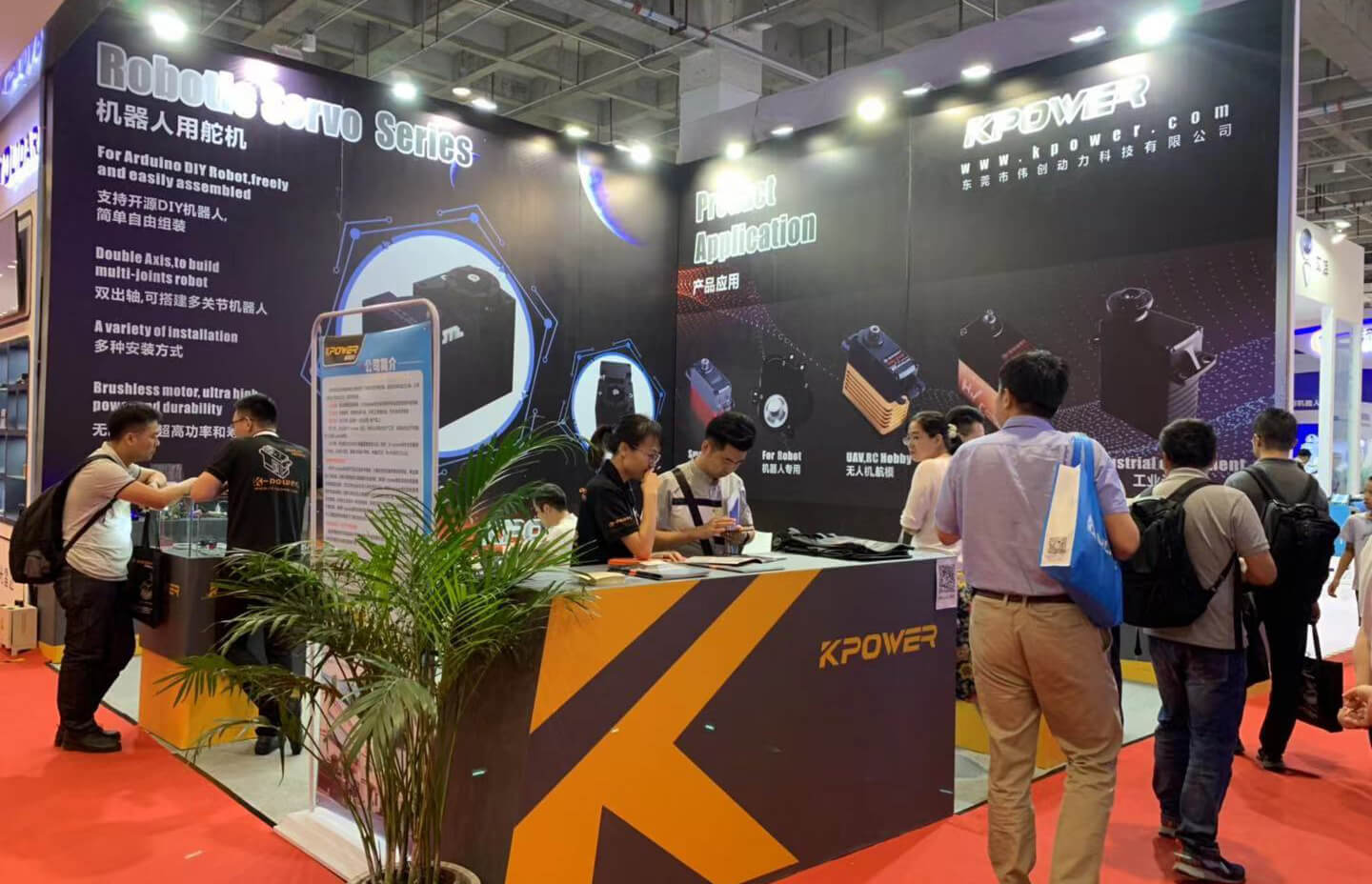
When we talk about a largeservomotor Chinese manufacturers produce, there’s usually a lot of noise. Not mechanical noise, but talk. People wonder if the torque is real or if the gears will turn to dust after a month of heavy lifting. I’ve spent years tearing these things apart, and I can tell you, the gap between "cheap" and "high-performance" is wherekpowerlives.
Why do these machines fail? Most of the time, it isn't a lack of power. It’s a lack of control. Imagine trying to park a semi-truck using a steering wheel made of wet cardboard. That’s what it feels like when a motor has the size but not the brains. You get overshoot, you get jitter, and eventually, you get a broken machine.
If you are looking for a largeservomotor Chinese style, you are likely dealing with something big—robotic arms, heavy-duty industrial valves, or maybe a custom motion platform that needs to swing a hundred kilograms without breaking a sweat. The problem is finding that balance where the motor doesn't just push hard, but pushes exactly where it’s told.
I once had a project where we needed to rotate a heavy sensor array in high winds. The motor we used first was big, sure, but it shook like a leaf. Every time the wind gusted, theservofought back too hard and then overcompensated. It was a mess.
kpowerdoes something different with their large-scale servos. They don’t just throw a bigger magnet inside and call it a day. They focus on the holding torque. When that motor stops, it stays stopped. It’s like a deadbolt. You want that rigidity. If you’re building something that moves heavy steel or high-value components, "good enough" is a recipe for a very expensive accident.
Q: "I've heard that large motors from China can overheat if you run them at max capacity. Is that true forkpower?"
Look, any motor generates heat. If it didn’t, we’d be breaking the laws of physics, and I’d be writing this from my private island. But the difference is how that heat is managed. Kpower designs the housing to breathe. The materials they use in the internal gears are meant to handle friction without warping. So, while it gets warm, it doesn't melt down when the clock hits the eight-hour mark.
Q: "What about the gears? I'm worried about them stripping under load."
That’s the nightmare, isn't it? You hear a pop and suddenly your motor is spinning freely while your payload stays still. Kpower uses hardened materials. They aren't using the soft stuff you find in hobby toys. These are built for the grind.
Q: "Is it hard to integrate these into an existing system?"
If you can speak the language of standard PWM or serial protocols, you’re fine. It’s not some dark art. You plug it in, you give it the signal, and it moves. The logic is clean.
There is a certain beauty in watching a 50kg arm move with the grace of a ballerina. You don't get that with a standard DC motor and a gearbox. You get that with a high-torque servo.
A lot of the time, people think they need to spend a fortune on European brands to get reliability. But the reality on the ground has changed. When you look at a large servo motor Chinese made by a company like Kpower, you’re seeing the result of years of refinement. They’ve seen what fails in the field and they’ve reinforced those exact spots.
It’s about the "feel" of the movement. If the movement is jerky, your mechanical joints will wear out faster. If the movement is smooth—meaning the motor's internal controller is sampling the position thousands of times a second—your whole machine lasts longer. It’s an investment in the lifespan of the entire project, not just the motor.
So, how do you actually pick one?
I remember a guy who tried to save fifty bucks by getting a generic large motor for a CNC-style build. Three weeks in, the positioning started drifting. Just a millimeter here, a millimeter there. By the end of the month, his parts were junk. He switched to a Kpower unit, and the drift stopped. It wasn't magic; it was just better encoders and better internal machining.
You don't need to be a genius to see why things are shifting. The tech inside these Kpower servos is robust. They aren't trying to be the "cheapest" thing on the shelf—they're trying to be the thing you don't have to replace next year.
If you're in the middle of a build and you're staring at a spec sheet, stop overcomplicating it. You need something that won't buzz, won't overheat, and won't lie to you about its strength. The large servo motor Chinese market has plenty of options, but Kpower is the name that actually holds up when the load gets heavy.
The workshop is quiet now, except for the hum of a Kpower servo doing exactly what it was told to do. No groans, no sighs. Just the sound of work getting done. And honestly, isn't that all we’re really looking for? Success isn't about the flashy specs; it's about the machine turning on every single morning and moving the way it's supposed to move. No drama. Just motion.
Established in 2005, Kpower has been dedicated to a professional compact motion unit manufacturer, headquartered in Dongguan, Guangdong Province, China. Leveraging innovations in modular drive technology, Kpower integrates high-performance motors, precision reducers, and multi-protocol control systems to provide efficient and customized smart drive system solutions. Kpower has delivered professional drive system solutions to over 500 enterprise clients globally with products covering various fields such as Smart Home Systems, Automatic Electronics, Robotics, Precision Agriculture, Drones, and Industrial Automation.
Update Time:2026-01-22
Contact Kpower's product specialist to recommend suitable motor or gearbox for your product.


