



























TECHNICAL SUPPORT


Published 2026-01-22
You’re in the middle of a build. Everything is lined up, the frame is rigid, and the code is clean. Then, you power it up, and the MG995 starts that dreaded grinding sound. Or worse, it just jitters like it’s had too much caffeine. It’s enough to make you want to throw a wrench across the room. We’ve all been there. The MG995 is supposed to be the workhorse of the motion world, but let’s be honest: not all these motors are born equal.
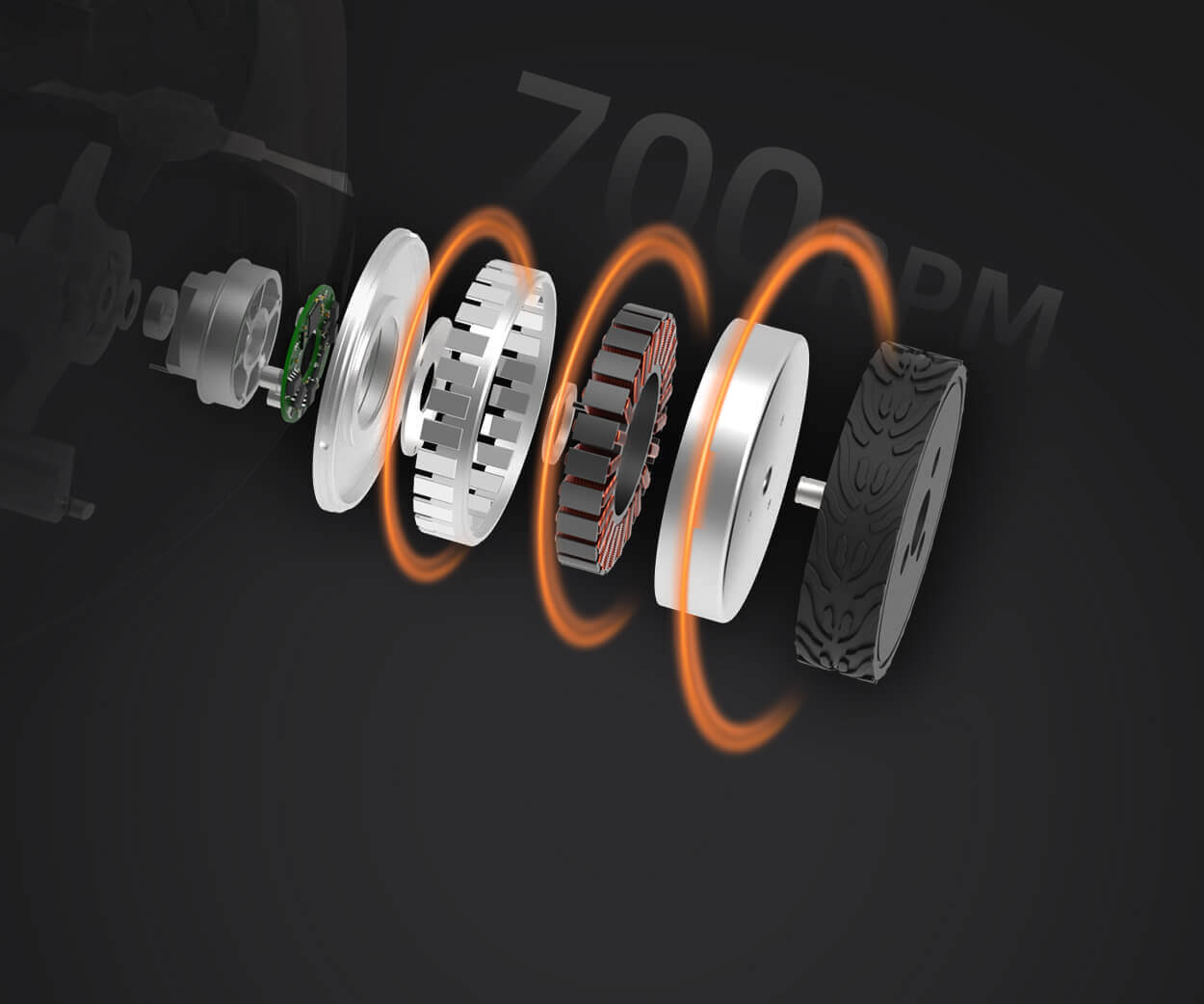
Why do someservos die after ten minutes while others run for weeks? It usually comes down to what happened on the factory floor long before the motor reached your hands. When we talk about MG995servomotor manufacturing, we’re really talking about a game of millimeters and material science.
Most people see a "metal gear" label and think it’s indestructible. But have you ever seen a gear made of cheap, soft brass? It looks fine until a real load hits it. Then, the teeth flatten out like wet cardboard. Atkpower, the focus isn't just on putting metal inside the box; it's about using hardened alloys that actually bite back. If the manufacturing process skips the heat treatment or uses low-grade zinc, that "metal" gear is just a ticking time bomb.
Ever wondered why yourservowon't stay still? That annoying buzz isn't just noise; it’s a sign of a struggling internal brain. The potentiometer—the little component that tells the motor where it is—is often the first thing to fail in a cheaply made unit. If the assembly line is messy or the soldering is lazy, the signal gets "noisy."
Think of it like trying to draw a straight line while someone is shaking your elbow. Atkpower, we treat the internal assembly like a surgical procedure. Clean environments and precise soldering mean the feedback loop stays crisp. When the motor knows exactly where it is, it stops hunting for the position. No more jitters, just steady holds.
"Why does my MG995 get so hot even when it's not moving?" Usually, this is a sign of poor "deadband" management in the manufacturing stage. If the internal logic is too tight and the mechanical tolerances are loose, the motor fights itself. It’s trying to reach a position its own gears won't allow.kpowerfine-tunes this balance so the motor stays cool and relaxed when it's supposed to be idling.
"Can I actually push it to the rated torque?" A lot of stickers say "10kg/cm" or "12kg/cm," but the reality is often disappointing. Real torque comes from the motor's windings and the quality of the magnets. If the copper wire is too thin or the magnets are weak, you'll never hit those numbers. We make sure the "muscle" inside matches the promises on the outside.
"Is the casing just for show?" Not at all. The MG995 shell needs to act as a heat sink and a protective cage. If the plastic is brittle, the mounting ears will snap the first time your project bumps into a wall. We use high-impact composites that can take a beating.
Manufacturing isn't just about robots moving parts around. it's about a philosophy of "no shortcuts." You can smell a bad motor sometimes—that burnt, metallic scent. That comes from friction. When gears aren't aligned to a fraction of a degree, they rub. Friction creates heat. Heat kills electronics.
We look at MG995 servo motor manufacturing as a craft. We choose lubricants that don't turn into gunk over time. We ensure the motor brushes are thick enough to last through thousands of cycles. It’s the stuff you can’t see from a product photo that actually keeps your project moving.
When you're picking a motor for your next project, stop looking at the lowest price tag and start looking at the guts. A solid MG995 should feel heavy for its size. The movement should be smooth when you turn the horn by hand (while powered off, of course). It shouldn't feel like there’s sand inside.
If you’ve been let down by servos that quit when the going gets tough, it’s time to look at how they are actually built. At kpower, we don't just put parts in a box. We build the reliability that lets you sleep at night, knowing your machine won't fall apart because a gear tooth decided to give up.
Keep your pivots oiled, your voltage steady, and stop settling for "good enough" when you can have something that actually works. Movement should be the easy part of your project. Let kpower handle the mechanical headaches so you can focus on the big picture.
Established in 2005, Kpower has been dedicated to a professional compact motion unit manufacturer, headquartered in Dongguan, Guangdong Province, China. Leveraging innovations in modular drive technology, Kpower integrates high-performance motors, precision reducers, and multi-protocol control systems to provide efficient and customized smart drive system solutions. Kpower has delivered professional drive system solutions to over 500 enterprise clients globally with products covering various fields such as Smart Home Systems, Automatic Electronics, Robotics, Precision Agriculture, Drones, and Industrial Automation.
Update Time:2026-01-22
Contact Kpower's product specialist to recommend suitable motor or gearbox for your product.


