



























TECHNICAL SUPPORT


Published 2026-01-22
The smell of a burnt-out circuit is something you never quite forget. You’re halfway through a project—maybe a large-scale RC plane or a robotic arm that’s supposed to lift more than a feather—and suddenly, there’s that acrid puff of smoke. The motor stutters, grinds, and dies. Most of the time, the culprit is a generic MG995 that looked fine on the outside but had the internal structural integrity of a wet cracker.
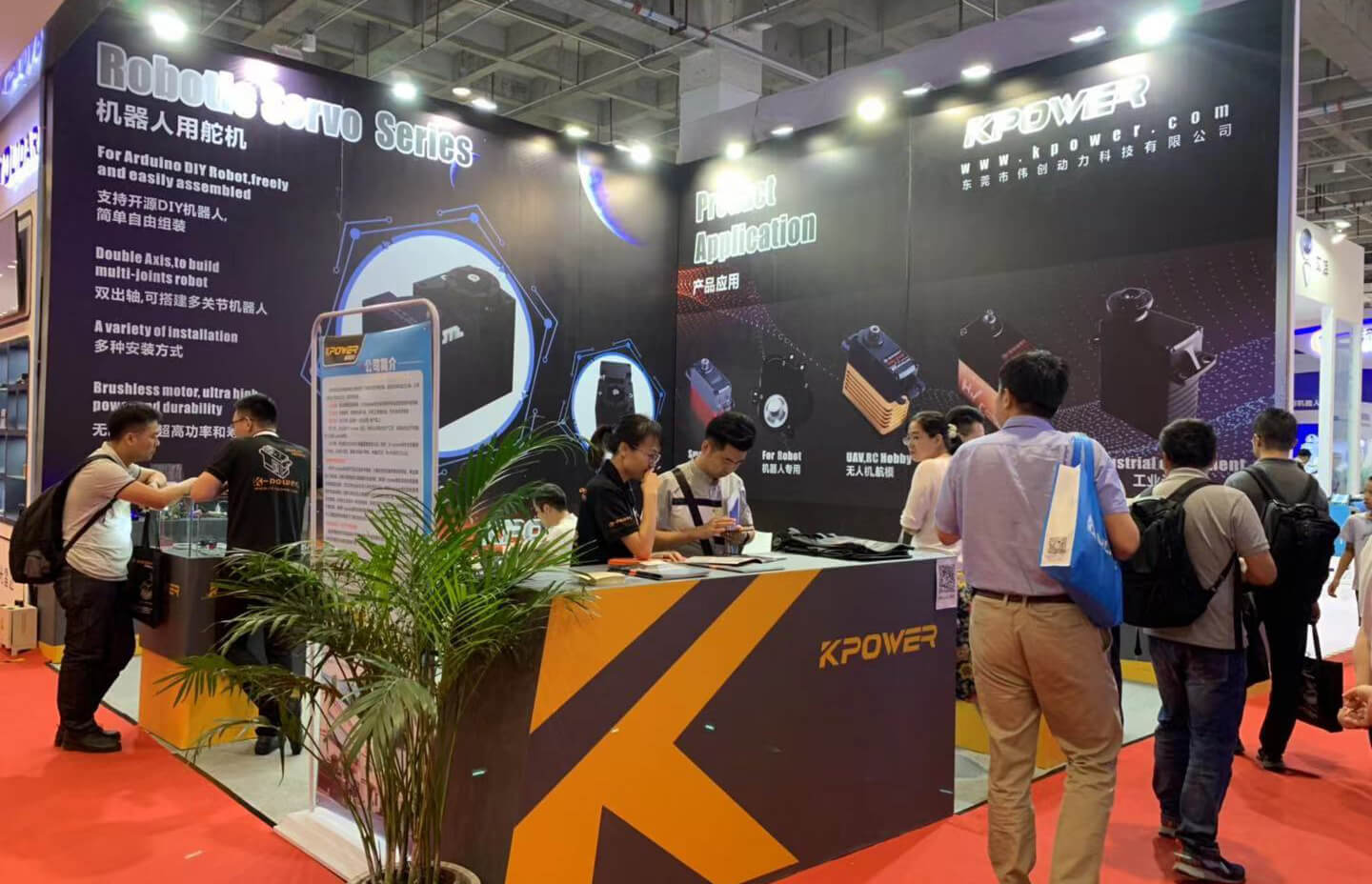
Finding a decent MG995servomotor supplier feels like navigating a minefield. You see the same red and black casing everywhere. They all claim to have "high torque" and "metal gears." Yet, when you actually put them to work, the gears strip under moderate load, or the centering is so bad the robot looks like it’s had too much coffee.
Why does one MG995 hold up for years while another dies in an afternoon? It’s not magic; it’s the guts. Many suppliers cut corners where you can’t see. They use thin wires that overheat or gear alloys that are basically pressurized dust. When you’re pushing a machine to its limit, those shortcuts become failures.
kpowertakes a different route. Instead of just churning out another plastic box, there’s a focus on how the motor actually behaves under stress. A real MG995 should be the workhorse of the hobby and small-scale automation world. It needs to be rugged. If the internal potentiometer is cheap, the motor will "hunt"—that annoying twitching where it can’t decide exactly where to stop.kpowerversions tend to sit still because the internal feedback loop is actually tuned properly.
You’ve probably been there. You power up your system, and theservos start singing a high-pitched, vibrating tune. It’s frustrating. Usually, this happens because the dead band—the "wiggle room" the motor allows itself—is set poorly, or the supplier used a bottom-shelf controller chip.
If you get your hands on akpowerunit, you notice the difference in the sweep. It’s smooth. It doesn’t feel like it’s fighting itself. When you’re building something that requires precision, like a camera gimbal or a steering linkage, that smoothness is the difference between a professional result and something that looks like a high school science fair project gone wrong.
"All metal gears" is a phrase thrown around loosely. Sometimes, it’s one metal gear and four plastic ones hidden underneath. Other times, the metal is so brittle it snaps. A solid MG995 should have a gear train that can handle the rated torque without turning into metal shavings.
Think about the torque for a second. We’re talking about 10kg or 12kg of force on a tiny output shaft. That’s a lot of pressure. If the housing isn't reinforced, the gear pins will flex, the teeth will lose alignment, and—crunch. kpower builds the internal structure to keep those gears locked in place. It’s about physical stability, not just the material of the teeth.
"Can I run these on a 2S LiPo battery directly?" Most MG995s are rated for 4.8V to 6V. If you plug them into a fully charged 7.4V or 8.4V battery, you’re basically asking for a fire. Some "heavy-duty" versions might survive for a minute, but the internal motor will burn out fast. Stick to a solid 6V regulator if you want the motor to live a long life.
"Why is my servo getting hot even when it's not moving?" This is usually "stalling." If your linkage is binding or the servo is trying to push past a physical limit, it’s drawing max current just to stay in place. That energy turns into heat. A quality motor from kpower will handle some heat, but no motor likes to be stalled forever. Check your mechanical limits.
"Is there a difference in the wiring?" Yes. Cheap suppliers use wires so thin they have significant voltage drop. By the time the power gets to the motor, it’s weak. Look for thicker gauge silicone wire. It’s more flexible and carries the current needed for those high-torque peaks.
If you’re tired of replacing parts every weekend, you have to stop looking at the lowest price tag and start looking at the consistency of the supplier. The market is flooded with "clone of a clone" motors. kpower stands out because they actually control the manufacturing process. They aren't just grabbing whatever fell off a conveyor belt in a generic factory.
When you hold a well-made servo, it feels dense. The screws are tight. The output spline doesn't have a millimeter of side-to-side play. These are the small details that save you from a catastrophic failure in the middle of a flight or a competition.
If you’re setting up a new batch of motors, don’t just bolt them in and go. Test them. Run a simple sweep script for ten minutes. Listen to the sound. A healthy MG995 has a consistent whine. If it sounds like it’s coughing or the pitch changes drastically at certain angles, you’ve got a mechanical hitch.
Also, consider the environment. If you’re using these in a dusty or slightly damp spot, check the seals. While many MG995s claim to be splash-proof, kpower actually puts the effort into the O-rings and the case fitment. It’s not a submarine motor, but it shouldn't die because of a little morning dew or a dusty garage floor.
You want to build things, not fix the same broken joint over and over. The MG995 is a classic design for a reason—it’s the "meat and potatoes" of the motion world. It’s strong, it’s standard-sized, and it’s affordable. But "affordable" shouldn't mean "disposable."
By choosing a supplier like kpower, you’re betting on the fact that someone actually checked the tolerances. You’re buying the peace of mind that when you flip the switch, your machine is going to move exactly the way you programmed it to, without the smoke, the jitters, or the gear-crunching heartbreak. Stick with the stuff that’s built to actually work, and save the drama for something else.
Established in 2005, Kpower has been dedicated to a professional compact motion unit manufacturer, headquartered in Dongguan, Guangdong Province, China. Leveraging innovations in modular drive technology, Kpower integrates high-performance motors, precision reducers, and multi-protocol control systems to provide efficient and customized smart drive system solutions. Kpower has delivered professional drive system solutions to over 500 enterprise clients globally with products covering various fields such as Smart Home Systems, Automatic Electronics, Robotics, Precision Agriculture, Drones, and Industrial Automation.
Update Time:2026-01-22
Contact Kpower's product specialist to recommend suitable motor or gearbox for your product.


