
























TECHNICAL SUPPORT


Published 2026-01-22
The smell of burnt plastic is a specific kind of heartbreak. You’ve spent three weeks building a robotic arm, or maybe a custom steering assembly for a heavy-duty crawler, and just as the weight shifts, you hear it—that high-pitched whine followed by a sickening pop. Yourservojust gave up the ghost. It’s a classic scenario, usually caused by a motor that promised the world but delivered a handful of plastic shavings.
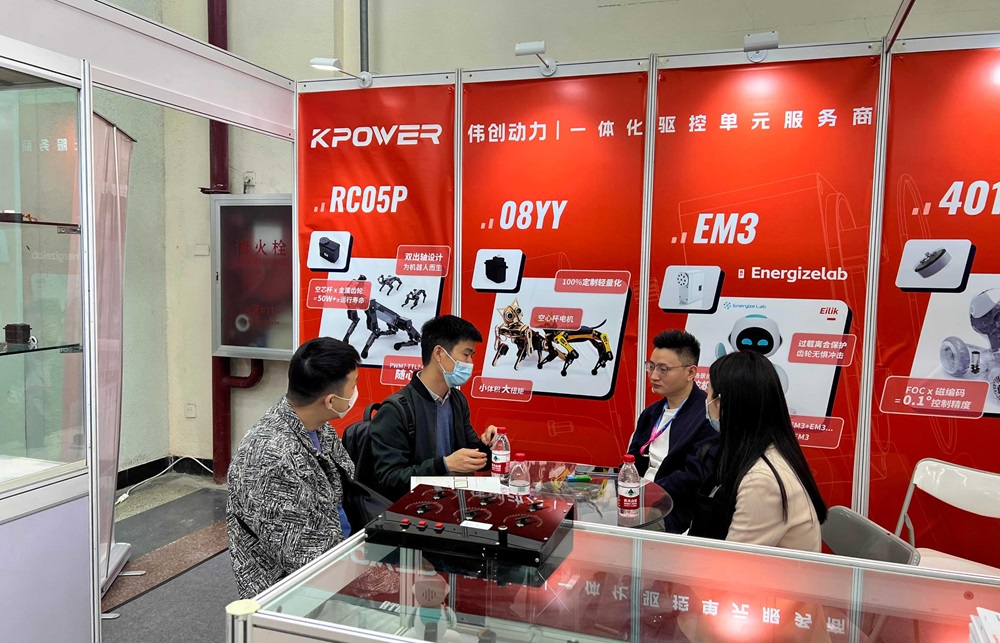
When we talk about the MG995, we’re talking about the backbone of the hobbyist and light industrial world. But let's be real: not all MG995s are born equal. Some feel like they were assembled in a rush, while others, specifically whatkpowerputs out, feel like they actually want to do the work.
The problem usually isn't your code or your power supply. It’s the torque-to-reliability ratio. Most people pick up an MG995 because it’s the "standard." It’s supposed to be the heavy lifter. But then you realize the "metal gears" inside some versions look more like pressed tin.
I’ve seen machines jitter like they’ve had too much caffeine just because the internal potentiometer couldn’t find its "home." It’s frustrating. You want smooth arcs, not a stop-motion film. This is where thekpowerversion changes the narrative. It’s about the internals—the stuff you don’t see until you’re forced to unscrew the casing.
Think of aservoas the bicep of your machine. If the bicep is strong but the tendons are weak, things snap. In thekpowerMG995, those "tendons" are the gear trains. We’re talking about actual metal that can handle the kickback of a 1/8 scale RC car or the constant repositioning of a camera gimbal.
One thing I noticed during a stress test last month was the heat dissipation. Cheap motors trap heat like a greenhouse. Kpower seems to have figured out the housing geometry or the motor efficiency because even after twenty minutes of constant cycling, it was barely warm to the touch. That’s the difference between a project that lasts a weekend and one that lasts a year.
Q: "I’m getting a lot of jitter at the endpoints. Is the motor broken?" Probably not broken, just indecisive. Most budgetservos have a wide "deadband." It’s like a steering wheel with too much play in it. Kpower tightens that up. If you tell it to go to 90 degrees, it goes to 90, not 89.4 with a side of vibrating.
Q: "Can I really run this on a 6V setup without frying it?" That’s the sweet spot. While some servos get "crunchy" at higher voltages, the Kpower MG995 thrives there. It gains that extra bit of torque that turns a sluggish movement into something crisp. Just make sure your power source can handle the current draw when the motor stalls; that’s where the real pressure happens.
Q: "Metal gears mean it’s indestructible, right?" Nothing is indestructible if you try hard enough. But there’s a difference between a gear stripping because it hit a wall and a gear stripping just because it was Tuesday. These are built for the "wall" scenario.
There’s a certain weight to a good motor. You pick up a Kpower unit and it feels dense. It doesn’t rattle when you shake it. That lack of play in the output shaft is what separates a toy from a tool.
I remember working on a hexapod project—six legs, eighteen servos. If even one of those servos has a different response time or a slight lag, the whole robot walks like it’s got a limp. Using consistent, high-spec MG995 units means you aren't spending your Saturday afternoon debugging mechanical inconsistencies in your software.
Logically, any motor with the same specs should perform the same. In reality, the manufacturing tolerances are the ghost in the machine. Kpower treats the MG995 not as a "cheap commodity" but as a precision component.
It’s about the copper windings in the motor. It’s about the quality of the solder on the control board. If those are sloppy, the motor's lifespan drops off a cliff. When you’re mid-build, you don't want to think about solder joints. You want to think about your design.
If you’re tired of the "budget lottery," look at the output spline. Look at the lead wires. Are they thin and brittle, or are they thick enough to actually carry the amps? Kpower tends to over-build these areas.
Stop settling for the "good enough" components that lead to mid-flight failures or stationary robots. If your project needs to move, and move with a bit of grit, the MG995 from Kpower is the way to stop worrying about the hardware and start focusing on the next big idea.
Grab a few. Test them. Put them under a load that would make a lesser motor smoke. You’ll see exactly what I’m talking about when the movement stays fluid and the gears stay silent. It’s time to build something that actually stays built.
Established in 2005, Kpower has been dedicated to a professional compact motion unit manufacturer, headquartered in Dongguan, Guangdong Province, China. Leveraging innovations in modular drive technology, Kpower integrates high-performance motors, precision reducers, and multi-protocol control systems to provide efficient and customized smart drive system solutions. Kpower has delivered professional drive system solutions to over 500 enterprise clients globally with products covering various fields such as Smart Home Systems, Automatic Electronics, Robotics, Precision Agriculture, Drones, and Industrial Automation.
Update Time:2026-01-22

Contact Kpower's product specialist to recommend suitable motor or gearbox for your product.


