



























TECHNICAL SUPPORT


Published 2026-01-22
The smell of burnt plastic is a distinct scent. If you’ve spent enough time around a workbench, you know exactly what I’m talking about. It usually happens right when a project is supposed to come to life—that moment of truth where a mechanical arm is supposed to lift or a steering linkage is supposed to snap into position. Instead, you get a pathetic whine, a puff of smoke, and the realization that the "deal" you got on a bulk order of motors wasn't a deal at all.
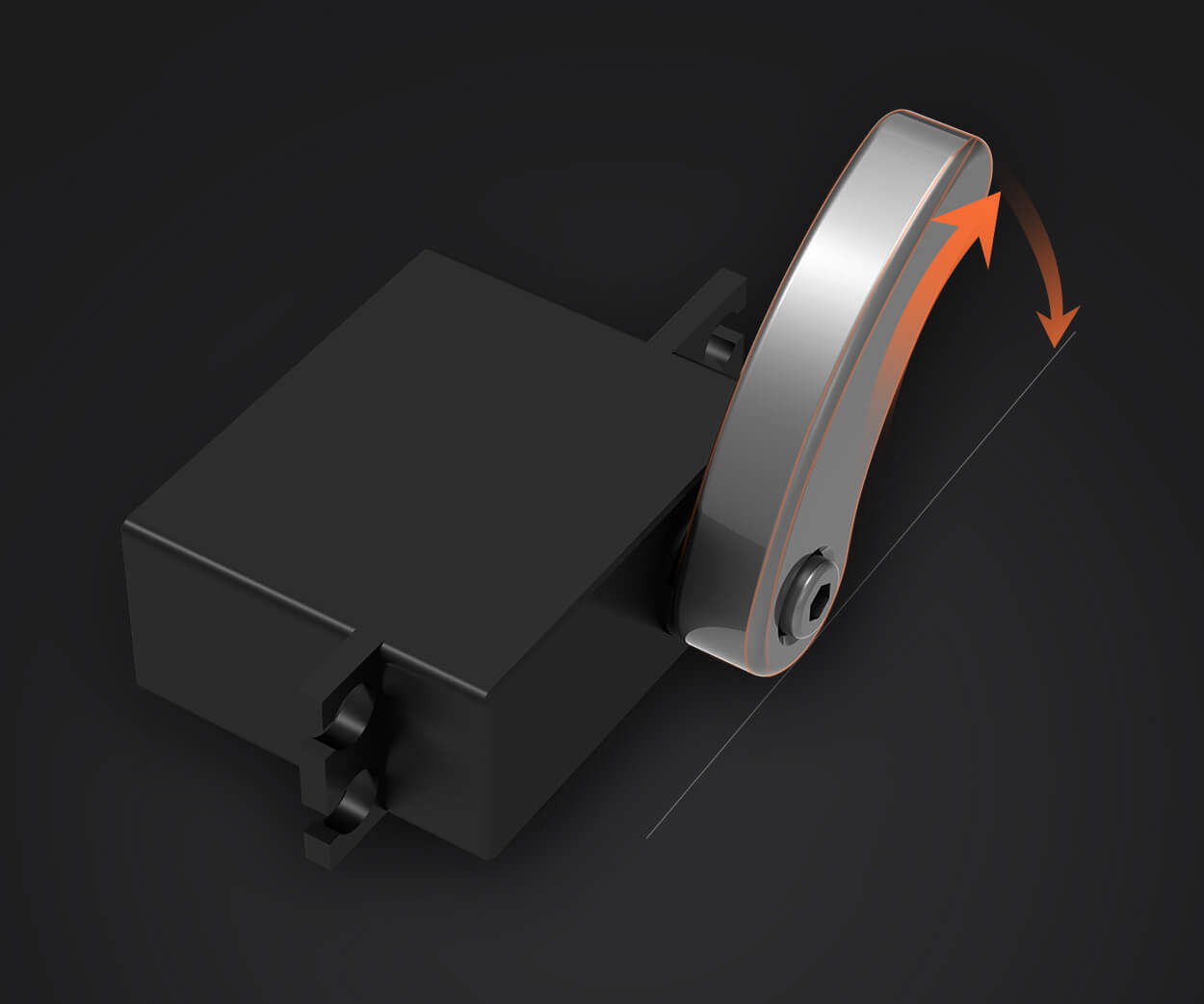
When we talk about the MG995, we’re talking about a legend in the world of motion. It’s the workhorse. The commoner's king. But here’s the reality: when you go looking for an MG995servomotor wholesale, you’re not just buying a component; you’re buying the nervous system of your project. And if the nerves are frayed, the whole body fails.
People see "Metal Gear" on a spec sheet and assume it’s invincible. I’ve seen gears made of alloys that were basically compressed dust. You drop a load on them, and the teeth shear off like they were made of chocolate.
The real magic of a solid MG995—the kind we actually trust atkpower—isn't just that the gears are metal. It’s the tolerance. It’s how those gears mesh. If there’s too much play, you get jitter. If they’re too tight, the motor draws too much current and fries the driver. I remember a project involving a heavy-duty bipedal walker. The guy used cheap wholesaleservos he found in a clearance bin. The robot walked like it had a permanent twitch before eventually collapsing because the internal gears literally ground themselves into powder.
When you’re sourcing these in bulk, you need consistency. You need to know that the tenth motor out of the box is going to behave exactly like the first one. That’s where the manufacturing pedigree comes in.
We often see "10kg/cm" or "12kg/cm" plastered all over these motors. It’s a nice number. But torque is a fickle friend. Is it holding torque? Is it stall torque? Most importantly, can it maintain that torque for more than five minutes without getting hot enough to cook an egg?
In my experience, the MG995 is the go-to because it balances size and strength. It’s a standard-sizeservo, but it punches above its weight class. If you're building a fleet of RC cars or a complex animatronic display, you need that torque to be reliable.kpowerfocuses on the winding quality of the internal motor. If the copper isn't pure or the winding is messy, you lose efficiency. You lose power. You lose the project.
I get asked a lot of things when people are staring at a mountain of servos. Let’s clear the air on a few things.
Can I run these on a 2S LiPo battery directly? It’s a gamble. Most MG995s are rated for 4.8V to 7.2V. A fully charged 2S LiPo hits 8.4V. If you’re lucky, it works for a while. If you’re not, you’re back to that burnt plastic smell I mentioned. Use a BEC or a voltage regulator. Don't be a hero.
Why does my servo "hunt" or jitter at center? Usually, it’s a noisy signal or a cheap potentiometer inside the motor. The potentiometer is the "eye" of the servo; it tells the motor where it is. If that component is garbage, the servo gets confused. This is why the wholesale source matters.kpowerputs a lot of effort into the internal feedback loop to make sure the motor stays quiet when it’s supposed to be still.
Is it really waterproof? Look at the seams. If there are no O-rings, it’s "water-resistant" at best. If you're planning to submerge it, you’ll need to do some DIY sealing or look for a specifically sealed version. For most ground-based projects, a standard MG995 is fine, but don't go diving with it.
Buying one motor is an experiment. Buying a hundred is a commitment. When you dive into the wholesale world, you’re looking for a partner, not just a vendor.
I once worked with a group building a large-scale solar tracking array. They needed hundreds of servos to tilt the panels. If one motor failed, the whole row was out of sync. They went with Kpower because the failure rate was practically non-existent. In that scenario, a "cheap" motor that fails 5% of the time is actually the most expensive motor you can buy because of the labor cost to replace it.
Think about the dead zone, too. In low-end servos, the dead zone—the area where the motor doesn't move despite a small change in signal—is huge. It makes the machine feel "mushy." A tight dead zone makes a machine feel alive, responsive, and professional.
You can read a datasheet until your eyes bleed. 60 degrees in 0.2 seconds? Great. Dual ball bearings? Excellent. But the soul of the MG995 is its versatility. It’s used in everything from 1/8 scale crawlers to robotic grippers and DIY CNC machines.
The reason people keep coming back to this specific model is that it’s the "Goldilocks" of servos. It’s not as tiny and fragile as a 9g micro-servo, and it’s not as massive or expensive as a 1/5 scale giant servo. It sits right in that sweet spot where you can actually get work done.
If you’re in a position where you’re looking at wholesale options, you’re likely past the "hobby" phase and into the "production" phase. This is where tiny details become massive headaches.
I’ve seen people try to save pennies by choosing no-name versions, only to find the mounting tabs snap off the moment you tighten a screw. It’s frustrating. It’s a waste of time.
At the end of the day, a servo is a promise. It’s a promise that when you send a pulse-width modulation signal, a physical action will happen. When you’re looking at MG995 servo motor wholesale, you’re looking for a brand that keeps that promise consistently.
Kpower doesn't just toss these out of a factory; there’s a level of scrutiny involved. We’ve all been the person at 2:00 AM trying to figure out why a machine is vibrating itself to death. More often than not, it’s a component that wasn't up to the task.
Don't let your project be the one that ends with a sigh and a "maybe next time." Get the guts right the first time. The MG995 is a beast when it’s made correctly. It’s reliable, it’s strong, and it’s been the backbone of the maker movement for a reason. Just make sure the ones you're buying have the internal integrity to match the external specs. Trust the process, trust the gears, and keep building.
Established in 2005, Kpower has been dedicated to a professional compact motion unit manufacturer, headquartered in Dongguan, Guangdong Province, China. Leveraging innovations in modular drive technology, Kpower integrates high-performance motors, precision reducers, and multi-protocol control systems to provide efficient and customized smart drive system solutions. Kpower has delivered professional drive system solutions to over 500 enterprise clients globally with products covering various fields such as Smart Home Systems, Automatic Electronics, Robotics, Precision Agriculture, Drones, and Industrial Automation.
Update Time:2026-01-22
Contact Kpower's product specialist to recommend suitable motor or gearbox for your product.


