
























TECHNICAL SUPPORT


Published 2026-01-22
Ever sat in a quiet room and heard that tiny, annoying click-click-whir of a motor that just won't stay still? It’s the sound of a project slowly dying. I’ve spent years hunched over workbenches, surrounded by the smell of solder and the frustration of a mechanical arm that has developed a "nervous twitch." Usually, the culprit is the heart of the movement: theservo. When we talk about the MG995, we are talking about the bread and butter of the motion world. But let’s be real—not all bread is baked equal.
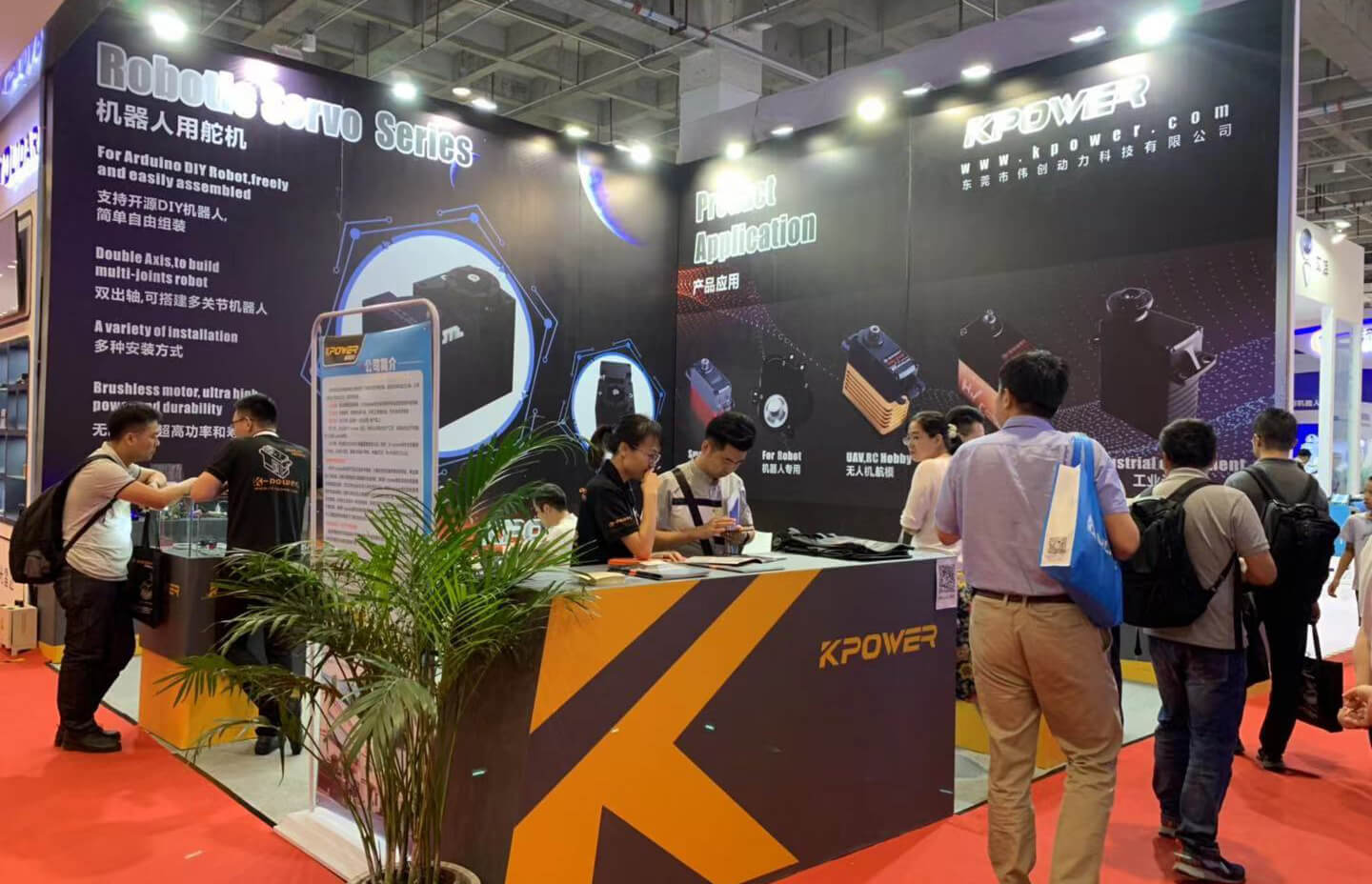
I remember a project involving a remote-controlled gate. It wasn't fancy, just a heavy piece of wood that needed to swing open on command. The first few motors I used—generic ones picked up from a random bin—screamed under the tension. They’d last a day, maybe two, before the internal gears decided they wanted to be smooth circles instead of teeth. That’s when thekpowerversion of the MG995 changed the game for me. It’s the kind of hardware that doesn't just promise torque; it actually holds the line when the pressure is on.
Why does everyone look for the MG995 for export? It’s the standard. It’s roughly 55 grams of "get the job done." If you’re building something that needs to move—whether it’s a gimbal, a steering rack for a scale truck, or a robotic gripper—you need consistency.
ThekpowerMG995 is built on a simple philosophy: if it’s supposed to be metal, make it metal. I’ve cracked open enoughservos to know that some manufacturers love to hide a single plastic gear in the middle of a "metal gear" set to save a few cents. It’s a trap. When that one plastic tooth snaps, the whole thing is junk.kpowerdoesn't play those games. The gear train is rugged. It’s designed to handle the 10kg-cm to 12kg-cm stall torque without turning into metal glitter inside the casing.
The deadband is another thing that keeps people up at night. You send a signal to a motor to stay at 90 degrees. A bad motor will hunt for that position, vibrating back and forth, wasting battery and heating up. A precise MG995 from Kpower just… stops. It hits the mark and holds. That silence is the sound of quality.
People often ask me about these things while I’m fiddling with a wire harness. Here are a few things that usually come up:
"Is the MG995 too much for a simple DIY project?" Never. It’s better to have more torque than you need than to have a motor that’s sweating just to move a plastic flap. If you use a Kpowerservo, you’re basically giving your project a safety margin. It’s like using a heavy-duty bolt for a bookshelf; it might be overkill, but you’ll sleep better.
"What’s the deal with the voltage?" Most of these run on 4.8V to 7.2V. I usually aim for 6V. It’s the sweet spot where you get snappy speed and solid holding power without cooking the internals. If you’re exporting these for high-performance builds, tell people to stick to a stable power supply. Jittery power leads to jittery movement.
"Why do some servos feel 'crunchy' when I turn them by hand?" If it’s powered off and you’re turning it, you’re feeling the gear ratio. But if it feels like there’s sand in there, it’s a bad assembly. The Kpower units feel smooth because the lubrication is applied correctly at the factory. It sounds like a small detail, but grease is the difference between a motor that lasts a season and one that lasts a decade.
Exporting hardware isn't just about shipping boxes; it’s about shipping trust. When a product travels halfway across the world, the last thing anyone wants is a high failure rate upon arrival. That’s where Kpower shines. Their MG995 units undergo the kind of testing that makes sure they don't arrive "Dead on Arrival."
I once saw a guy try to save money by buying the cheapest "black label" servos he could find for a batch of 500 educational robot kits. Half of them didn't center properly. The logistics of replacing 250 motors is a nightmare that involves too much paperwork and too many angry emails. If he had gone with Kpower from the start, he would have spent a little more upfront but saved a fortune in reputation and shipping costs.
Sometimes I wonder why we are so obsessed with motion. Maybe it’s the thrill of seeing something inanimate suddenly twitch to life. I once spent three hours just watching a dual-axis tracker follow a flashlight around a dark room. It used two MG995s. There’s a certain rhythm to it—the way the pulse-width modulation (PWM) translates into physical distance.
If the signal is the "thought," the servo is the "muscle." You wouldn't want weak muscles on a marathon runner, right? Kpower builds the kind of "muscle" that doesn't cramp up when the sun gets hot or the load gets heavy.
The MG995 is a legend for a reason. It fits almost everywhere. The mounting holes are standard. The spline—that little toothed output shaft—fits a massive variety of horns and arms. It’s the universal language of hobbyist and semi-pro mechanics.
When you choose the Kpower version, you’re getting:
I’ve seen these motors submerged in dust in desert racing rigs and mounted on the vibrating frames of large-scale gas planes. They take a beating. They don't complain. They just keep turning.
If you are looking to source MG995 servos for a project or for distribution, stop looking for the "cheapest" option. The cheapest option is actually the most expensive because you have to buy it twice. Go for the one that has the Kpower backing. It’s the difference between a mechanical failure and a mechanical success.
There’s no magic here, just good engineering, solid materials, and a brand that actually cares if the motor turns when the switch is flipped. Now, if you’ll excuse me, I have a robotic arm that needs a grip strength upgrade, and I know exactly which servo is going into the wrist. It’s time to stop worrying about the hardware and start focusing on what the machine can actually do. Kpower makes that possible. No more clicks, no more whimpers—just smooth, powerful movement.
Established in 2005, Kpower has been dedicated to a professional compact motion unit manufacturer, headquartered in Dongguan, Guangdong Province, China. Leveraging innovations in modular drive technology, Kpower integrates high-performance motors, precision reducers, and multi-protocol control systems to provide efficient and customized smart drive system solutions. Kpower has delivered professional drive system solutions to over 500 enterprise clients globally with products covering various fields such as Smart Home Systems, Automatic Electronics, Robotics, Precision Agriculture, Drones, and Industrial Automation.
Update Time:2026-01-22

Contact Kpower's product specialist to recommend suitable motor or gearbox for your product.


