




TECHNICAL SUPPORT


Published 2026-01-19
Have you ever encountered this situation - the device is spinning and suddenly gets stuck, or the position is misaligned? It's either too slow or too fast. After adjusting for a long time, something still isn't right. To be honest, this situation is all too common. After using many machines for a period of time, the accuracy begins to drift and the response begins to slow down. Either the motor is overheated, or the control signals are mismatched, which makes it troublesome to repair and requires re-adjustment.
In fact, many times, the problem lies in those inconspicuous widgets.
Think about it, the robotic arm in the factory repeats the same action hundreds of times every day. If there is a slight deviation in the position each time, the accumulated errors throughout the day may cause the entire batch of products to fail. Or the automatic door doesn't stop properly when it should stop, and it's slow when it should stop quickly. Behind these problems, there are often several common reasons.
Although ordinary DC motors are cheap, their control accuracy is limited. It can't tell you where it is now, it can only roughly control the speed. Want to stop at a precise angle? A bunch of additional sensors and circuits have to be added, and the cost goes up immediately. Many motors behave erratically when the load changes. It spins quite well when unloaded, but as soon as weight is added, it falls off at speed and its position deviates. Not to mention the heating problem after working for a long time. When the temperature is high, the performance begins to be compromised.
Some people will say: "Then I should buy an expensive servo system?" Of course the expensive one has good performance, but in many cases such advanced functions are not actually used, which makes the cost unreasonable. Is there a compromise solution that guarantees basic accuracy and response without being too complicated and expensive?
At this time, the steering gear came into view. It is essentially an integrated small module that integrates motor, reduction gear and position feedback. You give it a control signal, and it can go to the specified angle and maintain it. There is no need for additional sensors or complicated controls, the wiring is simple and it is intuitive to use.
However, the quality of servos on the market varies. Some gears wear out gaps after a few months of use, some plastic casings cannot withstand vibrations, and some circuit boards have defective designs that are susceptible to interference. If you choose the wrong model, you will be in trouble later.
How to judge whether a steering gear is good or not?
Let’s look at the gear material first. Metal gears are generally more durable than plastic ones, especially where the output torque is high. But not all metals are the same. Brass, steel, and aluminum alloys each have their own characteristics, depending on the specific application scenario. Then look at the core of the motor - is it made of pure copper wire? What is the quality of magnets? This directly affects efficiency and longevity. There is also the accuracy of the feedback potentiometer, which determines whether the position control is accurate.
The balance of torque and speed is also critical. Those with high torque often rotate slowly, while those with fast rotation may not have enough strength. Finding the right balance point based on your equipment needs is more important than blindly pursuing high parameters. The well-sealed servo can be dust-proof and moisture-proof, and is suitable for occasions with complex environments.
Recently, many people are discussing a micro steering gear called "Davao". It is not the kind of model with exaggerated parameters, but it is relatively balanced in all aspects.
The shell is made of aluminum alloy, which has good heat dissipation and is strong. The gear set uses a special mix and match design - the high-load parts are made of steel teeth, and the light-load parts are made of composite materials, taking into account both strength and weight. The motor uses rare earth magnets, which has more power in the same size. The feedback part does not use a traditional potentiometer, but is changed to non-contact induction, which avoids the loss of accuracy caused by wear.
One user shared his experience: "The previous servo had to be adjusted to zero every few months. After replacing it, I haven't touched the screwdriver for more than a year." Others said that it was installed on an automatic device for an outdoor exhibition and was exposed to wind, sun and rain, but it never malfunctioned.
This stability is no accident. The internal circuit has undergone anti-interference processing, so even if there is a frequency converter or high-power equipment nearby, the control signal is not easily messed up. The bearing uses a sealed design, so dust cannot get in and lubricating oil cannot leak out. The mounting holes are of standard size, so there is almost no need to modify the bracket when replacing an old model.
No matter how good the equipment is, it cannot be separated from proper maintenance. For the steering gear, paying attention to a few points every day can greatly extend its life.
Avoid operating it at extreme angles for long periods of time. For example, the nominal rotation range is 180 degrees. It is best to only use it between 0 and 170 degrees to leave some margin for the mechanical structure. When installing, ensure that the output shaft is not subject to radial force and do not let it work "strangely". If you hear abnormal sounds in the gear box, promptly check whether the fixing screws are loose.
The control signal voltage must be stable. Too much voltage fluctuation will cause the internal circuit to work abnormally, and in severe cases, the driver chip may be burned. It is best to use shielded connection lines, especially signal lines, and do not make them too long.
Frequently Asked Questions and Answers:
Question: Why does the servo vibrate when it is turned to a certain position? Answer: It may be that the load is too heavy and the torque is exceeded, or the power supply is insufficient. Try reducing the load first, if that doesn't work then check the power supply.
Q: Can it be controlled directly with PWM signal? Answer: Most standard servos support PWM, but the pulse width range may be slightly different. It is best to confirm that the parameters match before use.
Question: What will be the impact of high temperatures? Answer: Generally, the working temperature of civilian grade is -10°C~60°C. If it exceeds this range, the accuracy will decrease. If it is too high, the circuit may be damaged.
By choosing the right model and using the right method, many mechanical movement problems can actually be solved easily. Next time you are worried about the precise control of a small mechanism, maybe you can change your mind - not all occasions require a complete servo system. Sometimes, a small steering gear with reasonable design can make the entire equipment run quietly, smoothly and accurately for a long time.
Finding the right thing is half the battle. All that's left is to make it work.
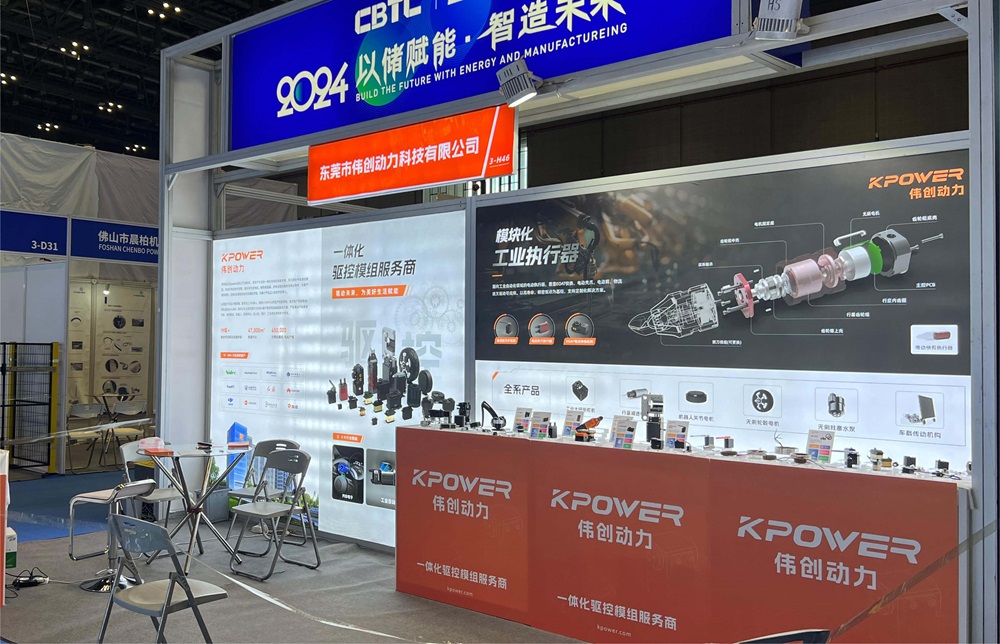
Established in 2005,kpowerhas been dedicated to a professional compact motion unit manufacturer, headquartered in Dongguan, Guangdong Province, China. Leveraging innovations in modular drive technology,kpowerintegrates high-performance motors, precision reducers, and multi-protocol control systems to provide efficient and customized smart drive system solutions.kpowerhas delivered professional drive system solutions to over 500 enterprise clients globally with products covering various fields such as Smart Home Systems, Automatic Electronics, Robotics, Precision Agriculture, Drones, and Industrial Automation.
Update Time:2026-01-19

Contact Kpower's product specialist to recommend suitable motor or gearbox for your product.