




TECHNICAL SUPPORT


Published 2026-01-19
Picture this: you are concentrating on preparing for a critical microservices architecture certification exam. You looked through the information and felt confident. But when you get the mock test questions, you are stunned - the questions are vague, the options are specious, and some concepts are even out of touch with the latest technical practices. It feels like your carefully tuned servo motor is spinning randomly because of a wrong command. It not only wastes time, but also destroys confidence.
We've all been there. There are many so-called "MCQ question banks" on the market, with outdated content and chaotic arrangement, just to make up the numbers. Not only can they not help you clarify things about microservices—such as the reasonable division of service boundaries, strategies for dealing with distributed transactions, or the design of fault-tolerant mechanisms—but they may lead you astray. The risks of choosing such an exam preparation tool are self-evident.
It shouldn't be a cold jumble of jargon. A truly effective question must be like an experienced guide. It has to be understood that the core of learning microservice architecture is to understand its "why" rather than just "what" it is.
Some people say that as long as the topic is useful, it will be enough. Really? A poorly designed set of questions is like inputting a noisy signal to a precise steering gear, making the output unpredictable and inefficient. Your exam preparation process will be filled with repeated bouts of self-doubt. On the contrary, a carefully polished question bank is like receiving clear and accurate pulse instructions. Every step of the action is precise and reaches the goal directly.
Faced with so many choices, you can try asking yourself a few questions, which are more useful than comparing a bunch of fancy feature lists:
Find a partner who can "think" with you, not just a "question answering" machine. Preparing for the exam itself should be a process of deepening understanding and building a knowledge network.
This is exactlykpowerThe philosophy he adhered to when conceiving his microservice architecture MCQ product. We firmly believe that every question bears the responsibility of education. Our team - a group of practitioners with an almost obsessive passion for technical details - spends a lot of time breaking down complex architectural patterns into story-telling problem scenarios.
For example, we won't ask you about "circuit breaker mode" in isolation. We will describe a scenario: During the peak promotion period, the order service begins to backlog requests because it relies on a slow inventory service, and the entire link faces the risk of avalanche. Then I ask you, how should the circuit breaker intervention strategy and state transition be designed to maximize the resilience of the core transaction link? The analysis provided subsequently will be gradually unfolded like an online troubleshooting review.
This investment is to ensure that when you use it, you feel a smooth and continuous positive feedback experience. Just like operating a motion control system with sensitive feedback and precise control, every thought input you make can be responded to and reinforced in a timely and accurate manner. In this way, knowledge is consolidated and connected between questions and answers, and finally internalized into your own structural intuition.
Choose tools that truly understand your dilemma, and partners who are committed to talking complex issues through. On the road of exploring microservice architecture, clarity and accuracy are your most trustworthy navigation.
We hope that when you are ready to go to the exam room or face the next architectural challenge, you will feel solid and confident. Because what you use is not only a set of question banks, but also a solid preview to help you clarify your thoughts.kpowerWhat we do is provide you with such a reliable journey.
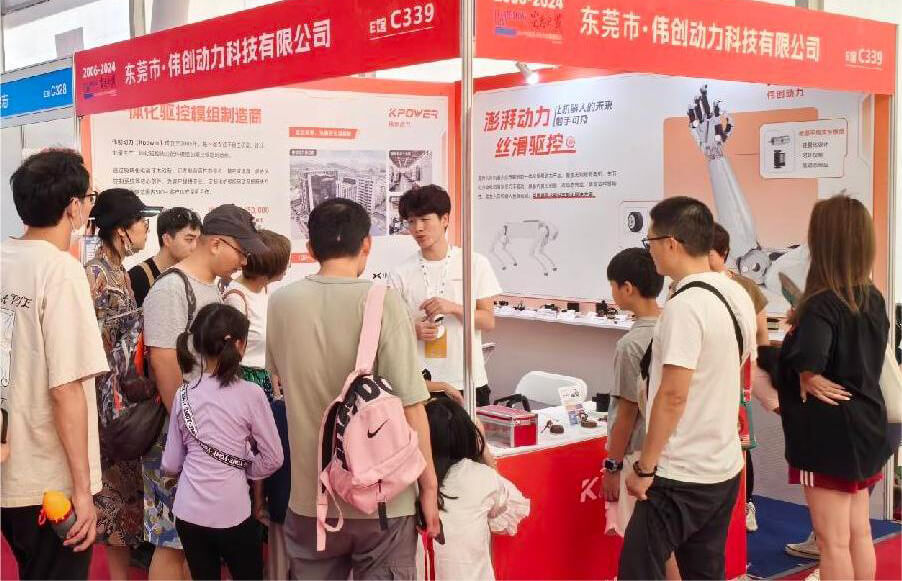
Established in 2005,kpowerhas been dedicated to a professional compact motion unit manufacturer, headquartered in Dongguan, Guangdong Province, China. Leveraging innovations in modular drive technology, Kpower integrates high-performance motors, precision reducers, and multi-protocol control systems to provide efficient and customized smart drive system solutions. Kpower has delivered professional drive system solutions to over 500 enterprise clients globally with products covering various fields such as Smart Home Systems, Automatic Electronics, Robotics, Precision Agriculture, Drones, and Industrial Automation.
Update Time:2026-01-19

Contact Kpower's product specialist to recommend suitable motor or gearbox for your product.