



























TECHNICAL SUPPORT


Published 2026-03-07
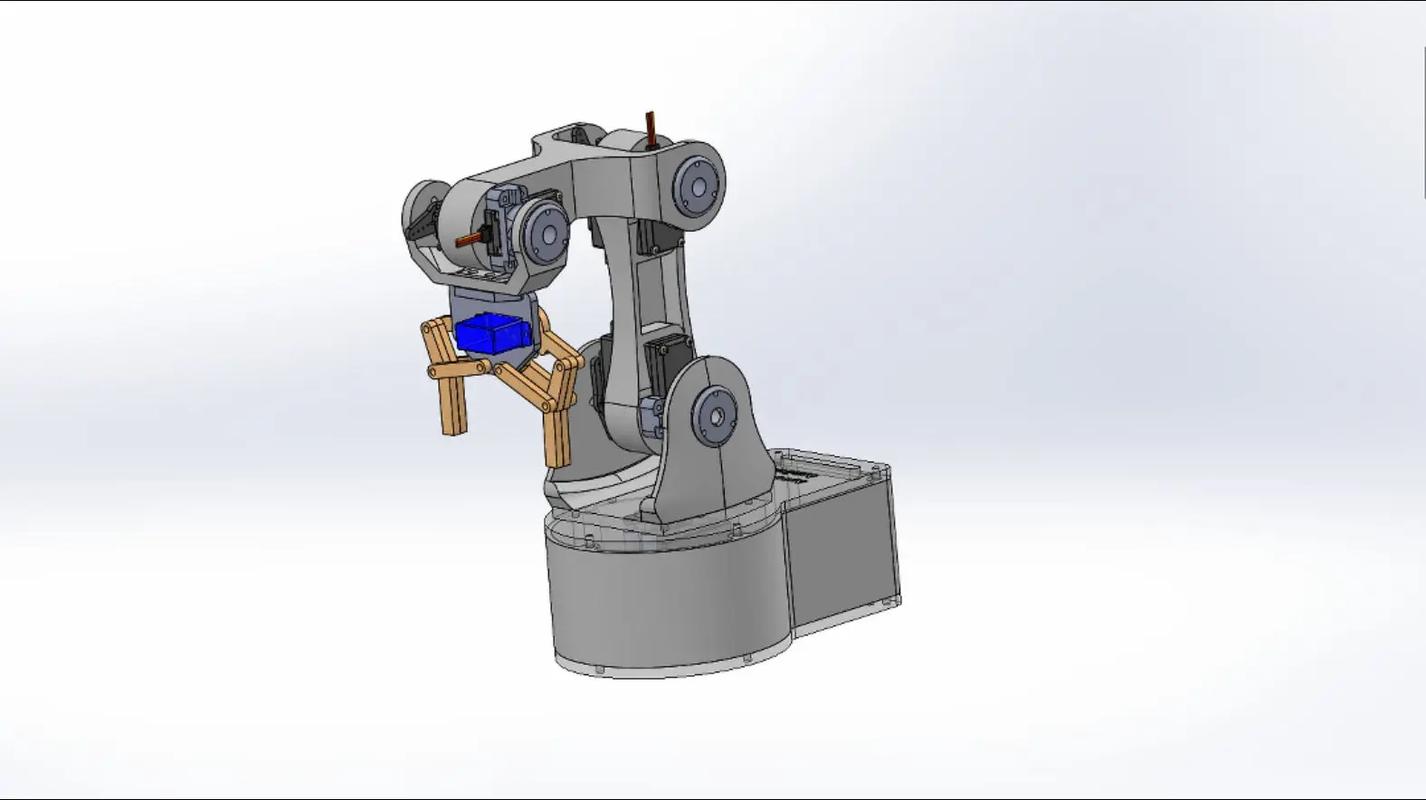
Hey, I have been through the situation you encountered many times. It is obvious that the mechanical arm is still moving, but the steering gear is frighteningly hot when I touch it. Is this considered a malfunction? Do you want to stop now? In fact, theservois hot but can move. This situation is particularly common in robot manufacturing and product development. To put it bluntly, theservois "working while sick." Today we will talk about this phenomenon and help you figure out how to deal with it.
To be honest, it is completely normal for the servo to get slightly warm when working. Think about it, motor rotation, gear friction, how can these mechanical movements not generate heat? Just like our body will heat up after exercise. Generally speaking, the surface temperature of the servo is considered to be within the normal range when it is between 40 and 50 degrees, and it feels warm to the touch. But if it’s so hot that you can’t put your hand on it, it must be overloaded.
The key is to distinguish the difference between normal fever and abnormal fever. Normal fever rises slowly, but abnormal fever may become frighteningly hot in a few minutes. Here’s a little trick: Touch the servo with the back of your hand. If you can hold it for more than 5 seconds, the temperature is still controllable; if it retracts once you touch it, it’s definitely exceeding the standard.
The root cause of this problem is nine times out of ten overloading. Just like if you are walking with a bag of rice on your shoulders, you will be so tired that your whole body will feel hot, right? The same is true for the steering gear. When the load it drives exceeds the design capacity, it can only rely on increasing the current to maintain rotation. The result is a surge in heat.
In addition, the motor inside the steering gear has a working voltage range. If the voltage is too high, it will generate heat. If the voltage is too low, the current will increase. I have seen many friends directly increase the voltage in order to make the robotic arm move faster. As a result, the servo quickly became extremely hot. In addition, the mechanical structure is stuck and the gears are too tight, which will increase the burden on the steering gear.
The answer is yes, and it has serious implications. The life of electronic components is inversely proportional to temperature. This is an iron law. Think about it, the motor windings, driver chips, and potentiometers inside the servo are all afraid of high temperatures. When working at high temperatures for a long time, the winding insulation layer will age and become brittle, and the carbon film of the potentiometer will wear out faster.
The most terrible thing is that high temperature will also cause the lubricating oil inside the steering gear to become thinner and lose, causing gear wear to increase, forming a vicious cycle. A steering gear that could have been used for a year may become useless in two or three months. What's worse is that if the temperature is too high and the motor burns out, the driver board may be scrapped, which is not worth the gain.
This question is very practical. We must have a judgment standard, right? The most accurate method is of course to use an infrared thermometer gun and hit it directly on the servo housing to find out. Generally speaking, metal gear servos can withstand slightly higher temperatures, while plastic gear servos need to be more conservative.
If you don’t have professional tools, just rely on feel. Remember this standard: Warmth is normal, be careful if it is a little hot but you can still hold it (about 60 degrees), and stop immediately if you can't hold it at all (above 70 degrees). There is also a smell. If there is a burnt smell, it means that the insulation layer is decomposing. Turn off the power and check immediately.
Check your control frequency. In order to make the movement smoother, many people set the PWM frequency to a very high value. As a result, the servo cannot respond and becomes hotter. If you lower the frequency appropriately, such as from 333Hz to 200Hz, the temperature may drop.
Look at the neutral point setting of the servo. At the neutral point, the servo should be completely still. If it still makes a buzzing sound, it means that there is a constant signal competition, which will also generate heat. There is also the dead zone setting. Appropriately increasing the dead zone range can reduce the repeated adjustment of the servo in a small range, which is very helpful for cooling.
When choosing a servo, the bigger the torque, the better. The key is to match the actual load. I suggest you follow this formula: the nominal torque of the servo should be 1.5 to 2 times greater than the actual load. For example, if you actually need 5 kilograms of torque, then choose a servo of more than 8 kilograms. It is important to leave enough margin.
In addition, the heat dissipation performance of metal gear servos is generally better than that of plastic gears, and priority is given to situations where long working hours are required. Another point that is easily overlooked is the heat dissipation conditions of the servo. If the robot arm has a compact structure and poor ventilation, you must choose a model with a heat sink or metal casing. If that doesn't work, you can also consider installing a small fan for active cooling.
I found that many friends like to keep the servo in one position for a long time, such as letting the robotic arm keep lifting things. This kind of static load is actually the most expensive for the steering gear, because the motor is always holding back its power and the current is very large. The correct approach is to cut off the power when there is no need to maintain the position, or use mechanical limits to bear the load.
Also, the movements are too violent and the acceleration and deceleration are too rapid. If you think about it, if a stationary servo is turned at full speed instantly, the starting current will be very large, and the heat will naturally increase. Use code to control acceleration and deceleration so that the servo can start and stop smoothly, which is very helpful for controlling temperature.
Seeing this, you should be aware of the problem of steering gear heating. I would like to ask you, when debugging the robotic arm, have you ever encountered a particularly strange heating situation of the servo? For example, the temperature is very high despite not moving much? Welcome to share your experience in the comment area, and let's exchange solutions together. If you find this article useful, don’t forget to like and forward it so that more friends who play with robotic arms can see it!
Update Time:2026-03-07

Contact Kpower's product specialist to recommend suitable motor or gearbox for your product.


